
This sub-chapter will discuss communication ethics that students need to know when interacting with lecturers and staff. Communication between students, lecturers, and staff (tendik) will happen throughout the lecturing period. Along with the development of technology, communication between students and lecturers is not only face-to-face, but can also be via short messages via email, SMS, and WhatsApp messenger. There are ethics that must be considered and maintained when communicating with lecturers and staff. Here are some things that can be used as a guide when you want to communicate with lecturers and staff.
Related Posts

Competition between modern retailers and local businesses poses a challenge to building an inclusive regional economy. Amid the expansion of modern minimarket chains, cooperatives and micro, small, and medium enterprises (MSMEs) need greater market access and policy support to participate in economic activities.
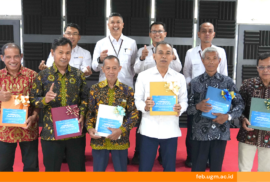
The Faculty of Economics and Business Universitas Gadjah Mada (FEB UGM) bid farewell to six retiring professional staff members on Monday (October 26) at the Alumni Corner, FEB UGM.
The six retiring staff members were Suharto (MD), Tabrani (KAF), Tukijan (KAF), Amat Khalimin (MEP), Waluyo (KAF), and Mundzakkir (KAF).
Dean of FEB UGM, Bayu Sutikno, S.E., M.S.M., Ph.D., expressed his gratitude for the staff members’ hard work, dedication, and contributions throughout their years of service.
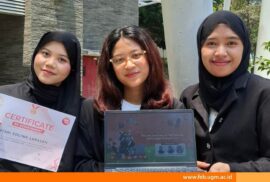
Students from the Faculty of Economics and Business Universitas Gadjah Mada (FEB UGM) have achieved another remarkable accomplishment in a national-level marketing competition. Two FEB UGM students, collaborating with a student from the Faculty of Engineering UGM (FT UGM), won Second Place in the Marketing Campaign Competition category of the 2026 National Youth Creator Challenge, organized by Deli n’co of PT MCDelica Food Indonesia from February 27 to March 31, 2026.
The team, named The Brandstormers, consisted of Btari Edlyna Larasati (Management, 2023), Valencia Oktaliana Ekaputri (Economics, 2023), and Amalia Mahadewiqu Rachmadhiani (Chemical Engineering, 2023).
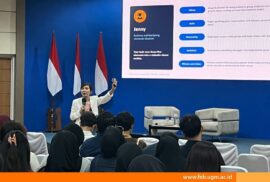
What makes someone more memorable than other candidates with similar qualifications? One factor is personal branding—the way individuals communicate their uniqueness, competencies, and values to others.