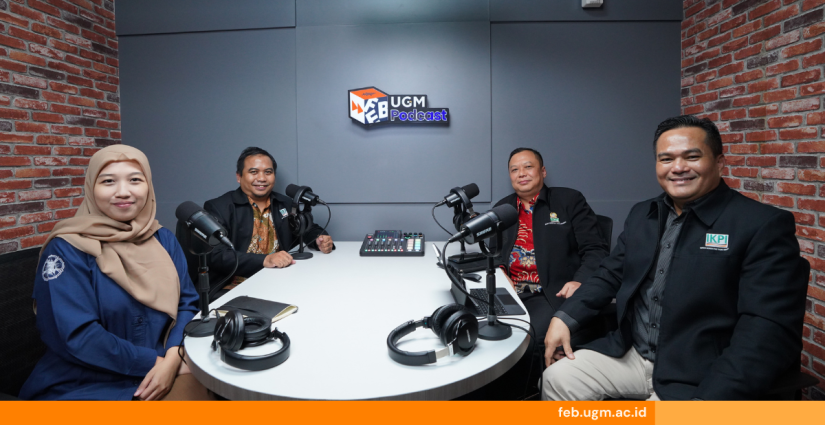
The digital transformation of Indonesia’s taxation system has entered a new phase with the introduction of Coretax, a platform envisioned as a “central hub” integrating all tax administrative services into a single system. This topic was discussed in the FEB Podcast titled “Unpacking Coretax: Challenges & Tax Efficiency in Indonesia”, featuring board members of the Indonesian Tax Consultants Association (IKPI): Vaudy Starold, S.E., S.H., Ak., CA., ASEAN CPA., Chairman of IKPI; Jemmi Sutiono, S.E., S.H., M.M., M.Si., Ak., CA., CPA., Head of Public Relations Department of IKPI Central Board; and Argi Evansarid Hughie Janitra, S.Sos., BKP., Head of Investment and Business Development Department of IKPI.
Previously, taxpayers had to use multiple applications to manage their tax administration. With Coretax, all processes—registration, reporting, payment, and supervision—are now integrated into one system and accessible through a single gateway,” Vaudy explained.
From an effectiveness standpoint, Coretax significantly improves work efficiency. Processes that once required face-to-face meetings with tax officers can now be conducted online, anytime and anywhere, through a single digital platform.
“In addition, this transformation encourages paperless practices and document digitalization, including the use of digital signatures and electronic stamps. This integration benefits all stakeholders, including tax consultants and taxpayers,” Argi added.
With the commencement of the 2025 Annual Individual and Corporate Income Tax Return filing through Coretax, changes have been introduced to the reporting flow. The process now begins with the main form, and the system guides users to more detailed sections. Additional mandatory information, such as bank account numbers, phone numbers, and other data integrated with third parties, must also be completed.
According to Jemmi, adding detailed information does not contradict the process simplification; rather, it enhances data accuracy.
“This actually reinforces manual reporting by providing more detailed and concrete data. It ultimately benefits everyone by minimizing recurring issues caused by discrepancies between reported data and existing records,” Jemmi stated.
The prepopulated system also automatically displays withholding tax certificates issued by counterparties in taxpayers’ accounts, enhancing transparency while reducing the potential for disputes.
Addressing public concerns regarding data breaches, the speakers emphasized that the government has engaged third parties to conduct system security testing. Argi also reminded taxpayers to safeguard their personal data.
“Sometimes people forget to protect their personal information and easily share their usernames and passwords. Once access is given, all data can be manipulated because everything is stored within the system,” he noted.
Taxpayers are encouraged to activate their accounts promptly and check system notifications to avoid delays or missing important information.
“Do not wait until the reporting deadline approaches before activating your account or learning how to complete the forms. System access may become congested and make it difficult for users,” Vaudy explained.
Coretax will likely become a long-term system with continuous improvements.
“With this integrated system, we hope Coretax will make tax compliance easier for taxpayers while increasing overall reporting compliance,” Jemmi concluded.
The implementation of Coretax marks a strategic step in strengthening Indonesia’s national tax administration. Through service integration, improved data accuracy, and collaboration with various stakeholders, the system is expected to promote more transparent and efficient tax governance in Indonesia.
The whole episode of the FEB UGM Podcast titled “Unpacking Coretax: Challenges & Tax Efficiency in Indonesia” is available at: Link
Reported by: Shofi Hawa Anjani
Edited by: Kurnia Ekaptiningrum
Sustainable Development Goals