
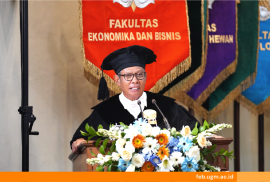
Prof. Eko Suwardi, M.Sc., Ph.D., was officially inaugurated as Professor of Accounting at the Faculty of Economics and Business (FEB), Universitas Gadjah Mada (UGM), on Thursday, 16 July 2026, at the UGM Senate Hall.

Entering the professional world can feel intimidating for students who have never experienced it firsthand.

The Faculty of Economics and Business, Universitas Gadjah Mada (FEB UGM), through its Human Resources (HR) Office, organized two competency development programs for professional staff in June and July 2026.
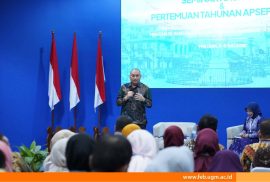
Amid the rapid transformation of the world of work, university graduates can no longer rely solely on their Grade Point Average (GPA).

Choosing a career path can be one of the biggest challenges for university students.
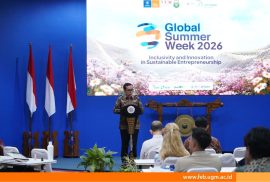
A total of 62 students from nine universities across five countries are participating in the Global Summer Week (GSW) 2026, held at the Faculty of Economics and Business, Universitas Gadjah Mada (FEB UGM) from 13–24 July 2026.
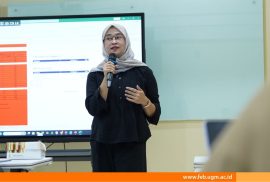
Different business characteristics mean that each micro, small, and medium enterprise (MSME) faces different tax obligations.
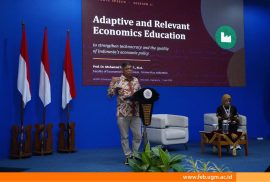
Despite the growing number of economics graduates produced by universities, the quality of economic reasoning in Indonesia’s public discourse has yet to show significant improvement.

Digital business management has become an essential requirement for Micro, Small, and Medium Enterprises (MSMEs) amid the rapid growth of the digital economy.
Can we help you?