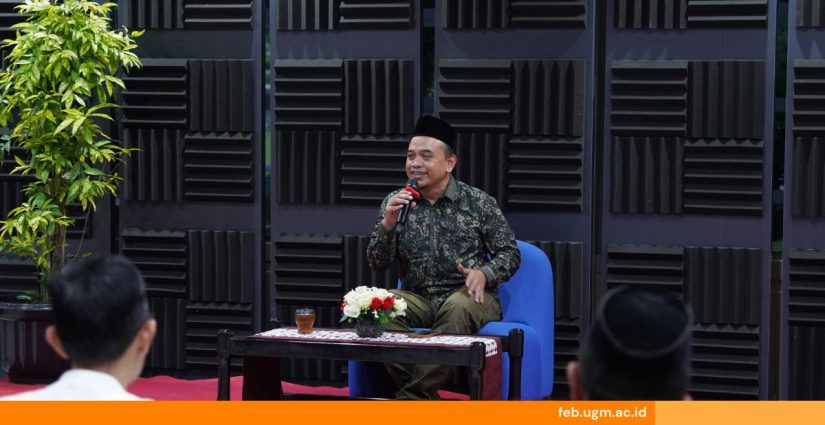
The month of Ramadan is a time for Muslims to reflect on the meaning of life, including how to maintain balance in viewing the worldly life and the hereafter, during the Ramadan Iftar discussion held at the Faculty of Economics and Business at Universitas Gadjah Mada (FEB UGM) on Friday, 6 March, members of the academic community reflected on these values through the history of Islamic civilisation.
Dr. Muhammad Roy Purwanto, S.Ag., M.Ag., from the Faculty of Islamic Studies at Universitas Islam Indonesia, highlighted the rise and decline of Islamic civilization in Andalusia. According to him, one of the important lessons from this history is how excessive attachment to worldly matters can distance people from the greater purpose of life.
“A community will experience decline when it becomes overly attached to worldly life and forgets the purpose of the hereafter. Excessive love for worldly matters may lead people to justify any means. Likewise, death should not be feared, as life in this world is merely a test, whether through happiness or hardship,” he explained.
Muhammad Roy Purwanto also emphasized that a society’s progress is closely related to how its members practice religious teachings in their daily lives. In his view, the decline of Muslims occurs when they begin to abandon the teachings of the Qur’an, while others instead study and apply the values contained within it.
He also reminded the audience of the importance of emulating the spirit of the Prophet’s companions in striving and contributing to the community, including Abu Bakr Ash-Shiddiq, Umar bin Khattab, Uthman bin Affan, and Ali bin Abi Talib. They are known as figures who did not hesitate to sacrifice their wealth, energy, and even their lives for the community’s benefit.
He encouraged the attendees to make the most of the Ramadan momentum by increasing acts of worship, including voluntary (sunnah) practices. He believes that wealth and worldly achievements should serve as a means of drawing closer to God rather than becoming the ultimate goal in life.
Report: Shofi Hawa Anjani
Editor: Kurnia Ekaptiningrum
Sustainable Development Goals