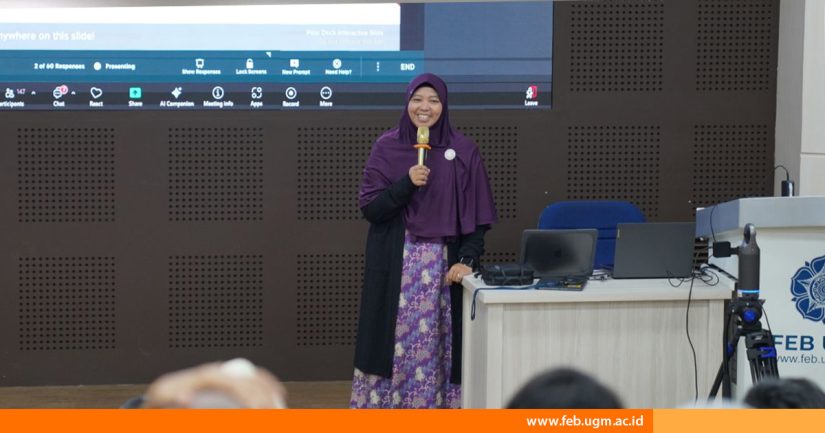
The Faculty of Economics and Business at Universitas Gadjah Mada (FEB UGM) continues to strengthen mental health literacy on campus as part of its commitment to building a healthy campus environment. FEB UGM realized this effort by organizing a basic Psychological First Aid (PFA) training titled “First Steps in Psychological Support: The Role of Faculty and Staff in PFA” on Thursday, April 9, 2026, at the FEB UGM Multimedia Room.
Through this initiative, FEB UGM equips faculty members and professional staff to act as first responders in addressing psychological crises on campus. The training features Diana Setiyawati, Head of the Center for Public Mental Health (CPMH), Faculty of Psychology UGM, as the main speaker.
During the session, participants learn the fundamental concepts of Psychological First Aid (PFA), a basic form of psychological support designed to assist individuals experiencing distress due to challenging or traumatic events. Diana explains that PFA focuses on reducing negative stress (distress), which can help minimize potential long-term psychological impacts.
She emphasizes that anyone can provide PFA as long as they are willing and act within their capacity. Individuals can deliver PFA during or after a crisis, whether immediately, days later, or even weeks after the event. They can also provide support to various groups, including individuals affected by crises, those experiencing mental health difficulties, or anyone struggling to cope with psychological pressure.
“PFA can be provided to anyone who needs it, both individuals and groups, across all age ranges,” she explains.
Before delivering PFA, Diana encourages first aiders to understand the situation by assessing the crisis context, identifying the condition of affected individuals, whether they experience eustress, distress, or dysfunction, and mapping available resources. At the same time, they must ensure safety and security throughout the process.
She further highlights that PFA applies three core principles: look, listen, and link. Through this approach, helpers can recognize signs of distress, listen actively with empathy, and connect individuals to appropriate support systems, including mental health professionals or their closest support networks, such as family and friends.
Diana also outlines a structured support pathway system. First, helpers gather information to identify early signs of mental health issues. Next, they provide initial assistance through supportive communication. In more urgent situations, they take rapid action by referring individuals to professional services. She stresses the importance of applying PFA principles at every stage of this support process.
In addition, she underscores the importance of psychosocial support, which includes ensuring safety, promoting calmness, strengthening social connections, enhancing self-efficacy, and fostering hope. These elements play a critical role in supporting recovery after stressful or traumatic experiences.
Reportage by: Kurnia Ekaptiningrum
Sustainable Development Goals