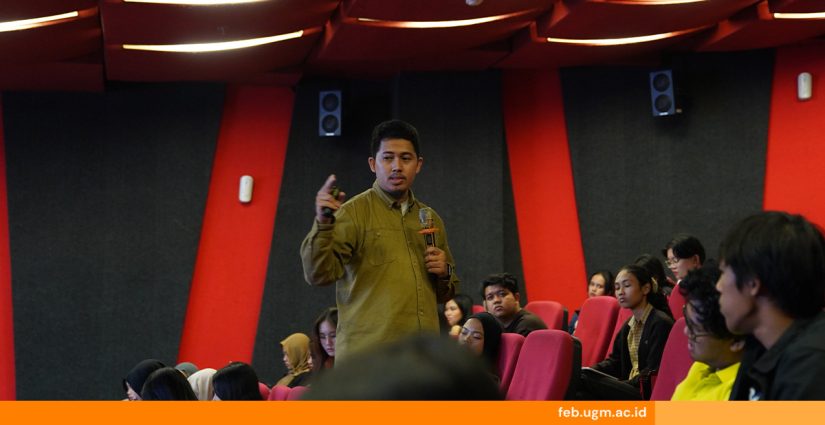
Communication and negotiation skills are the main foundations of effective leadership. According to Alfath Bagus Panuntun El Nur Indonesia, M.A., lecturer at the Department of Politics and Government, Faculty of Social and Political Sciences, Universitas Gadjah Mada (FISIPOL UGM), being a leader is not only about speaking well but also about inspiring and moving others toward a shared goal.
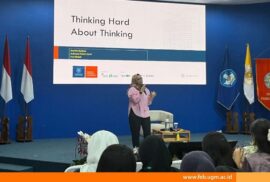
“Leadership is not merely about holding a position or power, but the art of influencing others to move toward a common purpose,” he explained during the Mandatory Soft Skills session titled “Communication and Negotiation Skill” on Friday (October 31, 2025) at Djarum Hall, Faculty of Economics and Business (FEB) UGM.
He emphasized that a leader’s communication style and negotiation approach reflect their core leadership values. Therefore, leadership cannot be separated from one’s character and the way they interact with others. Meanwhile, the university serves as the initial ground for cultivating leadership character. In the academic environment, students have opportunities to develop confidence in expressing their opinions, delivering ideas logically, and negotiating respectfully despite differences.
Alfath also invited students to understand the social reality of Indonesia, which he described as the paradox of being “poor, sick, and smart.” According to him, the three variables welfare, health, and education are interrelated foundations of society. The balance among these aspects, he continued, reflects authentic leadership: leadership rooted in social awareness and understanding of societal challenges.
Furthermore, Alfath discussed the challenges faced by vulnerable groups amid social change. Many groups, he said, are excluded from transformation processes due to three reasons: they lack knowledge, don’t want to participate, or are unable to do so. A leader must be able to bridge these gaps through effective communication and concrete action.
“We cannot simply blame them. The task of a leader is to help them know, want, and ultimately be able,” he asserted.
The issue of identity crisis among young people also became a focal point. Alfath referred to the popular term in academic settings duck syndrome a condition in which someone appears calm and successful on the surface but is actually struggling beneath. This phenomenon, he said, mirrors the young generation’s struggle to meet the pressure of perfection while being uncertain about their identity.
He explained that this crisis represents the leadership challenge of the younger generation, who often lose touch with their cultural and social roots. Authentic leadership, according to him, emerges from self-awareness and a deep understanding of one’s environment and the changing times.
“If we don’t know who we are and what we live for, then we cannot lead anyone,” he added.
At the end of the session, Alfath reminded the audience of the importance of speaking and negotiating effectively in all situations both on campus and in professional life. He quoted a saying, “The one who speaks wins,” highlighting that the courage to voice ideas intelligently and ethically is the key to driving change.
Reporter: Orie Priscylla Mapeda Lumalan
Editor: Kurnia Ekaptiningrum
Sustainable Development Goals