As global attention to the climate crisis continues to grow, the issue of energy transition has increasingly featured in national development discourse. Indonesia, as one of the world’s largest carbon emitters, has set various targets to reduce greenhouse gas emissions, ranging from its Nationally Determined Contribution (NDC) commitment to achieving Net Zero Emissions (NZE) by 2060. However, behind these targets lies a critical question: to what extent do existing achievements truly reflect fundamental changes in the national energy system?
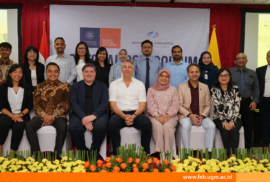
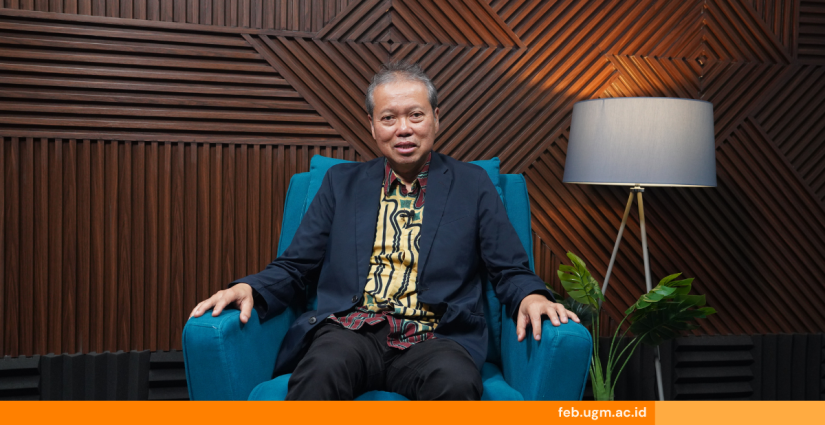
This question has not only emerged in the public sphere but has also become a key concern among academics studying energy economics and sustainable development. In one session of the FEB UGM Research Series, entitled “Opportunities and Obstacles to Indonesia’s Energy Transition,” Head of the Australian National University Indonesia Project, Prof. Budy P. Resosudarmo, explained that Indonesia’s emission-reduction achievements need to be understood more critically, particularly in relation to the assumptions used to set the targets.
He explained that Indonesia’s NDC target was formulated based on an assumed economic growth rate of around 6 percent per year during the 2010–2030 period. Based on this growth assumption, projected emission levels were used as the baseline for determining national emission-reduction targets.
“When the assumption of economic growth is high, the emission baseline is also high. If actual growth turns out to be lower, as happened after the COVID-19 pandemic, emissions automatically decline. On a numerical basis, the target is achieved, but this does not necessarily reflect technological change or a shift in the energy structure. In that sense, we can meet the NDC not because of improvements in energy transition or energy efficiency,” he explained.
This condition makes NDC targets relatively easy to achieve without requiring a fundamental transformation of the national energy system. Therefore, meeting the NDC target cannot always be interpreted as genuine success in energy transition. In this context, the NZE 2060 target is considered a more challenging and relevant benchmark.
“There is no problem with the NDC. But what is more important is whether Indonesia can truly reflect an energy transition and achieve NZE by 2060 or even sooner,” he said.
The challenges of energy transition become even more complex when Indonesia’s dependence on coal is taken into account. During the post-pandemic period, national economic growth has relied mainly on rising commodity prices, particularly those of coal. However, coal is also a significant contributor to carbon emissions. Beyond its role as an energy source, the coal sector also generates substantial economic multiplier effects, especially in mining regions.
Informal mining activities around coal mining areas provide a livelihood for many local communities. In this context, energy transition cannot be understood merely as a matter of replacing energy sources.
“Coal mining has two aspects. First, open-pit mining involves a large workforce. Second, illegal mining involves a large number of people. If these activities are shut down, and we assume illegal mining is also closed, the multiplier effect of closing the coal sector becomes significant,” he explained.
Indonesia has enormous potential to shift toward renewable energy sources. The development of renewable energy is supported by the National Energy Policy and Presidential Regulation Number 112 of 2022. Prof. Budy highlighted the potential of solar energy, particularly through the development of floating solar power plants in Indonesia’s relatively calm waters. This potential further increases as energy storage technologies, such as pumped hydro storage, address the intermittency of renewable energy. The development of inter-island power grids also helps to distribute the energy supply more evenly.
Despite this vast potential, he emphasized that the main challenge of Indonesia’s energy transition does not lie in technological aspects. Although renewable energy costs are becoming increasingly affordable globally, implementation in Indonesia remains constrained by high institutional costs.
“The problem is not technology. The technology already exists and is becoming more efficient. Our main challenge lies in institutions and the commitment of top leadership,” Prof. Budy stressed.
The full video of the FEB UGM Research Series program entitled Opportunities and Obstacles to Indonesia’s Energy Transition can be accessed via:
Research Series: Peluang dan Rintangan Transisi Energi Indonesia
Author: Dwi Zhafirah Meiliani
Sustainable Development Goals