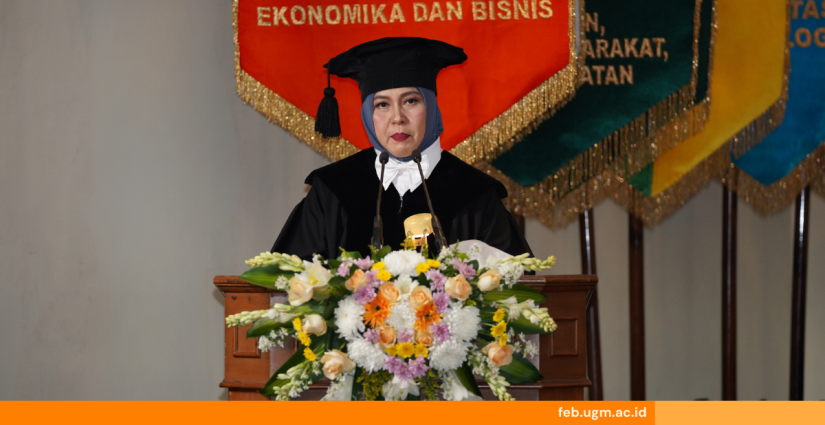
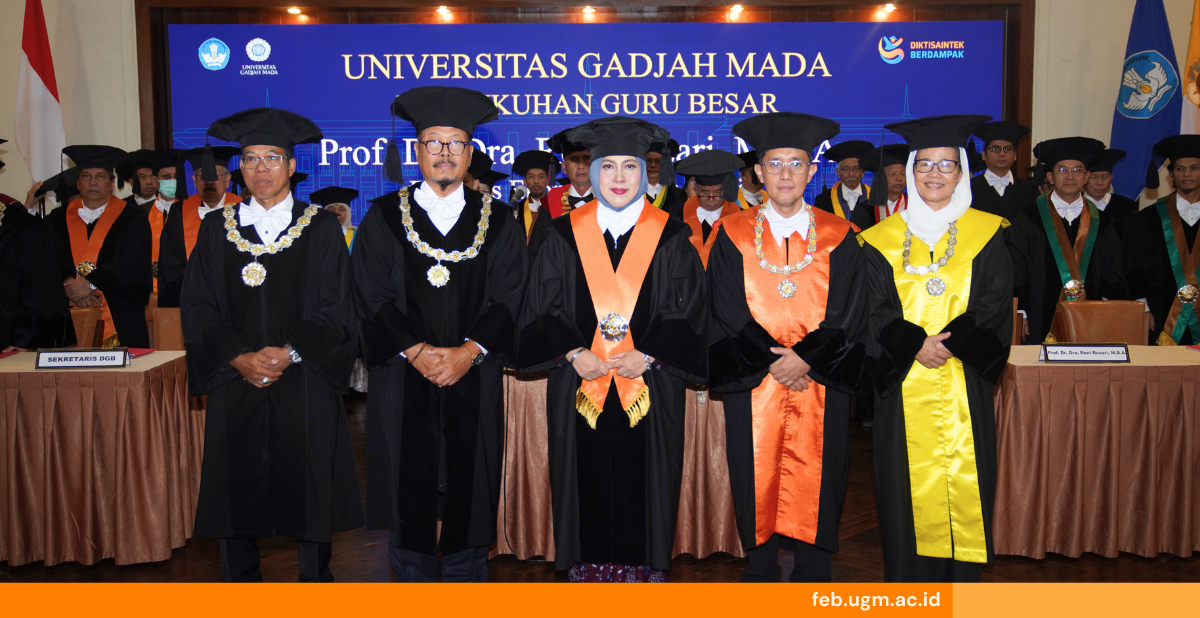
Prof. Dr. Reni Rosari, M.B.A., a lecturer at the Department of Management, Faculty of Economics and Business, Universitas Gadjah Mada (UGM), was officially inaugurated as a Professor in Organizational Behavior. In her inaugural speech titled “Rumongso Melu Handarbeni: A Sense of Belonging as the Foundation of Happiness- and Collaboration-Based Organizations,” she emphasized that the sustainability of modern organizations is determined not merely by systems and structures, but by the depth of human ownership and belonging within them.
According to Prof. Reni, organizations today operate amid increasing speed and complexity, accompanied by intense performance measurement pressures. Yet behind achievements and efficiency, many individuals experience burnout, disengagement, and even quiet quitting. These phenomena reflect a crisis of meaning and connectedness in the workplace. Organizations may be administratively busy, but they risk losing their human dimension.
She stressed that organizations are not merely formal entities, but living systems that thrive when the people within them feel emotionally and morally connected. In this context, she introduced the Javanese philosophy of rumongso melu handarbeni as a conceptual contribution that enriches the theory of psychological ownership in Organizational Behavior.
Rumongso melu handarbeni refers to a sense of control, but as a consciousness of shared responsibility. A sense of belonging is not about rights, but about responsibility; not about domination, but about care; not about “me,” but about “us.” This value bridges the rational and moral dimensions of management while bringing local cultural depth into global academic discourse.
When organizations foster a genuine sense of belonging, workplace relationships shift from transactional to transformational. Individuals work not merely out of obligation, but out of trust and commitment to shared goals. From collaboration emerges synergy; from trust grows collective strength; and from connectedness arises sustainable workplace happiness.
Prof. Reni also underscored that happiness and performance are not opposing poles. Actual productivity stems from individuals who feel valued, heard, and involved. Organizations that cultivate a sense of belonging become organizations with soul—ones that nurture rather than drain, empower rather than suppress.
Concluding her speech, she reminded the audience that organizations capable of igniting meaning are those that endure in the long term. Quoting the Javanese expression “Urip iku urup” (life is to give light), she affirmed that a meaningful life lights the lives of others. Likewise, a proper organization lives when it kindles purpose and meaning among its people.
Reported by: Kurnia Ekaptiningrum
Sustainable Development Goals