Accountable asset management is one of the key foundations of university governance. Amid demands for transparency and efficiency, the valuation of university-owned assets plays a strategic role in ensuring each asset has a clear status, economic value, and a utilization plan.
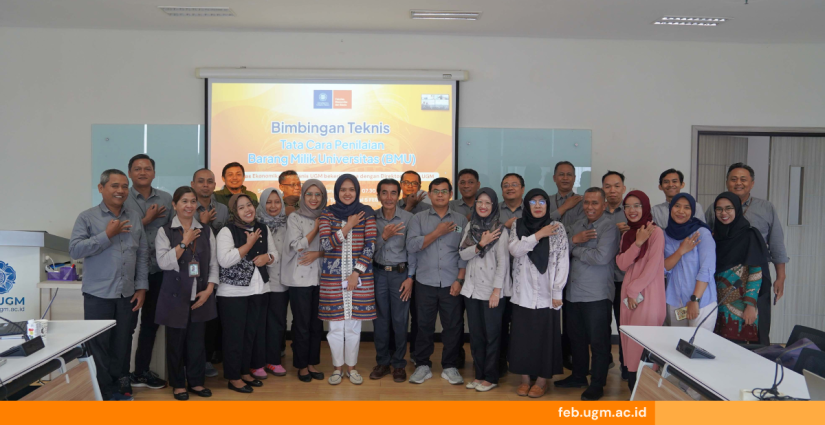
To strengthen this capacity, the Faculty of Economics and Business, Universitas Gadjah Mada (FEB UGM), organized a Technical Guidance on University Asset Valuation Procedures on Tuesday (Feb 3, 2025). This activity focused on improving technical understanding related to asset valuation.
Head of the FEB UGM Administration Office, Nur Bakti Susilo, S.E., Ak., CA., ASEAN CPA, emphasized that asset management is not only about administrative recording, but also involves consideration of economic value and long-term utilization planning. Assets that no longer have monetary value and are not planned for repair need to have their status determined immediately to avoid inefficiency.
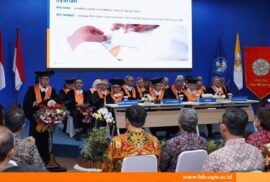
This technical guidance activity featured several material sessions delivered by experts in their fields. In the session on Basic Concepts of Valuation for Asset Disposal, Nurisqi Amalia, S.Pd., M.Sc., explained the basic concepts of asset valuation in the context of asset disposal as well as the role of appraisers in the process. Valuation provides an objective basis for determining whether assets should be maintained or disposed of.
Rio Jaka Tama, S.E., M.Ec., also discussed the valuation of movable assets, such as furniture and equipment, and explained the importance of determining market value before disposal. Meanwhile, Dr Sudarto (M.Si., M.Ec.Dev., MAPPI Cert.) emphasised that building valuations must adhere to applicable Valuation Standards to ensure accountability in the disposal process.
Furthermore, in the session Valuation of Furniture and Other Equipment for Disposal, Rio Jaka Tama, S.E., M.Ec.Dev., MAPPI (Cert.), explained the valuation of movable assets, such as furniture and equipment, to determine market value before disposal. This valuation supports objective, accountable decision-making for disposal.
In the session Building Valuation for Disposal, Dr. Sudarto, M.Si.., M.Ec.Dev., MAPPI (Cert.), emphasized that valuation is an essential instrument in the asset disposal process. The valuation process must take place objectively, accountably, and in accordance with applicable Valuation Standards.
In the Introduction to Asset Management session, Fatima Putri Prativi, S.T., M.Ec.Dev. explained the basics of university asset management and the strategic position of asset disposal within the asset life cycle. Asset disposal is an essential part of maintaining asset value while improving organizational efficiency.
In the session Valuation Approaches and Methods, Bagaskara, S.E., M.Ec.Dev. explained the main approaches to asset valuation: the market approach and the cost approach. Valuation also considers physical condition, asset function, economic factors, and asset economic life.
Through strengthening this competency, university asset management should become more professional, transparent, and aligned with sound governance principles. Effective asset governance not only drives internal efficiency but also strengthens institutional accountability in the long term.
Reported by: Shofi Hawa Anjani
Editor: Kurnia Ekaptiningrum
Sustainable Development Goals