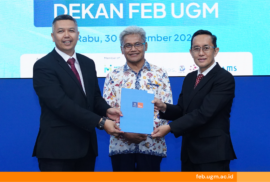
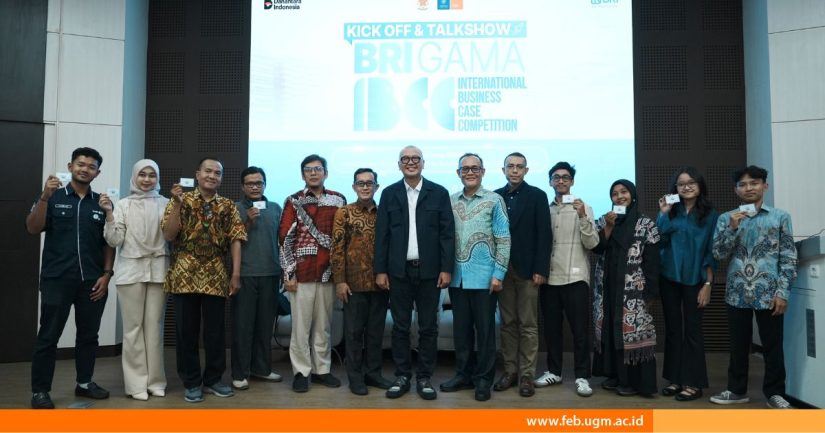
The Faculty of Economics and Business Universitas Gadjah Mada (FEB UGM), in collaboration with PT Bank Rakyat Indonesia (Persero) Tbk (BRI) and the Alumni Association of the Faculty of Economics and Business Universitas Gadjah Mada (KAFEGAMA), has officially launched the BRI GAMA International Business Case Competition (IBCC) 2026.
Carrying the theme “Empowering MSMEs: Innovative and Sustainable Business Solutions for Global Competitiveness,” the competition invites undergraduate and graduate students to develop solutions that strengthen the global competitiveness of micro, small, and medium-sized enterprises (MSMEs).
Dean of FEB UGM, Prof. Didi Achjari, emphasized that collaboration between universities and industry is essential for fostering innovations that address real societal needs.
“Through this international business case competition, we hope students, as agents of change, can sharpen their analytical and critical thinking skills while developing practical solutions that can contribute to the advancement of MSMEs,” he said during the kick-off event and talk show held on May 22, 2026, at the Multimedia Room of FEB UGM.
Echoing this view, the Chair of KAFEGAMA, Dr. Bogat Agus Riyono, highlighted the competition’s potential to generate ideas that have meaningful impacts on society and policymakers.
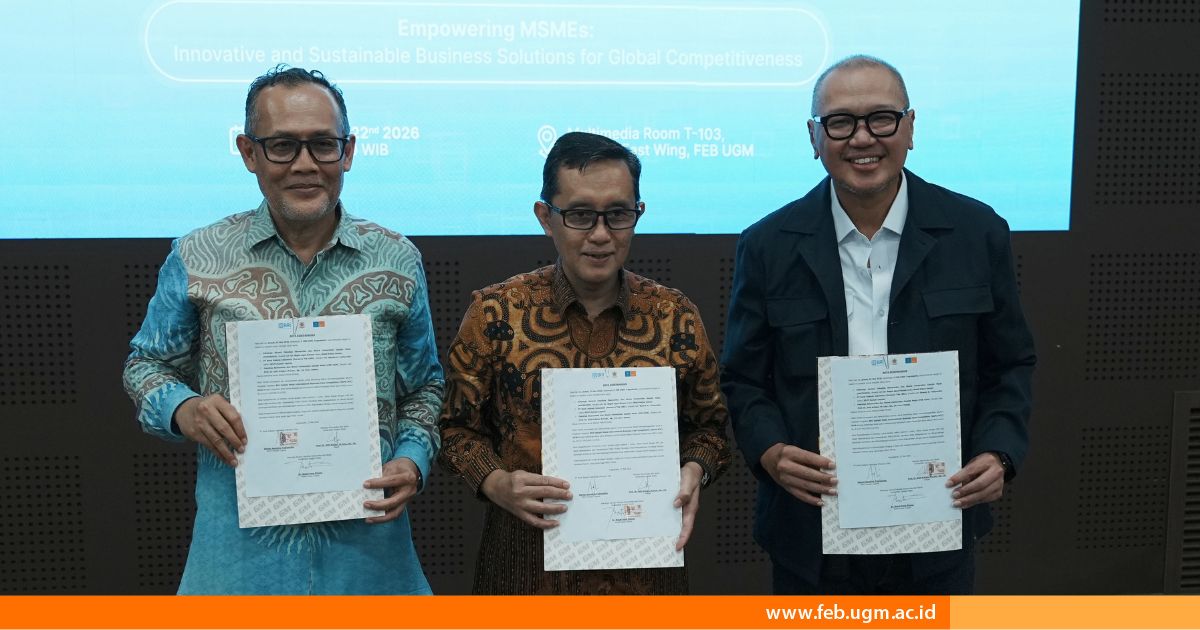
“We are committed to ensuring that the brilliant ideas emerging from this competition do not end up merely as reports or journal articles. The best recommendations will serve as valuable contributions to national development and form the basis of recommendations to policymakers,” Bogat stated.
Meanwhile, BRI Senior Executive Vice President of Human Capital, Steven A. Yudiyantho, explained that BRI’s support for the competition aligns with the company’s commitment to empowering MSMEs as the foundation of Indonesia’s people-centered economy.
“Empowering communities goes beyond providing loans. More importantly, it involves helping entrepreneurs build capacity, improve financial literacy, and strengthen their ability to grow sustainably,” Steven explained.
Boyke Rudy Purnomo, a lecturer at the Department of Management, FEB UGM, noted that MSMEs remain the backbone of Indonesia’s economy, contributing significantly to gross domestic product (GDP) and employment. However, their contribution to export markets remains relatively low, highlighting the need to address the competitiveness gap.
According to Boyke, the challenges faced by MSMEs extend beyond access to financing and include managerial capacity, financial literacy, digital technology adoption, and the ability to meet sustainability standards that are increasingly important in global trade.
He also highlighted a sustainability competitiveness gap, a disparity between growing market demand for sustainable business practices and the reality that many MSMEs are still struggling to meet their day-to-day operational needs.
“MSMEs should not merely become subjects of discussion in classrooms. We need to ensure that the solutions proposed truly make a difference in their daily operations,” he said.
Therefore, he stressed the importance of academics serving as knowledge brokers, bridging the needs of business actors with advances in knowledge and technology.
Complementing this perspective, BRI Group Head of Micro Business Development, A. Eddy Tri Wibowo, explained that strengthening MSMEs requires an ecosystem-based approach involving multiple stakeholders. According to him, digitalization and data utilization play crucial roles in expanding access to financing while enhancing business mentoring efforts.
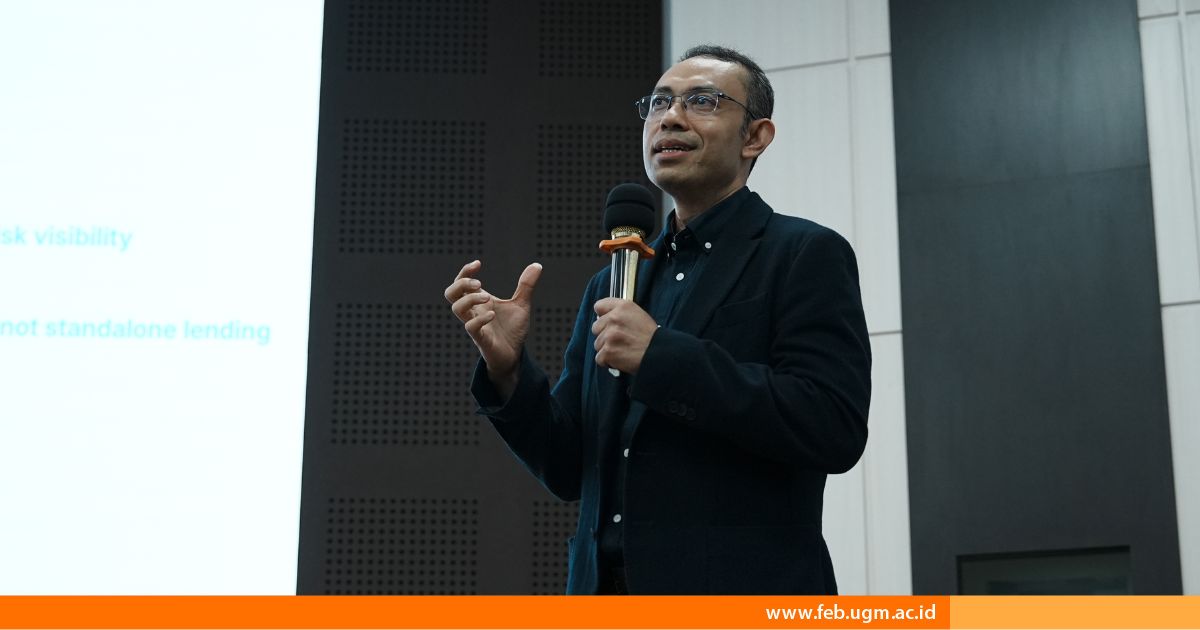
He highlighted several initiatives developed by BRI, including the digitalization of financing processes through BRISPOT, the expansion of the AgenBRILink network, the Desa BRILian program, and integrated services through the Ultra Micro Holding with Pegadaian and PNM. These initiatives aim to help entrepreneurs enhance their business capacity and gain broader access to formal financial services.
“MSMEs cannot grow on their own. They need an ecosystem that provides access to financing, markets, mentoring, and technology to enable sustainable growth and business upgrading,” he said.
The discussion session was highly interactive, with participants actively raising questions on MSME development, digital transformation, access to financing, and the implementation of sustainable business solutions.
The competition aims to provide students with a platform to generate ideas that are academically rigorous, relevant, and practical in addressing the real challenges faced by Indonesian MSMEs.
Registration for the BRI GAMA International Business Case Competition (IBCC) 2026 is open from May to July 2026. The opening ceremony will be held on July 3, 2026, while the competition will take place throughout August 2026. For more information, visit brigamaibcc.com.
Reporter: Dwi Zhafirah Meiliani
Editor: Kurnia Ekaptiningrum
Sustainable Development Goals