The rapid advancement of digital technology has transformed the way people conduct transactions and access financial services. However, alongside these conveniences, threats to data security and personal information have also increased significantly.
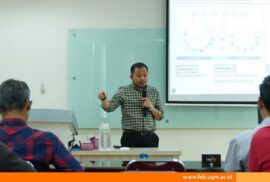
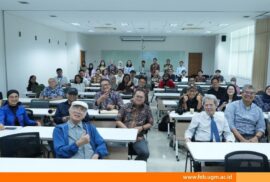
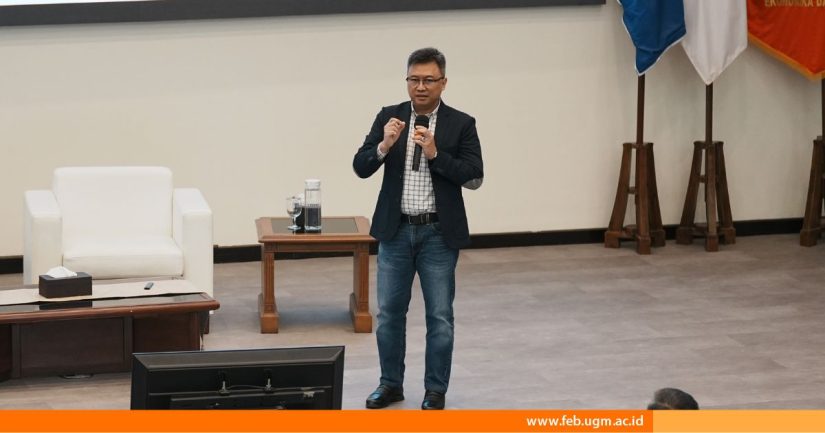
This issue was one of the key topics discussed during a Guest Lecture held as part of the Gadjah Mada Accounting Days (GMAD) 2026 series on Saturday, May 23, 2026, at the MM UGM Auditorium. The event featured Muharto Hadi Suprapto, M.Sc., CISA., CISSP., CISSP. Director of Information Technology at Bank Syariah Indonesia, who delivered a lecture titled “Cybersecurity in Accounting Information Systems: Protecting Financial Data in the Digital Era.”
Muharto highlighted the rapid growth of digital transactions in Indonesia. He explained that Generation Z has become a major driver of this transformation, having grown up with digital technology and demonstrating high adoption of digital payment systems.
According to him, the increasing adoption of digital technology has also expanded the attack surface faced by society. As more financial activities move online, the risk of data misuse and cyberattacks that threaten both individuals and institutions is growing.
While digitalization offers convenience and efficiency, it also introduces new risks. Muharto noted that cyber threats are constantly evolving, ranging from digital fraud and phishing to ransomware and the misuse of artificial intelligence. He added that the financial services sector remains a primary target for cyberattacks due to the valuable data and assets it manages.
“Technology can bring us closer to convenience. However, without security, that convenience is merely an illusion,” Muharto emphasized.
Muharto further explained that human factors remain the most vulnerable aspect of digital security. Based on various studies he presented, most data breach incidents originate from user errors, such as oversharing personal information, clicking phishing links, or using weak passwords.
On the other hand, the growth of digital technology is also creating new career opportunities. Muharto pointed out that demand for talent in information technology and cybersecurity continues to rise. He believes that a combination of business and technology expertise has become an increasingly valuable asset across industries.
“If you have an interest in technology, do not hesitate to explore it further. Business and technology knowledge is a highly valuable combination in today’s digital era,” he said.
Earlier, the Dean of the Faculty of Economics and Business at Universitas Gadjah Mada, Prof. Dr. Didi Achjari, stated in his opening remarks that cybersecurity and sustainability are highly relevant issues in the development of the accounting profession today. According to him, digital transformation requires educational institutions to continuously adapt to the evolving needs of industry and regulators.
“We believe that academia must continue to strengthen collaboration with practitioners, regulators, and industry partners to produce graduates who possess not only strong academic competencies but also the readiness to face future professional challenges,” he remarked.
Reporter: Dwi Zhafirah Meiliani
Editor: Kurnia Ekaptiningrum
Sustainable Development Goals