For most people, watching films is a simple way to unwind after a busy routine or follow a popular story. But did you know that this activity is not only entertaining, but can also aid in emotional and psychological healing?
Watching films to maintain mental health is known as cinematherapy. Through cinema, it becomes a vehicle for fostering self-awareness, empathy, and understanding of life experiences.
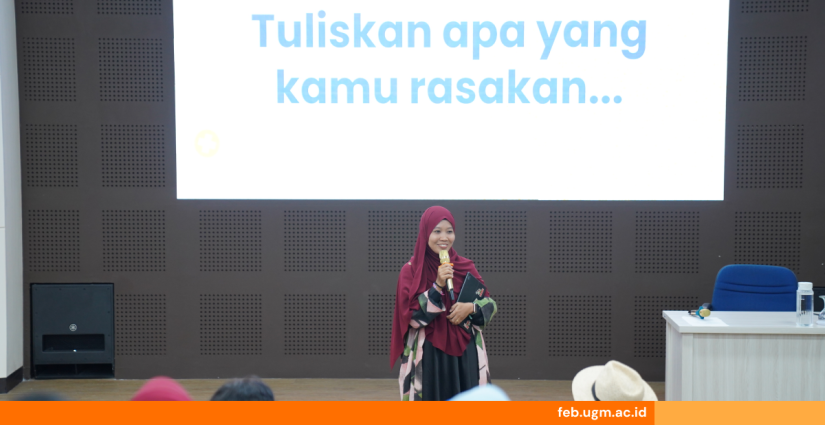
In an effort to support the mental health of its academic community, the Faculty of Economics and Business, Universitas Gadjah Mada (FEB UGM) held a cinematherapy session. The event took place on Wednesday (10/12/2025) in the FEB UGM Audio Visual Room with a screening of the film Diorama. This activity presented as a space for reflection and healing.
This cinematherapy session is part of the Berlayar event held by the Career and Student Development Unit (CSDU) in collaboration with the Dharma Wanita Persatuan (DWP) FEB UGM. Featuring School-Based Mental Health counsellor, Sakti Mutiara.
The 20-minute film ‘Diorama’ tells the story of a young girl who is a victim of bullying and her relationship with her single mother, presented from the child’s perspective.
After the screening, participants write down their feelings and relevant points for discussion. A variety of emotions emerged, ranging from sadness and anger to mixed feelings, particularly highlighting the lack of healthy communication between mother and child. Several mothers expressed empathy for the child character who felt unheard, while also understanding the emotional challenges faced by single mothers who are often exhausted.
The discussion also highlighted the turning point in the story when the mother understood her child’s feelings through writing, a symbol that the child wanted to be heard and understood, not just obeyed. From the students’ perspective, conflicts often arise due to differences in communication languages. Students emphasised the need for a warm and honest dialogue space, given that each age phase has its own challenges, especially in the digital age. This session also provided a space for sharing experiences of bullying victims that have had a profound impact on mental health and emphasised the importance of family, community, and spiritual support.
Sakti Mutiara emphasised the importance of two-way communication, mutual emotional understanding, and the awareness that the challenges faced by parents and children are equally complex. At the end of the session, she invited participants to build a community of care. Children need their parents to be present, to listen to them, and to show small acts of care that have a significant impact on their mental health.
Reportage by: Shofi Hawa Anjani
Editor: Kurnia Ekaptiningrum
Sustainable Development Goals