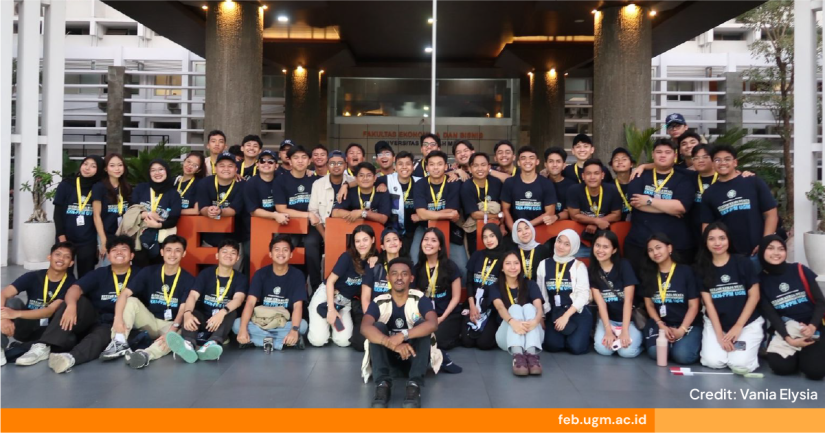
The Faculty of Economics and Business at Universitas Gadjah Mada (FEB UGM) is taking part in the implementation of the UGM Community Service and Empowerment Program (KKN-PPM) Period II of 2026. During this period, 432 FEB UGM students are being deployed alongside thousands of students from various faculties to carry out community service programs in several regions across Indonesia.
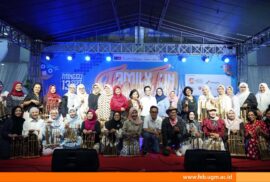
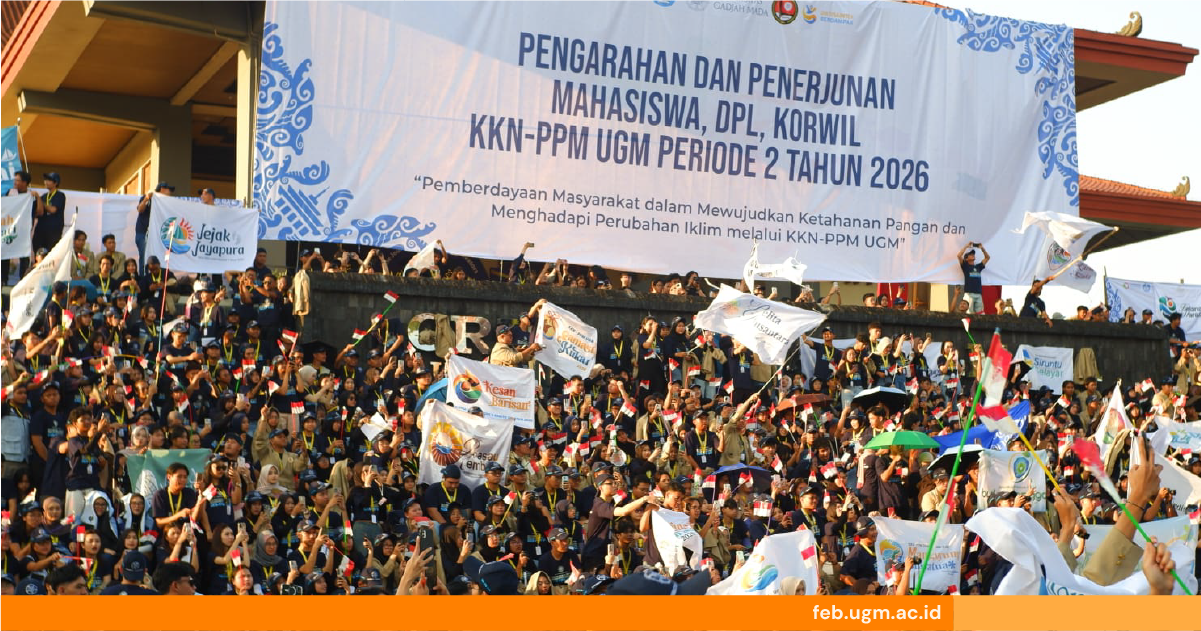
A total of 8,178 students are participating in this phase of the UGM KKN-PPM. The students will carry out their KKN activities from June 19, 2026, to August 8, 2026, spread across 32 provinces, 132 regencies/cities, and 274 subdistricts in Indonesia. Before embarking on their community service program, the students were officially sent off by the Deputy Minister of Industry, H. Faisol Riza, S.S., M.A., at Pancasila Field, UGM, on Friday, 6 June 2026.
The Associate Dean for Academic and Student Affairs at FEB UGM, Bayu Sutikno, S.E., M.S.M., Ph.D., stated that 432 FEB students are participating in this KKN period. He hopes that through the KKN-PPM program, students can have a positive impact on the community while developing their ability to work in interdisciplinary teams.
“We hope that the 432 FEB UGM students participating in the UGM KKN-PPM Phase II for 2026 will be able to make a contribution and have a positive societal impact on the communities in their KKN locations. In addition to fostering collaboration with teammates from other faculties, we certainly hope they will maintain healthy and harmonious relationships with residents,” he said.
Among the 432 FEB UGM students participating in the KKN-PPM program are three international students currently studying at FEB UGM: Seyede Hasti Salavati from HS Pforzheim, Cecile Winkelmann from HS Pforzheim, and Maria Schanz from Hochschule Osnabrück. The involvement of international students in the KKN-PPM program reflects the spirit of internationalization while strengthening cross-cultural exchange through community service activities.
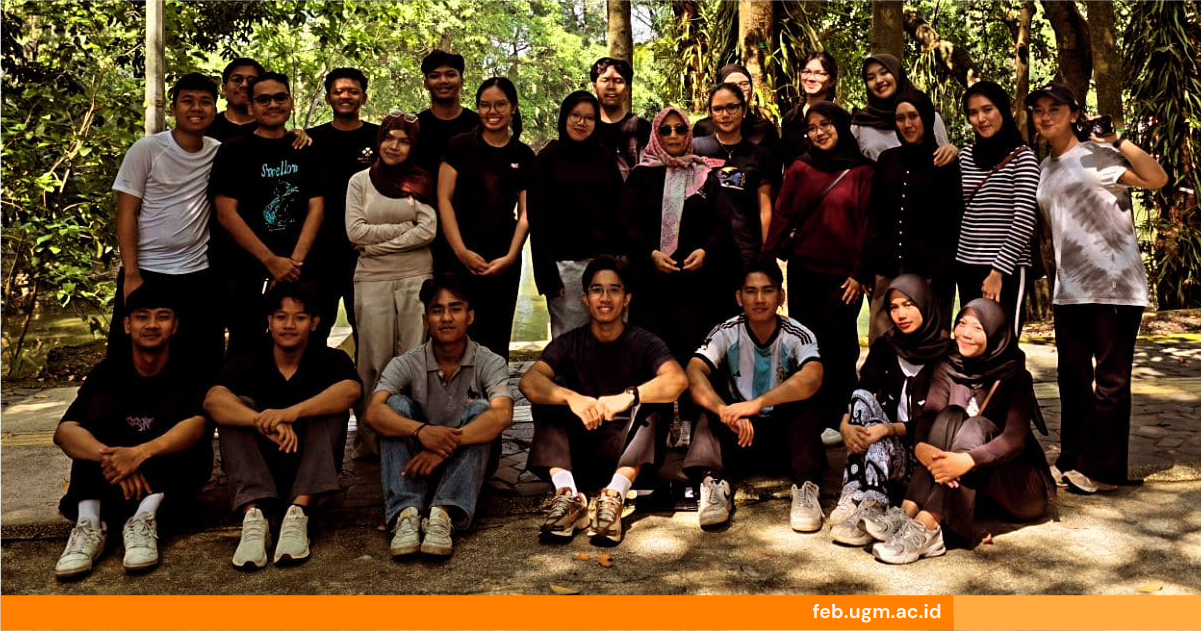
In addition to sending students, FEB UGM also contributes by having faculty members serve as Field Supervisors (DPL). During this period, four FEB UGM faculty members were assigned to accompany students throughout the KKN program: Prof. Wihana Kirana Jaya, Diah Retno Wulandaru, Ph.D., Heni Wahyuni, Ph.D., and Agastya, M.B.A.
“FEB UGM appreciates the dedication of the faculty advisors who helped ensure the program ran smoothly and supported students in navigating various challenges in the field,” said Bayu.
One of the Field Supervisors (DPL) from the Faculty of Economics and Business (FEB) at UGM, Diah Retno Wulandaru, Ph.D., who oversees the Lombok region, expressed both emotion and pride upon seeing 432 FEB UGM students ready to be deployed for the UGM Community Service Program (KKN PPM) Period II of 2026. For her, mentoring the KKN team is always an emotional and extraordinary experience.
“During the KKN, students set aside their department affiliations. In Lombok, the residents won’t ask if you’re an Accounting, Management, or Economics student. What they need is compassion and concrete action,” she explained.
Diah admitted that serving as the Field Supervisor (DPL) presents challenges not only in ensuring that students’ work programs run smoothly but also in unifying students’ egos and perspectives from various faculties onto a single wavelength. Additionally, she emphasized the need to help students understand that engaging with the community is not about lecturing, but about listening and collaborating.
“My message is this: maintain healthy and harmonious relationships with residents. Help develop the economy and tourism in remote areas of the country using the economic knowledge you’ve learned on campus, but convey it in down-to-earth language that touches people’s hearts. Make a tangible societal impact, and return home as a wiser person,” she explained.
Meanwhile, one of the participants in the UGM FEB Community Service Program (KKN), Muh. Taswin (Accounting, 2023), who is part of the Cahea Busel team, is conducting his KKN in Gerak Makmur Village, Sampolawa Subdistrict, and Gaya Baru Village, Lapandewa Subdistrict, South Buton Regency, Southeast Sulawesi. He hopes to apply the knowledge he gained on campus to help the local community. His team is focusing on the theme “Optimizing Maritime Potential and Local Resources as the Main Pillars of Sustainable Development in Gaya Baru and Gerak Makmur Villages,” with a primary program to incubate and develop an MSME ecosystem.
“I hope that through the KKN program, I can make a tangible contribution to the community through programs that are beneficial and aligned with the community’s needs. Additionally, I can learn directly from the community, develop my ability to collaborate and adapt, and work together to foster the development of local potential to create a sustainable impact,” explained Taswin.
During the implementation of the monodisciplinary KKN program, Taswin initiated various educational activities, such as basic financial literacy, teaching children about the function of money and the importance of saving, the “Fun Saturday Afternoon” (Nature School) program, and the establishment of a library to support a culture of reading in the community. In addition, the team also launched a flagship program titled “Blue Coast Eco Festival: Coastal Enthusiasm Toward Sail to Indonesia 2026.”
Joshua Emmanuel Sudarto (Economics, 2023), who was assigned to participate in the Community Service Program (KKN) in Tegalalang, Gianyar, Bali, expressed a similar hope. He hopes that this KKN-PPM program will make a broader contribution to the community.
One of the programs Joshua will implement is introducing the Business Model Canvas (BMC) in a simple, easy-to-understand format for elementary school students. Through an age-appropriate approach, this program aims to instill a basic understanding of entrepreneurship, creativity, and the development of ideas into a simple business model.
Through the KKN-PPM program, FEB UGM students are expected not only to gain community-based learning experiences but also to develop leadership, empathy, and collaboration skills to create solutions that contribute to sustainable development.
Reportage by: Kurnia Ekaptiningrum
Sustainable Development Goals