What makes someone more memorable than other candidates with similar qualifications? One factor is personal branding—the way individuals communicate their uniqueness, competencies, and values to others. For students, building a personal brand during their university years can be an important first step toward the professional world.
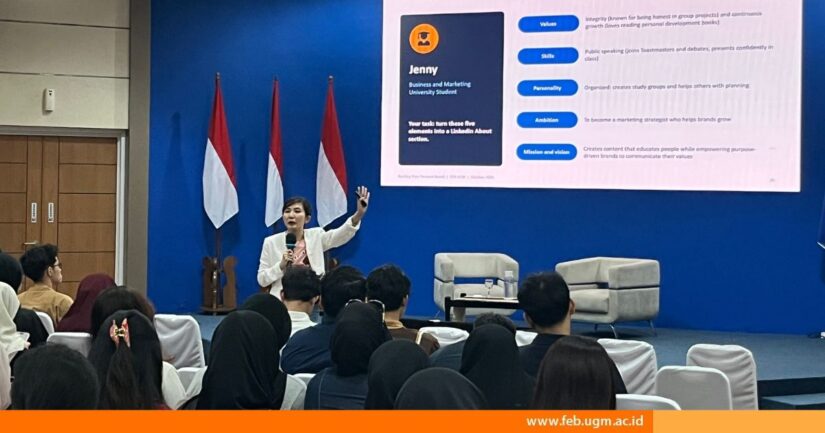
This was highlighted by Maya Septriana, Career Consultant and Chief Program Officer at GIK UGM, during the Mandatory Soft Skill: Personal Branding session on Friday (October 23). During the session, Maya encouraged students to understand personal branding and to identify their unique qualities and potential.
“Personal branding is about how others experience and perceive you, and how you communicate your unique value to the world through the way you speak, act, and present yourself,” she explained.
She emphasized that personal branding is not simply about creating an image or presenting oneself as someone different from who they truly are. Rather, it is built through consistency in how individuals interact with others and express their values.
“You are already a brand. The question is whether you consciously shape it or let it take shape on its own,” she added.
According to Maya, people’s impressions of an individual can be shaped by seemingly simple things, ranging from Google search results and LinkedIn profiles to the way they write emails. These elements can influence how others perceive a person’s professionalism, competence, and character.
Therefore, Maya emphasized that students need to take an active role in building their reputation. A strong personal brand can help individuals stand out among other candidates, strengthen others’ confidence in their competencies, and open up broader opportunities throughout their careers.
Before deciding how they want to be perceived by others, Maya stressed the importance of developing self-awareness by introducing the concept of Ikigai. Through this approach, students were encouraged to identify what they love (What do you love?), what they are good at (What are you good at?), what the world needs (What does the world need?), and what skills can provide economic value (What can you be paid for?).
“These four aspects can help individuals find a clear purpose behind what they do. This purpose provides direction in building a personal brand, including when making choices and navigating their career journey,” she said.
Maya also reminded students that everyone’s career journey unfolds differently. Differences in experience, starting points, and challenges are all part of the process of growth.
“The most important thing is to develop a growth mindset and resilience so that you can continue learning from experience. Rather than giving up when faced with rejection, you need to reflect on what you can learn and improve for the next opportunity,” she concluded.
Reporter: Shofi Hawa Anjani
Editor: Kurnia Ekaptiningrum
Sustainable Development Goals