

The Faculty of Economics and Business, Universitas Gadjah Mada (FEB UGM), is once again supporting students during the Midterm Examination (UTS) period of the 2026/2027 Academic Year, held from October 5 to 16, 2026, through the Mood Booster program.

The government plans to implement free education through the college level.
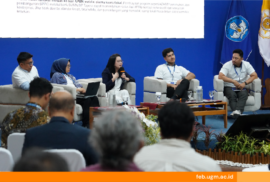
One year after presenting seven economic emergency demands, the Indonesian Economists Alliance (AEI) has once again evaluated developments in national economic policy.

The Job Loss Insurance (Jaminan Kehilangan Pekerjaan/JKP) program is designed to protect workers who experience Termination of Employment (PHK).

Not every journey to a dream university happens on the first try.
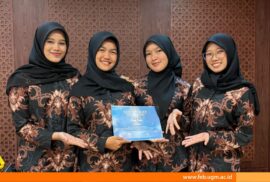
Another remarkable achievement has been made by students of the Faculty of Economics and Business, Universitas Gadjah Mada (FEB UGM).
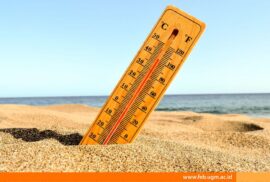
Rising temperatures do not merely make the weather feel hotter; they also affect the income of small businesses in Indonesia.

Poverty remains one of the social challenges faced by countries around the world.
The Faculty of Economics and Business at Universitas Gadjah Mada (FEB UGM) has shown its concern for students affected by the earthquake in East Nusa Tenggara (NTT).
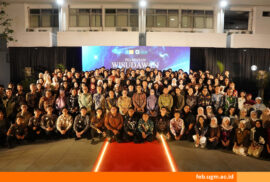
FEB UGM Conferred Degrees on 175 Undergraduate Graduates from the Fourth Graduation Ceremony of the 2025/2026 Academic Year
The Faculty of Economics and Business at Universitas Gadjah Mada (FEB UGM) held a graduation ceremony for 175 undergraduate students from Period IV of the 2025/2026 academic year on Wednesday evening (August 19, 2026) at the FEB UGM Plaza.
Can we help you?