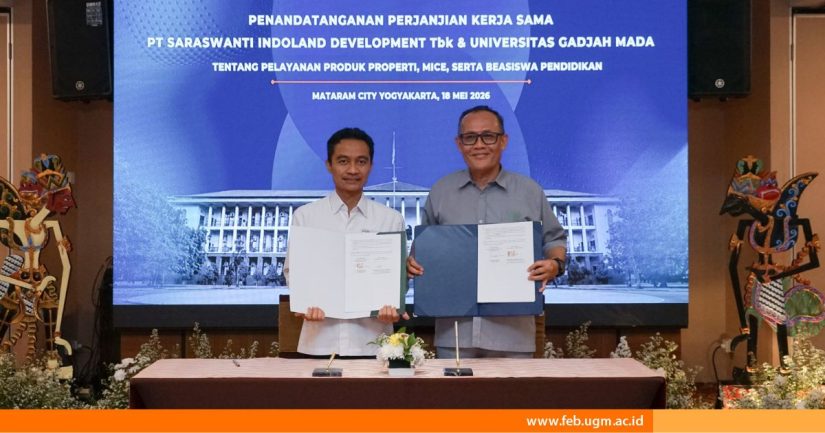
The success of alumni is reflected not only in their professional achievements but also in the opportunities they create for future generations. This spirit is exemplified by Bogat Agus Riyono, an alumnus of the Faculty of Economics and Business, Universitas Gadjah Mada (FEB UGM), through a scholarship initiative integrated with the development of Mataram City in Yogyakarta.
Bogat graduated from the Accounting Department of FEB UGM in 1983 and currently serves as President Director of PT Saraswanti Indoland Development Tbk (SWID).
Together with Hari Hardono, CEO of Saraswanti Group and an alumnus of the Faculty of Agriculture class of 1981, he has developed Mataram City as a vertical residential and hospitality complex that has become one of Yogyakarta’s emerging growth centers. Beyond its business development, the project also carries a commitment to creating sustainable social impact through support for higher education.
Through a collaboration between SWID and Universitas Gadjah Mada, the company has committed to allocating 1 percent of every property unit purchase transaction and MICE (Meeting, Incentive, Convention, and Exhibition) facility usage within SWID’s hotel network made by members of the UGM community to a scholarship fund.
“As a tangible contribution to education, this partnership introduces an innovative reciprocal scholarship scheme. The funds collected will accumulate, and official distribution will take place each year to support UGM students,” Bogat said during an interview on Thursday (June 4, 2026).
In addition to the scholarship program, the partnership also offers various benefits to the UGM community, including students, lecturers, administrative staff, their immediate families, and alumni networks. Members of the UGM community are eligible for special discounts on hotel room bookings and preferential pricing for apartment and villa ownership in SWID developments.
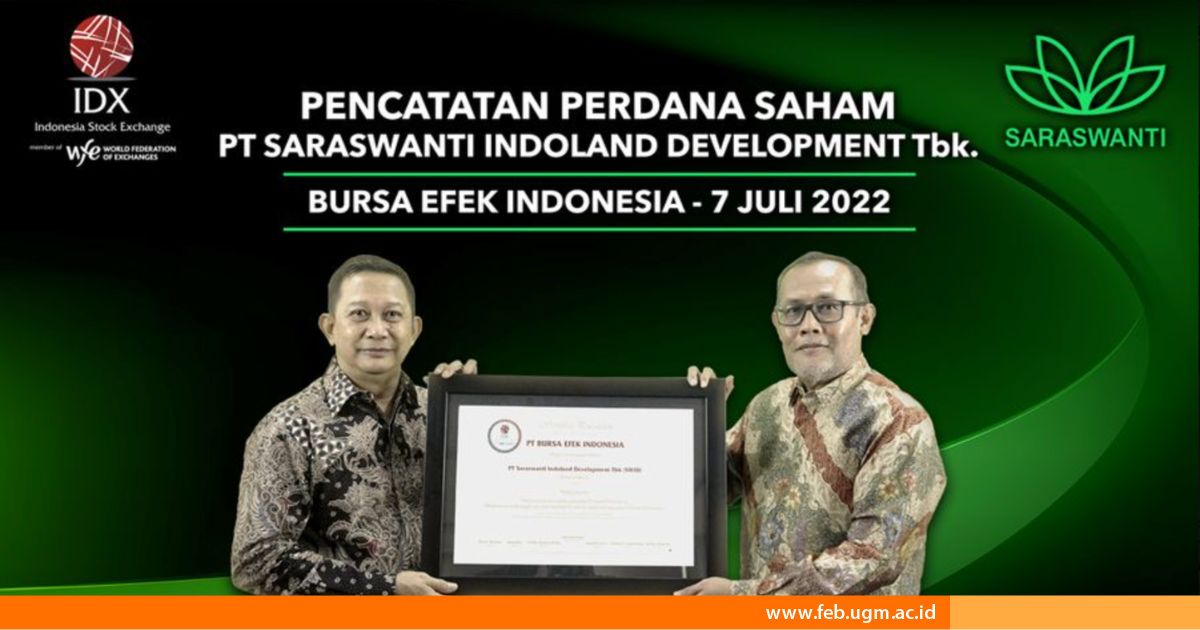
“For us, collaborating with UGM is a genuine form of giving back to our alma mater. UGM has provided us with invaluable knowledge, skills, and mental resilience, enabling us to compete in business and in life. It would not be an exaggeration to say that UGM transformed our lives and empowered us to become useful members of society. Now, it is our turn to contribute in return,” said Bogat, who also serves as Vice Chairman of KAFEGAMA.
For Bogat, the initiative is not merely part of a corporate social responsibility program but rather a heartfelt expression of gratitude to the institution that played a significant role in shaping his life. He described the contribution as a personal calling.
His commitment stems from his own experience as a student at UGM. Bogat recalls how the campus environment helped shape his character during his university years, when classes were held in UGM’s Central Building.
According to him, the relatively long study period at that time fostered strong bonds among students. They not only knew their classmates but also formed close relationships with students from various cohorts. These experiences created a sense of solidarity that has endured for decades after graduation.
“In the past, completing a degree could take anywhere from five to eight years. Yet it was precisely this duration that allowed us to build exceptionally strong friendships. Imagine being able to know students from five or even six different cohorts,” he recalled.
This deep emotional connection to his alma mater inspired the scholarship program now implemented through SWID. In his view, alumni success is inseparable from the education and opportunities provided by the university.
The initiative also demonstrates how collaboration between the private sector and higher education institutions can generate sustainable benefits. Every business transaction not only creates economic value but also directly expands educational opportunities for students.
When asked about the importance of maintaining solidarity with one’s alma mater, Bogat encouraged fellow UGM alumni to preserve the spirit of togetherness that has long characterized the UGM family.
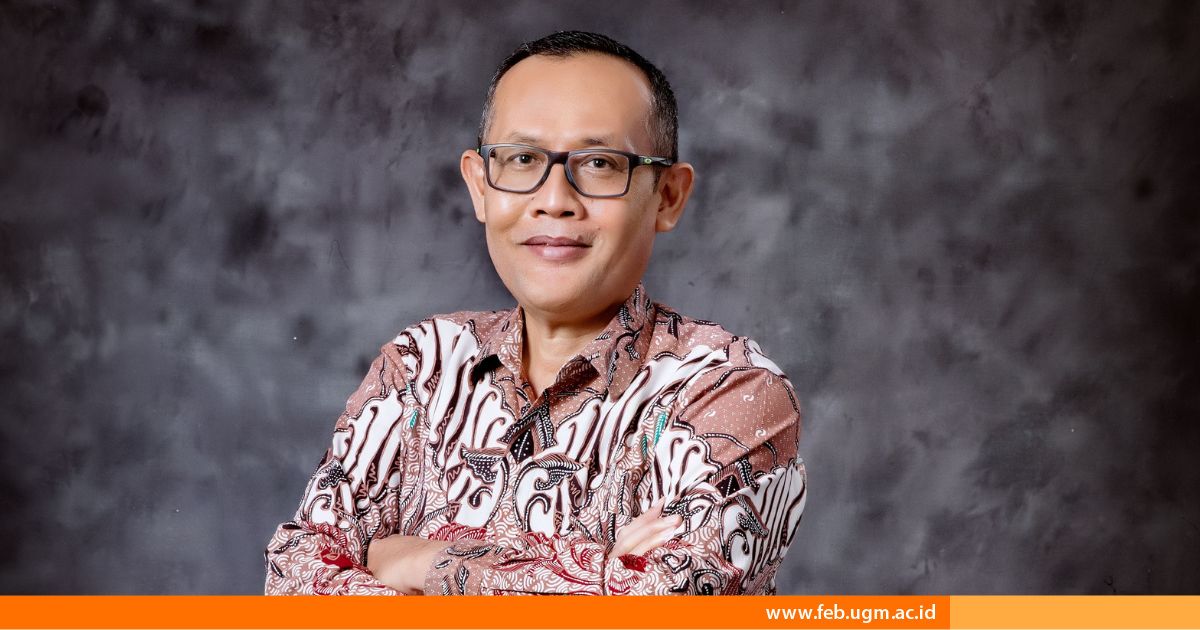
“Continue to nurture the spirit of togetherness, live harmoniously, and always strive to be beneficial to others and to our beloved alma mater,” he said.
The values of Guyub (togetherness), Rukun (harmony), and Migunani (being beneficial) embodied in this collaboration demonstrate that alumni contributions can take many forms, including philanthropic initiatives integrated with business activities. Through this effort, FEB UGM alumni are not only contributing to economic development but also helping create pathways for future generations to access better educational opportunities.
The initiative led by Bogat Agus Riyono serves as an example of how the relationship between alumni and their alma mater can continue to generate meaningful impact. Combining professional success with a commitment to education can have a positive impact on society as a whole and future generations.
Reported by: Kurnia Ekaptiningrum
Photo: SWID Documentation
Sustainable Development Goals