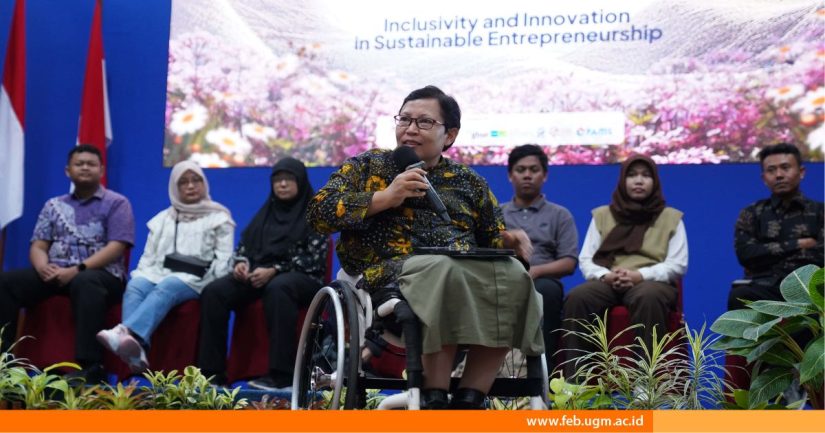
Inclusivity is increasingly recognized as a business strategy rather than merely a form of corporate social responsibility. When diversity is embedded into business strategy, inclusivity can become a source of innovation, expand market reach, and enhance a company’s competitiveness.
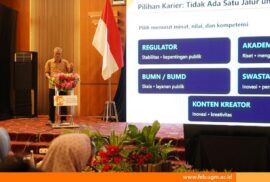
This perspective became the central focus of the session “Building Inclusive Business: Creating Value Through Disability Inclusion”, held as part of Global Summer Week (GSW) 2026 on Wednesday, July 15, 2026. Wuri Handayani, S.E., Ak., M.Si., M.A., Ph.D., a lecturer at the Department of Accounting, Faculty of Economics and Business, Universitas Gadjah Mada (FEB UGM), and Chair of UGM’s Disability Services Unit (ULD), explained that inclusive businesses position vulnerable groups, including persons with disabilities, as integral participants in economic activities. According to her, inclusion goes beyond ensuring access to services it involves removing barriers so that everyone has equal opportunities to participate and contribute.
“Inclusion is a process through which people, regardless of their background, gender, age, religion, education, or disability, have equal opportunities in every aspect of life. Inclusive business means placing these vulnerable groups at the heart of vital economic activities by removing existing barriers,” she explained.
Wuri also highlighted why businesses today need to pay greater attention to persons with disabilities. Around 16% of the world’s population lives with a disability, while Indonesia is estimated to have approximately 43.2 million persons with disabilities. These figures demonstrate that persons with disabilities are not merely a group requiring accessibility but also represent a significant market with substantial economic potential.
She then introduced the concept of the Purple Economy, an approach that frames inclusivity as a strategy for building a stronger, more sustainable economic system. Companies that design inclusive products, services, and workplaces are better equipped to respond to society’s diverse needs and are more likely to drive innovation.
“The benefits of embracing inclusivity are not only experienced by persons with disabilities but also by the company as a whole. Innovation can flourish, and market reach can expand through stronger inclusive values,” she said.
Rather than ending with theoretical discussions, the session invited GSW 2026 participants to deepen their understanding through hands-on experience. Eight representatives from UGM’s Disability Services Unit (ULD) joined the session as resource persons and were assigned to each discussion group. Participants interviewed them to gain insights into the daily experiences, challenges, and needs of persons with disabilities.
This process encouraged participants to recognize that effective solutions are built not on assumptions but on a genuine understanding of users’ lived experiences. The insights gathered were then used to evaluate and refine the business ideas developed in previous sessions, ensuring that they better addressed the needs of future users with disabilities.
Reporter: Najwa Anggi Namira
Editor: Kurnia Ekaptiningrum
Sustainable Development Goals