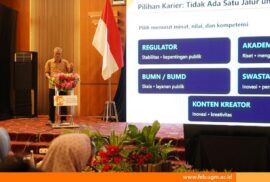
Two and a half centuries after Adam Smith published *An Inquiry into the Nature and Causes of the Wealth of Nations*, the Scottish economist’s ideas continue to be a topic of discussion in understanding economic growth, productivity, markets, trade, and the role of government.
To commemorate the 250th anniversary of the publication of this monumental work, the Faculty of Economics and Business at Gadjah Mada University (FEB UGM), in collaboration with the Adam Smith Business School at the University of Glasgow, held a forum titled “The Relevance of Adam Smith’s Thinking in The Wealth of Nations for Current Economic Development” on Friday, August 21, 2026, at the Auditorium of the FEB UGM Learning Center Building.
This forum is part of a series of global celebrations marking the 250th anniversary of The Wealth of Nations, organized by the University of Glasgow and the Adam Smith Business School in collaboration with various partner institutions worldwide. FEB UGM is one of the international partners in this series.
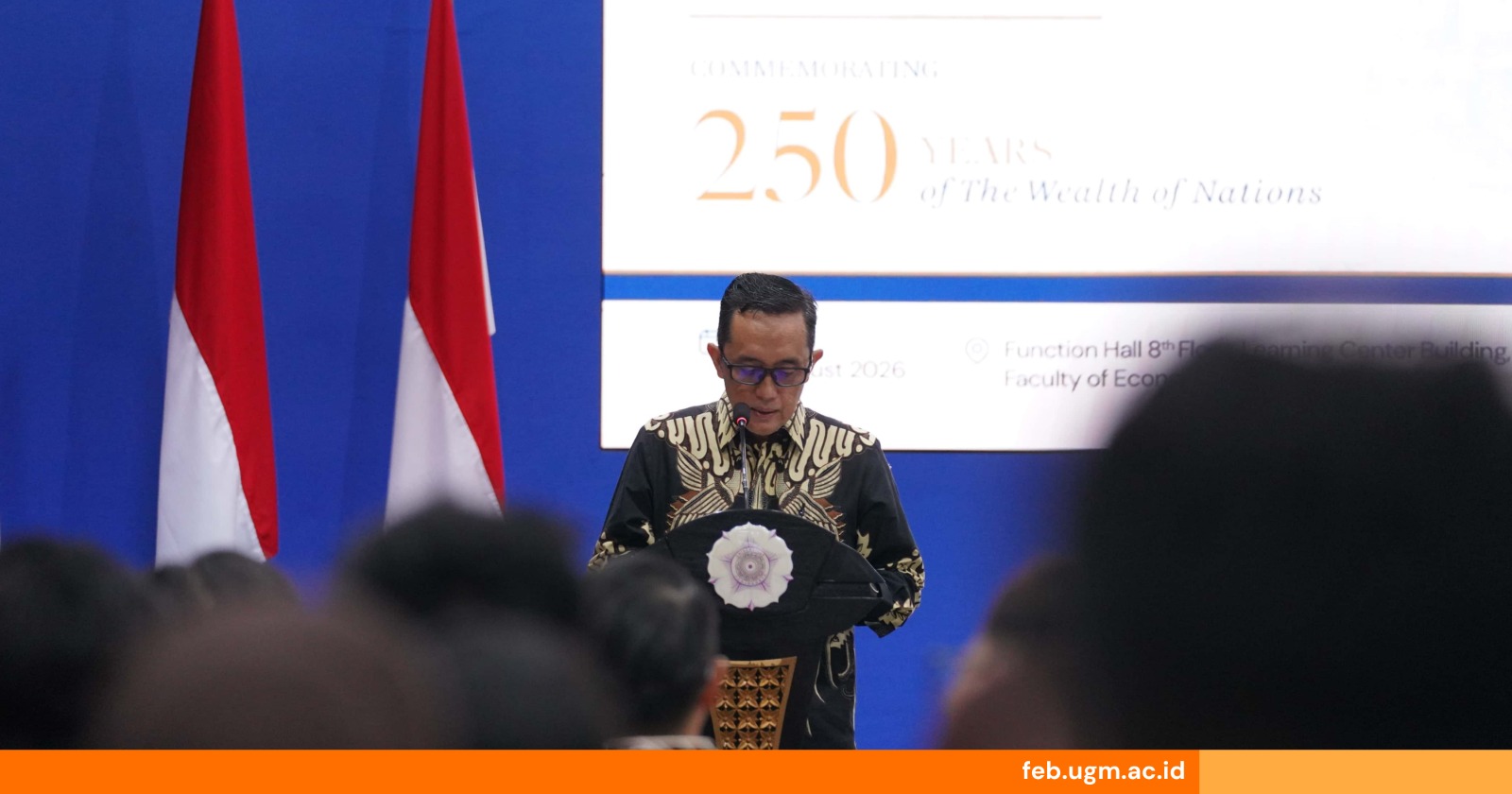
The Dean of the Faculty of Economics and Business at Gadjah Mada University (FEB UGM), Prof. Dr. Didi Achjari, S.E., M.Com., Ak., CA., stated that the 250th-anniversary celebration of *The Wealth of Nations* serves as an opportunity to revisit Adam Smith’s ideas in the context of today’s economic challenges.
“Two and a half centuries have passed, but Smith’s ideas on the division of labor, market dynamics, and the role of the state are far from being mere historical relics. For Indonesia, as a dynamic developing country facing the complexities of modern development, these ideas remain relevant and continue to resonate,” he explained.
Didi noted that the forum serves as a bridge between academic research and the formulation of relevant, actionable policies. This collaboration further strengthens the academic ties between the Faculty of Economics and Business (FEB) at UGM and the Adam Smith Business School at the University of Glasgow, while also opening opportunities to examine Adam Smith’s ideas in a greater context. Smith’s ideas are not merely viewed as a historical legacy but as a perspective that remains dynamic for understanding and responding to various strategic choices in Indonesia’s current economic development.
Prof. Wendy Loretto, Dean of the Adam Smith Business School at the University of Glasgow, stated that the 250th anniversary of the publication of The Wealth of Nations provides an opportunity to reexamine Adam Smith’s ideas in light of today’s global challenges. According to her, although the world now faces issues that Smith could never have imagined, such as artificial intelligence, climate change, geopolitical dynamics, uncertainty, and demographic shifts, the fundamental questions Smith raised remain relevant.
Wendy also highlighted the importance of collaboration between the University of Glasgow and UGM to expand academic discussion of Adam Smith’s ideas. She cited the partnership between the Adam Smith Business School at the University of Glasgow and the Faculty of Economics and Business (FEB) at UGM, which has been in place since 2023 through double-degree programs, faculty exchanges, and research collaborations, as a crucial foundation to be further developed. She hopes that this discussion will not only serve as a space to understand Adam Smith’s ideas but also encourage academics, researchers, students, business leaders, and policymakers to help shape the future of economic and social progress.
Through this forum, the Faculty of Economics and Business at UGM and the Adam Smith Business School are not merely commemorating the publication of the work in 1776. Hosting the forum in Indonesia provides a dedicated space for discussion of the relevance of Adam Smith’s ideas to Indonesia’s current situation. One of Smith’s primary concerns was why some countries become wealthy. In contrast, others do not, and Indonesia’s journey toward moving beyond middle-income country status is linked to many factors identified by Adam Smith. The division of labor and productivity are tied to Indonesia’s demographic conditions and skill gaps. A large working-age population can only increase output if it possesses the appropriate skills and can be absorbed into the workforce.
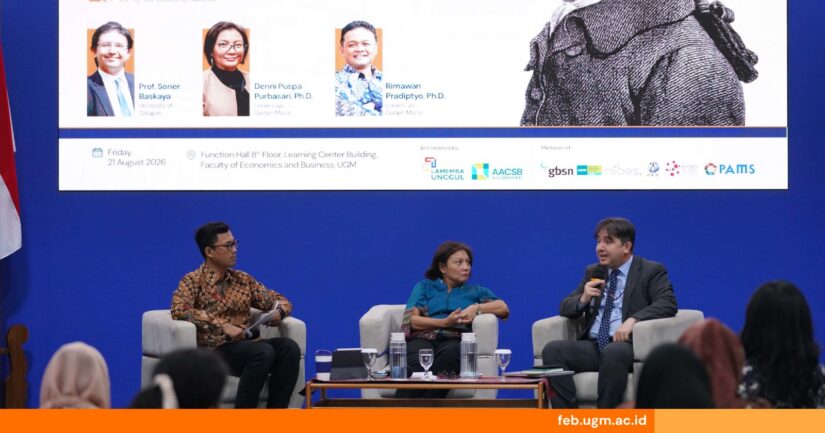
This forum featured three speakers: Professor Soner Baskaya from the Adam Smith Business School at the University of Glasgow, and two academics from the Faculty of Economics and Business (FEB) at UGM, Denni Puspa Purbasari, Ph.D., and Rimawan Pradiptyo, Ph.D.
Professor Soner Baskaya brought a monetary economics perspective and his experience as a former central banker. His academic focus includes monetary policy, central banks, financial stability, capital flows, macroprudential policy, and the labor market. These perspectives will be linked to Adam Smith’s discussions on capital, money, and banking.
Meanwhile, Dr. Denni Puspa Purbasari discussed Adam Smith’s ideas from the perspective of labor economics and skills development policy. Her experience leading the Prakerja Card Program Management Office provided valuable context for exploring the relationship among productivity, the division of labor, education, skills, and the role of government.
Dr. Rimawan Pradiptyo, on the other hand, brought a behavioral and experimental economics perspective. His research on human behavior, the economics of crime and corruption, and the design of sanctions opened a discussion about how Adam Smith’s ideas regarding human motivation, justice, rules, and institutions can be interpreted through the lens of modern economic science.
This forum not only enriches our understanding of the relevance of Adam Smith’s ideas to current Indonesian economic policy but also further strengthens the cooperative relationship between the Faculty of Economics and Business, UGM, and the Adam Smith Business School at the University of Glasgow.
Reportage by: Kurnia Ekaptiningrum
Sustainable Development Goals