
The Undergraduate Academic Guidebook of the Faculty of Economics and Business Universitas Gadjah Mada (FEB UGM) serves as an official reference for students to navigate their academic journey. It provides comprehensive information on curriculum structure, academic regulations, grading systems, and student responsibilities. This guidebook is designed to help students plan their studies effectively and uphold academic standards throughout their time at FEB UGM.
Related Posts

The decline in the poverty rate in the Special Region of Yogyakarta (DIY) in March 2026 is considered a positive achievement. However, Wisnu Setiadi Nugroho, Ph.D., a lecturer at the Department of Economics, Faculty of Economics and Business, Universitas Gadjah Mada (FEB UGM), said that behind this achievement lie persistent regional and social inequality issues that require greater attention.
The Central Statistics Agency (BPS) released in early August showed that the percentage of people living in poverty in the Special Region of Yogyakarta in March 2026 fell by 0.38 percentage points from September 2025.

After completing their undergraduate studies, graduates in Indonesia need more than a university degree to navigate the increasingly competitive job market. So, what is still missing?
Today’s job market demands talent that is truly adaptable, rather than simply degree holders.
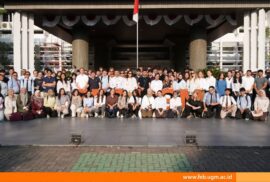
FEB UGM welcomed 95 new international students for the first semester of the 2026/2027 academic year. The students come from 42 universities around the world, comprising 76 undergraduates and 19 postgraduates.

Industrial waste is often perceived as a problem. However, for Andre Suryaman, waste materials that would typically end up in landfills became the starting point of a business capable of reaching the global market.