
After completing their undergraduate studies, graduates in Indonesia need more than a university degree to navigate the increasingly competitive job market. So, what is still missing?
Today’s job market demands talent that is truly adaptable, rather than simply degree holders. This condition has given rise to a competency gap, namely the gap between job seekers’ competencies and the skills required by the workplace. This gap prompted Ratis Maharanidewi Cesarina to examine the role of internship programs in bridging the divide.
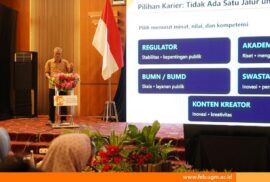
She explored the issue in a 3 Minute Thesis presentation titled “Can MSIB Internships Really Improve Students’ Learning Agility?” In her undergraduate thesis in the Management Study Program, Ratis examined the impact of work-based learning on students’ learning agility during their participation in the MSIB internship program under the Kampus Merdeka initiative.
Under the supervision of Sari Sitalaksmi, M.Mgt., Ph.D., the study involved 203 alums and active students who had participated in the MSIB internship program between 2021 and 2024. The internship program was a pilot initiative organized by the Ministry of Education, Culture, Research, and Technology.
The findings showed that work-based learning gained through internships positively impacted students’ learning agility. Through direct workplace experience, students not only gained a better understanding of theory but were also trained to navigate real-world challenges.
They learned to adapt to complex work environments, learn from mistakes and improvements, and make use of feedback provided by workplace mentors.

“This research shows that internship programs can serve as a strategic solution to reducing the competency gap between university graduates and the needs of Indonesia’s industries,” said Ratis, who graduated from the Management Study Program at FEB UGM in February 2026.
For students, she explained, internships provide benefits beyond gaining work experience. They also help build career readiness and equip students with competencies that are more relevant to today’s workplace demands. For organizations, internships provide an opportunity to identify, assess, and develop potential candidates before they enter the formal recruitment process.
“Thus, collaboration among the government, universities, and industries through internship programs can contribute to creating young Indonesian talents who are better prepared, competent, and capable of competing in the workforce,” she concluded.
The full video of the 3 Minute Thesis presentation, titled “Benarkah Magang MSIB Meningkatkan Learning Agility Mahasiswa?”, is available at ugm.id/MagangMSIB.
Report: Dwi Zhafirah Meiliani
Editor: Kurnia Ekaptiningrum
Sustainable Development Goals