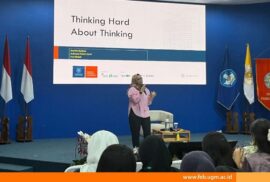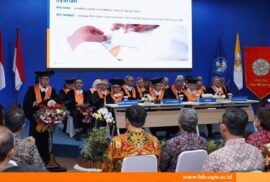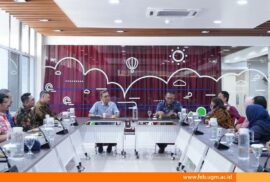
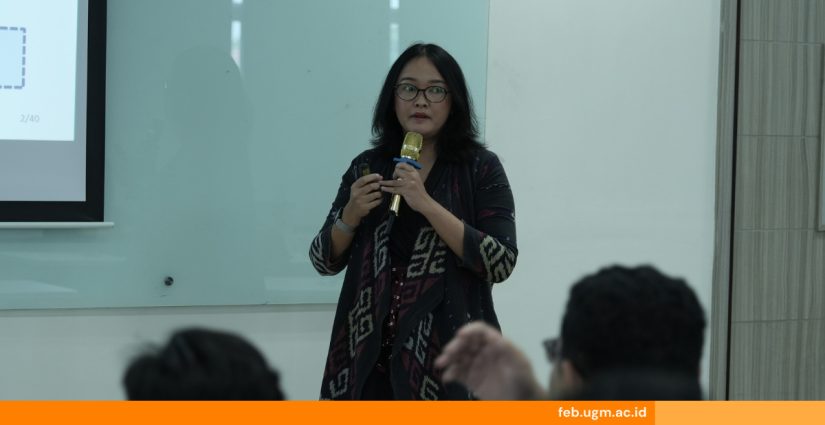
Access to part-time formal childcare plays a vital role in increasing women’s labor force participation in Indonesia, particularly for mothers with preschool-aged children. This issue came to light during the SinarKu public seminar, titled ‘Kindergarten, Kinship, and Women’s Labour Supply’, which took place on Wednesday, 18 February 2025.
Dyah Pritadrajati, a doctoral student at the Australian National University (ANU), explained that Female Labor Force Participation (LFP) in Indonesia remains stagnant. Despite economic growth and improved educational attainment among women, Indonesia’s female labor force participation rate has hovered around 50 percent over the past two decades.
In fact, women’s workforce participation plays a crucial role in driving the national economy. It contributes to improving household welfare, reducing poverty, fostering economic growth, and promoting gender equality.
“One of the main factors influencing women’s decision to work is childcare responsibility. We can observe a significant difference between women who have children and those who do not,” she explained.
Women without children tend to have higher labor force participation, while women with children, especially young children, have lower participation rates. This phenomenon is known as the motherhood penalty. In contrast, men’s labor force participation remains relatively stable even after having children.
“One of the key barriers is that women bear a disproportionate share of domestic work and childcare responsibilities, reinforced by social norms. It limits women’s ability to participate in the labor market, particularly when their children are still young,” she added.
Dyah noted that the ratio of female-to-male labor force participation in Indonesia is only about 0.6. This figure is significantly lower than in high-income countries and many other developing nations, indicating persistent gender disparities in the labor market.
She further explained that many countries have responded to this issue by expanding access to early childhood education programs that support child development while enabling women’s participation in the workforce. Indonesia has also increased access to early childhood education through a rapid expansion of kindergartens (TK), which grew by more than 30 percent in 2023. These programs generally provide around three hours of daily education, giving mothers time to engage in other activities.
“The findings from my research show that access to kindergarten significantly increases mothers’ labor force participation, including higher employment probability and longer working hours. However, it has not yet led to an increase in formal employment or income,” she stated.
The study indicates that access to kindergarten increases mothers’ labor force participation by approximately 17 percentage points compared to the baseline participation rate. In addition to improving employment opportunities, it also increases mothers’ working hours. Nevertheless, the access has not significantly affected the likelihood of securing formal jobs or growing earnings.
“Most kindergarten services in Indonesia operate for limited hours, and quality part-time job opportunities remain scarce. However, the positive impact of kindergarten access persists even in households where grandparents provide childcare. It suggests that kindergarten services complement rather than replace family-based care,” she elaborated.
The research also shows that the presence of kindergarten does not significantly change the division of childcare responsibilities within households. The adjustments primarily come from mothers reallocating their own time rather than increased involvement from fathers, meaning women continue to face a double burden of domestic and paid work.
Through these findings, Dyah emphasized the importance of policies that not only expand access to early childhood education but also improve its quality, affordability, and duration. Moreover, it is essential to implement more flexible labour policies to empower women and allow them to participate more extensively in the workforce.
“The expansion of kindergarten services is an important step, but its impact will be more optimal if supported by a more comprehensive childcare system and more inclusive job opportunities for women,” she concluded.
Reported by: Shofi Hawa Anjani
Editor: Kurnia Ekaptiningrum
Sustainable Development Goals