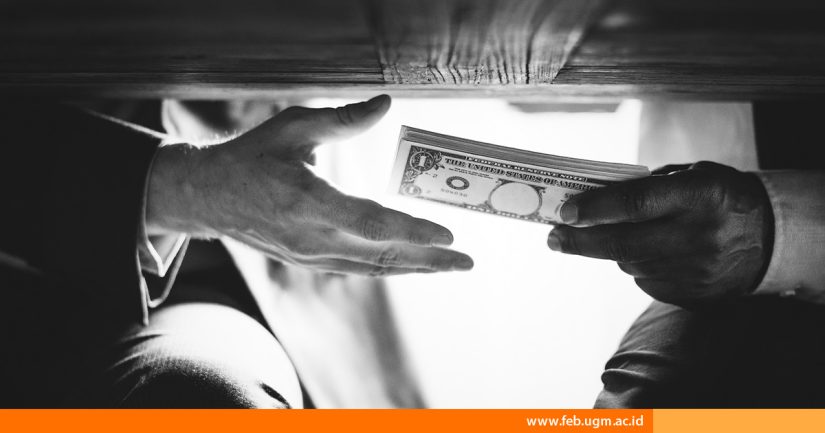
The practice of money laundering, or Tindak Pidana Pencucian Uang (TPPU), has become a major challenge in uncovering and combating corruption cases in Indonesia. Complex and layered transaction schemes make illicit financial flows difficult to trace.
Nanang Findhi Ismail, Head Regional Chair of SIFI Yogyakarta and an auditor at the BPK Representative Office of Yogyakarta, explained that money laundering is the process of disguising the origin of assets obtained from criminal activities to make them appear legitimate and difficult to track.
He likened the practice to washing dirty clothes to make them look clean. Various financial transaction schemes transform assets derived from illegal activities to make them appear lawful. This practice falls under the remit of Law No. 8 of 2010 on the Prevention and Eradication of Money Laundering in Indonesia.
“Essentially, TPPU can stand alone, but it often develops from predicate crimes such as corruption. Therefore, its detection is crucial to strengthen legal proof,” he stated in the FEB UGM Podcast titled Bincang Investigasi dan Anatomi Fraud: Money Laundering.
He further explained that tracing financial flows (follow the money) is key to solving such cases. Through this approach, authorities can track funds across multiple layers of transactions, even identifying the ultimate beneficial owner. This method also supports the construction of unlawful acts and helps optimize asset recovery.
In corruption cases, there are three main elements: unlawful acts, state financial losses, and the causal relationship between the two. Despite often involving significant financial losses, asset recovery rates remain relatively low.
“Based on KPK data from 2016, asset recovery from cases violating Articles 2(1) and 3 of the Anti-Corruption Law was less than 10%. With optimal financial tracing, the chances of recovering state losses can be significantly improved,” he added.
Nanang also shared an example of a procurement case in a state-owned enterprise (BUMN). The scheme involved fictitious projects executed through dozens of contracts. Funds paid to contractors were partially funneled to certain parties, including project owners. These layered transactions became key evidence in proving unlawful conduct.
“Proceeds of crime are rarely visible at first. They may be withdrawn in cash, converted into foreign currency, or used to purchase assets such as palm oil plantations. It is what makes the tracing process complex and time-consuming,” Nanang explained.
To address these challenges, cross-institutional collaboration is essential, both domestically and internationally. In practice, handling money laundering cases often involves joint investigations between law enforcement authorities and investigative auditors to combine legal and financial expertise.
Nanang emphasized that strengthening law enforcement officials’ commitment and capacity is crucial, particularly in their skills and knowledge for handling complex cases. At the same time, the role of the public, especially students, is equally important in prevention efforts, as they uphold integrity and honesty.
“Simple actions such as not cheating and having the courage to reject illegal practices should be cultivated. In addition, being willing to speak up or report through whistleblowing mechanisms is a concrete step that can be taken,” Nanang concluded.
The full video of the program Bincang Investigasi dan Anatomi Fraud: Money Laundering can be accessed at: http://ugm.id/BincangInvestigasiMoneyLaundering
Reported by: Shofi Hawa Anjani
Editor: Kurnia Ekaptiningrum
Sustainable Development Goals