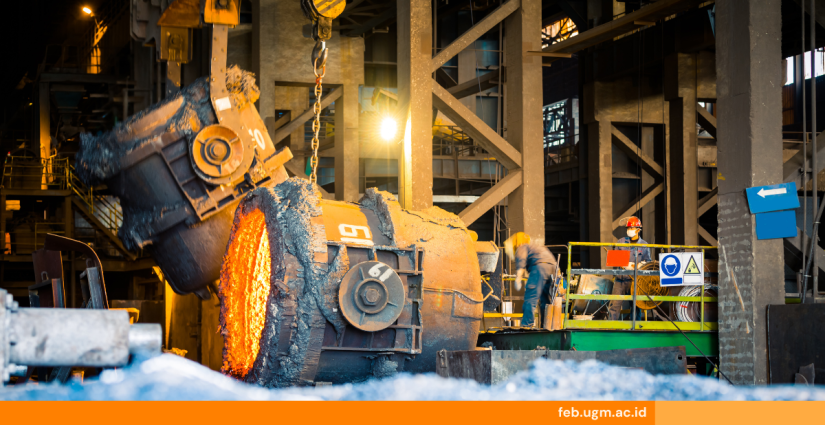
The development of the mining industry often plays a key role in driving regional economic growth. However, does the presence of mining industries, including nickel processing, always bring prosperity to surrounding communities?
Research conducted by Cahya Danu Rahman, an alumnus of the Master of Development Economics (MEP) program at the Faculty of Economics and Business, Universitas Gadjah Mada (FEB UGM), shows that the impact of nickel downstreaming is not uniform. Through his master’s thesis, he examined the effects of the nickel downstreaming policy, particularly through smelter development, on household welfare across several districts in Indonesia.
The study utilized data from the National Socioeconomic Survey (Susenas) from 2014 to 2022 and applied the Difference-in-Differences (DiD) method. This approach compared changes in per capita household expenditure between districts with and without smelters.
The findings indicate that smelter development has had positive impacts in several regions. The construction of nickel smelters in Morowali, North Morowali, Konawe, and South Halmahera increased household per capita expenditure by 10-15%.
However, a different outcome emerged in Central Halmahera. In this region, per capita household expenditure declined by approximately 5 percent.

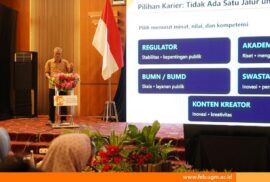
“These findings show that the impact of downstreaming is not uniform. Therefore, more contextual policy strategies are needed to ensure that the benefits are distributed more evenly,” Danu stated during the 3 Minute Thesis program titled The Impact of Nickel Smelter Development on Household Welfare in Indonesia.
Furthermore, Danu explained that the Growth Incidence Curve (GIC) analysis showed that, in the early stages, the economic benefits of smelter development were felt more strongly by lower-expenditure households. However, over time, the growth tended to benefit higher-expenditure households more significantly.
According to Danu, this pattern signals that the effects of downstreaming depend heavily on local conditions. Understanding this pattern enables us to design future policies that are more context-specific, ensuring that smelter development increases industrial value-added and genuinely promotes welfare across all segments of society.
These findings affirm that nickel downstreaming holds significant potential for regional development. Nevertheless, its success hinges on the implementation of appropriate policies to ensure equitable distribution of its benefits.
The full video of the 3 Minute Thesis program titled The Impact of Nickel Smelter Development on Household Welfare in Indonesia can be accessed at: http://ugm.id/DampakHilirisasiNikelTerhadapKesejahteraan
Reported by: Kurnia Ekaptiningrum
Sustainable Development Goals