Having a business idea with social impact is an important first step toward creating meaningful change. However, turning that idea into a sustainable business requires the right funding strategy and strong collaboration.
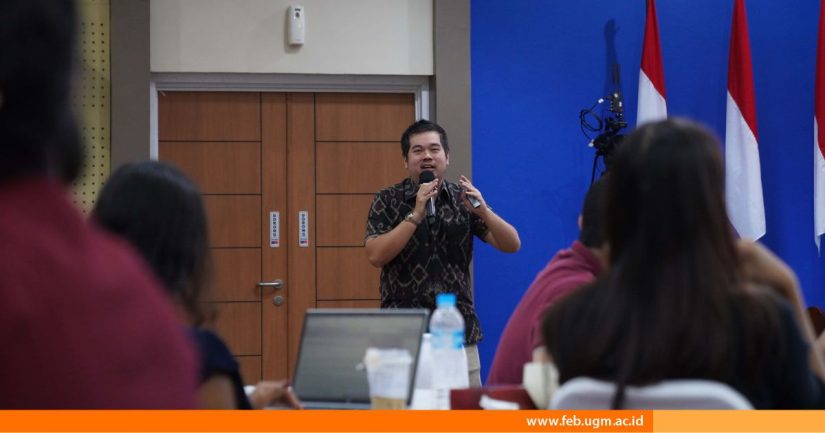
This was the key message shared by Stanislaus MC Tandelilin, Co-founder and Chief Operating Officer (COO) of PrimaKu, during the Impact Financing and Network for Inclusive Innovation session at the Global Summer Week (GSW) 2026 on Friday (July 17). Participants explored how financing strategies can strengthen innovations that generate social impact while remaining financially sustainable.
Drawing on his entrepreneurial journey, Stanislaus shared his experience building several Indonesian startups, including the fashion e-commerce platform Sorabel, the peer-to-peer lending platform ModalRakyat, and the parenting application PrimaKu. Based on these experiences, he explained that a startup’s success depends not only on the quality of its idea but also on making the right financing decisions. According to him, there is no one-size-fits-all funding instrument because every business model has unique financial needs.
Stanislaus also reflected on the closure of Sorabel. He admitted that the company’s failure was not solely due to changing market conditions but was also influenced by internal decisions, particularly in its investor selection. Choosing the wrong investors, he noted, became one of the biggest factors behind the company’s downfall, highlighting the importance of partnering with stakeholders who share the same vision and mission.
“From Sorabel’s experience, I learned that choosing the wrong partner can negatively affect the entire business,” he said.
He further introduced various financing mechanisms, including grants, debt, equity, and blended finance. He emphasized that the choice of financing instrument should align with the business’s characteristics, such as profit margins, cash flow, and growth stage. For social enterprises, blended finance offers a more suitable approach because it bridges the funding gap for businesses that prioritize social impact while pursuing financial sustainability.
“Blended finance can be a solution for businesses that have already proven their viability but are not yet large enough to attract commercial investors,” he explained.
To reinforce participants’ understanding, the session continued with a case-based group discussion. Participants analyzed six companies from different countries: Waste4Change and Du Anyam from Indonesia, M-KOPA and Sanergy from Kenya, Zipline from Rwanda, and One Acre Fund from East Africa. They were tasked with identifying the most appropriate financing model for each company based on its business characteristics.
At the end of the session, Stanislaus summarized three key lessons for aspiring entrepreneurs. First, every business model requires a different financing instrument. Second, strategic partners represent a form of capital whose value often exceeds the value of financial investment alone. Third, the growing impact investment ecosystem presents greater opportunities for businesses capable of delivering solutions to social challenges.
Reporter: Najwa Anggi Namira
Editor: Kurnia Ekaptiningrum
Sustainable Development Goals