In a meeting room, a female employee shares an idea that is largely overlooked. Minutes later, the same idea is repeated by a more dominant colleague, and the entire room nods in agreement. This phenomenon, known as idea hijacking, is just one of many invisible biases that quietly shape workplace decisions every day.
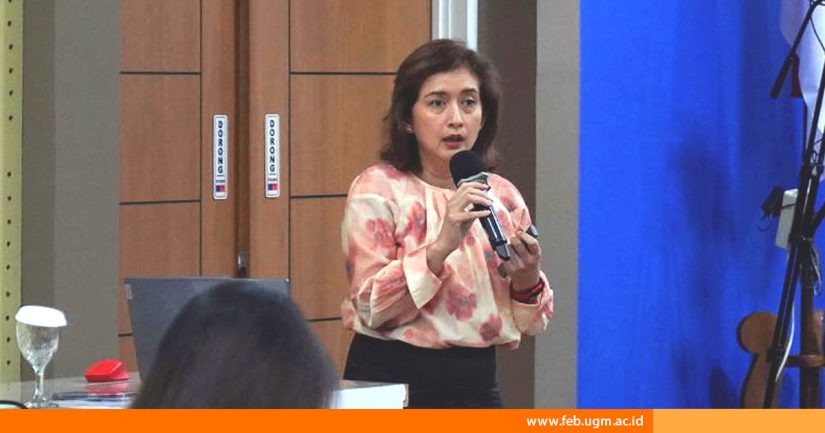
Such hidden biases were the focus of a session led by Herani Hermawan, Head of Services at Citi Indonesia (Citibank), titled “Diversity and Inclusion in the Workplace: Building Fair, Inclusive and Innovative Careers” during Global Summer Week 2026 on Monday (20/7/2026). Herani opened the session by defining the three pillars of diversity, equity, and inclusion (DEI), describing them as an organizational framework designed to ensure fair treatment and full participation for everyone, particularly those from historically underrepresented groups.
“Diversity is about who is in the room. Equity is about who gets into the room. Inclusion is about who helps shape the room,” she said.
Herani explained that workplace bias stems from the human brain’s biological limitations in processing information. She noted that while the brain receives millions of bits of sensory information every second, the conscious mind can process only a tiny fraction of it.
“The human brain processes around 11 million bits of sensory information every second, but our conscious mind can only handle about 40 to 50 bits per second. To prevent overload, the brain relies on automatic pattern recognition. The problem is that these patterns are shaped by media, upbringing, and cultural stereotypes, leading to systematic errors in judgment,” she explained.
Beyond individual bias, Herani highlighted systemic barriers embedded in organizational policies. One example is the network gap, where approximately 70 to 80 percent of job vacancies are never publicly advertised and are instead filled through informal internal networks.
She also pointed to the pedigree filter, in which automated recruitment software screens out qualified candidates simply because they did not graduate from certain universities. Other vague requirements, such as expectations of executive presence, can also create significant room for subjective bias.
Herani introduced the concept of intersectionality, a term coined by Professor Kimberlé Crenshaw to describe how different aspects of a person’s identity overlap, creating unique experiences of discrimination or privilege.
“We shouldn’t see people through a single lens—for example, putting all women into one box or all Asians into another. Those differences actually help us better understand people’s experiences and backgrounds,” she said.
She outlined several characteristics of inclusive teams, including treating mistakes as learning opportunities, implementing transparent promotion criteria based on measurable metrics, and openly acknowledging colleagues whose ideas were initially ignored but later adopted by others.
“Nine out of ten times, trying something new will fail. What matters is what we learn from it,” she said, recalling her experience leading a team review after a newly launched product failed to gain market traction and how openness encouraged team members to share information and lessons learned.
Another hallmark of inclusive teams, she noted, is holding social gatherings during working hours rather than organizing after-work drinking events, which may exclude some employees. In contrast, she identified several warning signs of non-inclusive workplaces, such as homogeneous executive leadership, meeting dynamics dominated by interruptions, and performance evaluations based on vague “gut feelings” instead of clear criteria.
Herani also shared three practical ways to become an ally in the workplace: listen to amplify by speaking up when a colleague is interrupted; audit your circle by expanding professional networks beyond familiar groups; and call in, not call out, by addressing bias privately rather than publicly. Citing research, she added that diverse and inclusive teams make optimal business decisions up to 87 percent of the time.
“Inclusion is not a political goal. It is both a business advantage and a human strength. Embracing diversity makes us more effective, modern leaders—and the kind of leaders organizations are looking for,” she concluded.
Reporter: Dwi Zhafirah Meiliani
Editor: Kurnia Ekaptiningrum
Sustainable Development Goals