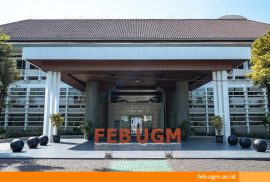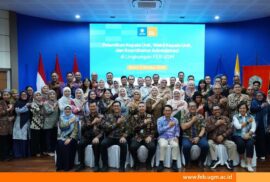
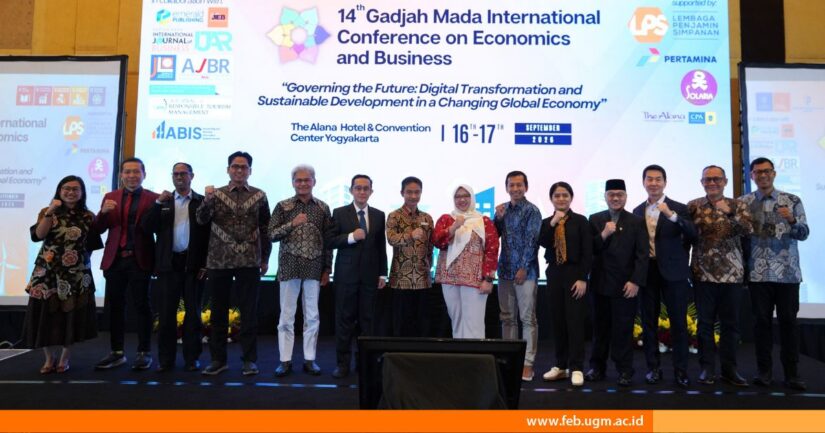
A total of 138 academics, researchers, and experts from various countries gathered to discuss digital transformation and sustainable development amid global change at The 14th Gadjah Mada International Conference on Economics and Business (GAMAICEB). Organized by the Publication Unit of the Faculty of Economics and Business, Universitas Gadjah Mada (FEB UGM), the conference was held on September 16–17, 2026, at The Alana Hotel & Convention Center, Yogyakarta, under the theme “Governing the Future: Digital Transformation and Sustainable Development in a Changing Global Economy.”
In his remarks, Dean of FEB UGM Prof. Dr. Didi Achjari, M.Com., Ak., CA., highlighted that digital transformation presents opportunities for more inclusive economic growth while also creating new challenges in regulation and cybersecurity. Addressing these challenges requires aligning technological advancement with sustainability through smart governance.
According to him, GAMAICEB serves as an important platform for bringing together perspectives from accounting, economics, and management to respond to these changes. Cross-sector collaboration is essential to generating ideas that can address economic challenges while strengthening long-term resilience.
“We hope this conference will serve as a productive forum for sharing insights, building networks, and formulating practical policy recommendations to support long-term economic resilience and shared prosperity,” he said.
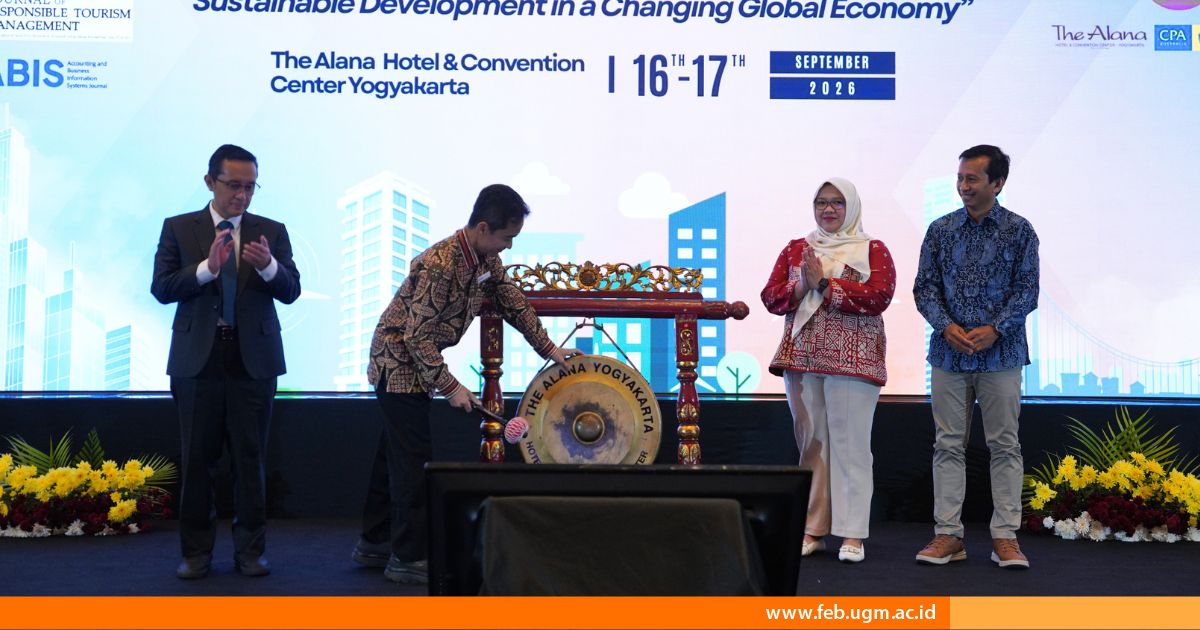
Meanwhile, UGM Vice Rector for Research, Business Development, and Cooperation, Dr. Danang Sri Hadmoko, S.Si., M.Sc., emphasized the importance of cross-country collaboration and dialogue in addressing today’s economic, ideological, and environmental challenges that increasingly transcend national borders.
“Today’s economic, ideological, and environmental challenges are transnational in nature, crossing national boundaries. No single country or institution can address them independently,” he stated.
He also highlighted that the challenges facing nations today extend beyond their ability to adapt to technology. They are also concerned about how technology is used wisely and responsibly. Aligning digital strategies with green innovation and data-driven policies is therefore essential to building a resilient and inclusive economy.
“Digital transformation must not exacerbate inequality or legal vulnerabilities. Instead, smart governance should contribute to social inclusion, environmental sustainability, transparency, and long-term public value,” he said.
He further emphasized the need for cross-country dialogue, shared commitment, and sustained collaboration. Academic forums such as GAMAICEB play an important role in bringing together research, policy, and practice to respond to ongoing changes and challenges.
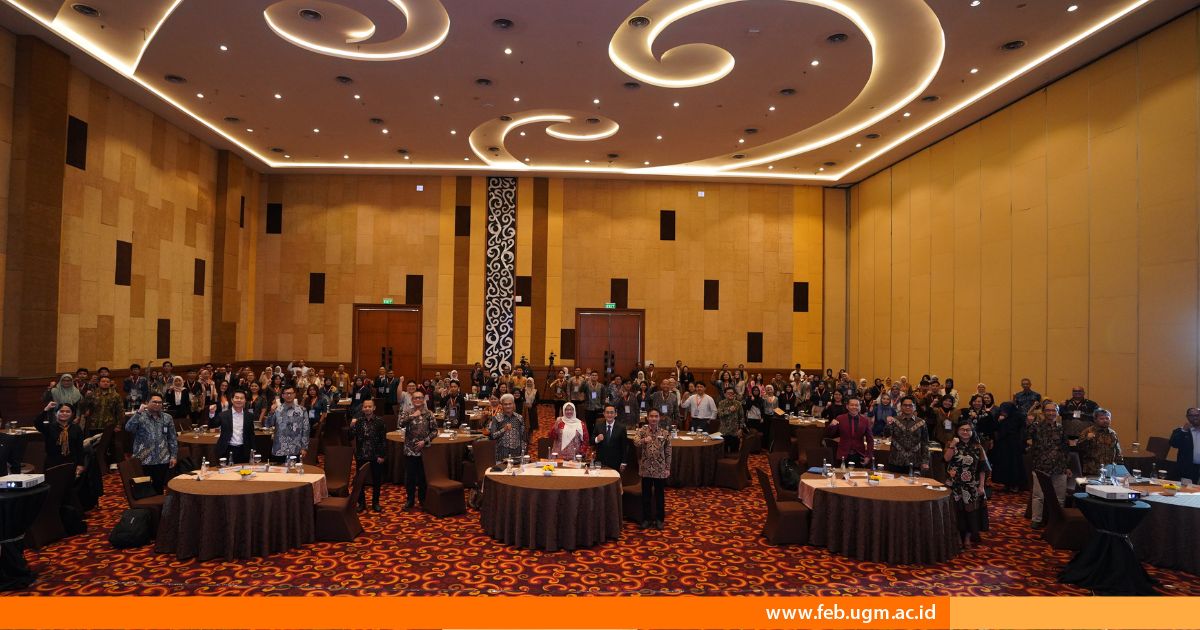
Chair of the GAMAICEB 2026 Organizing Committee, Arika Artiningsih, Ph.D., said that GAMAICEB 2026 brought together 138 participants from 11 countries: Indonesia, Poland, Taiwan, Japan, Hungary, Kazakhstan, Brunei Darussalam, Singapore, Australia, Pakistan, and Mexico. The participants presented research in three main fields: accounting, economics, and management.
“Through interdisciplinary dialogue and cross-sector collaboration, this conference aims to strengthen institutional capacity and promote innovative, resilient, and responsive governance models in addressing the rapidly evolving global economy,” she explained.
The conference featured four keynote speakers: Prof. Syaiful Ali, S.E., M.I.S., Ph.D., from FEB UGM; Dr. Siwage Dharma Negara, Principal Fellow at the ISEAS–Yusof Ishak Institute, Singapore; Dr. Mohd Hairul Azrin Haji Besar from Universiti Brunei Darussalam; and Elinor Kasapidis, Chief of Policy, Standards, and External Affairs at Certified Practising Accountants.
Over the two-day conference, participants took part in parallel paper presentation sessions covering contemporary economic and business issues. The topics included financial accounting, finance and investment, sustainable accounting/business, corporate governance, marketing, human resources, auditing, strategic management, entrepreneurship, economics, and leadership and organization.
Report: Kurnia Ekaptiningrum
Sustainable Development Goals