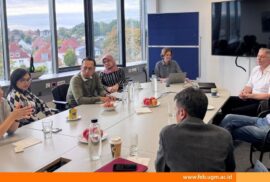
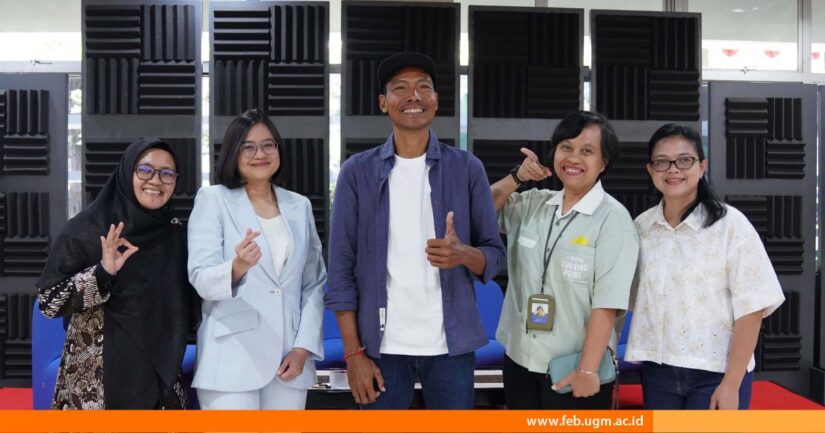
Understanding sustainability issues and gaining experience during university are important foundations for students to navigate workplace changes and address societal challenges. Climate Risk Senior Analyst at CIMB Niaga, Jovitania Soediro, explained that climate change risks are no longer merely a concern for the future. Their impacts are already being felt today, while environmental risks are expected to become increasingly dominant in the long term.
“If we shift to a long-term horizon, risks related to the environment become increasingly dominant. Therefore, we need to equip ourselves with knowledge related to mobility, climate, and environmental issues, even if our backgrounds are in management, economics, accounting, or other fields,” she explained during the Kick Off Student Week held by the Faculty of Economics and Business, Universitas Gadjah Mada (FEB UGM), recently.
Jovitania also shared her experience of pursuing a career in climate risk despite her background in accounting and finance. Her interest in climate issues emerged after watching various lectures and videos on the use of climate risk in stress testing by institutions such as the Bank of England and the European Central Bank.
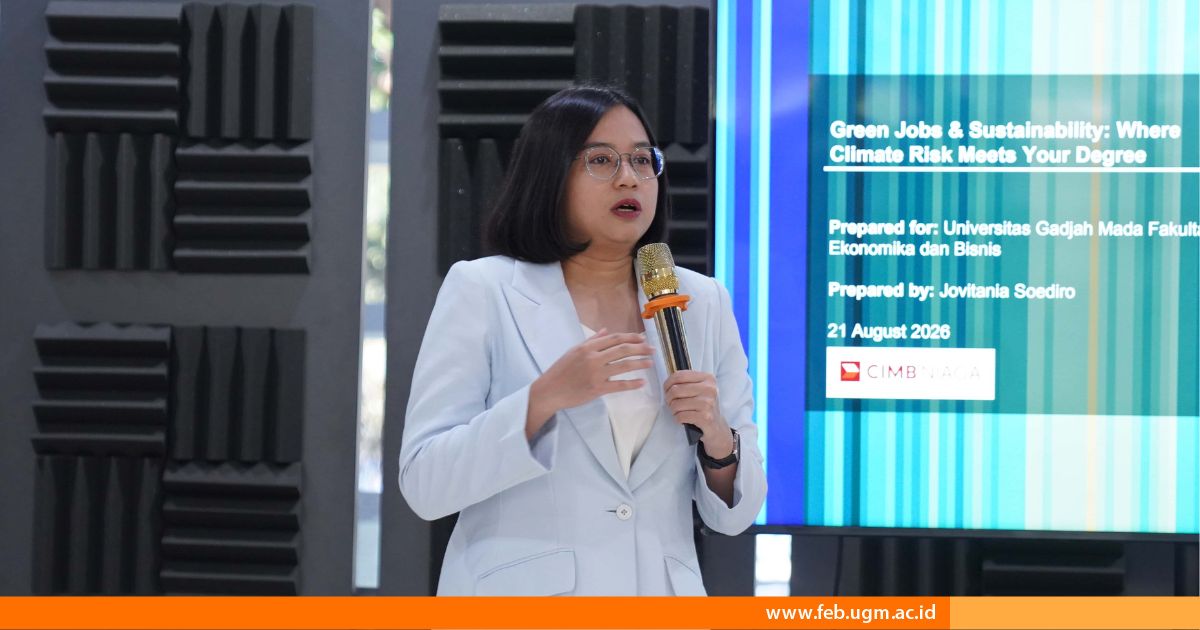
She later developed this interest by conducting research on climate risk and the financial sector before entering the workforce. This experience also helped her during job interviews by demonstrating both her interest in and understanding of the field she wanted to pursue.
Her experience shows that students do not need to wait until they enter the workforce to start building experience. Various steps can be taken during university, such as assisting lecturers with research on sustainability and climate, participating in internships, becoming actively involved in organizations, developing their own initiatives, and learning about industries and technologies related to the climate transition.
“These activities will help students build experience and strengthen their CVs. They are opportunities that students can take advantage of to explore a particular field before entering the workforce,” she emphasized.
Meanwhile, Pande Putu Setiawan, an alumnus of the MBA program at FEB UGM and founder of the Sekolah Alam Community, shared his life journey. He chose a path of community service after participating in a student exchange program at the University of Victoria in British Columbia, Canada.
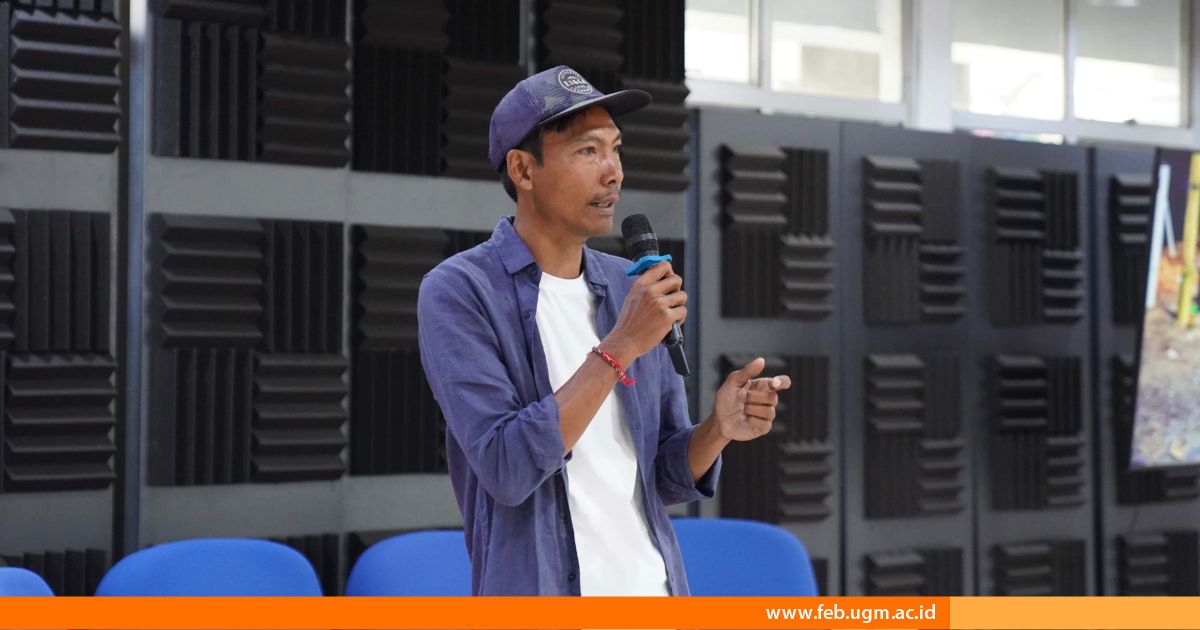
For Pande, studying abroad was not only about gaining academic experience but also became part of his journey toward giving back to society. Coming from Bangli, Bali, where access to education was limited, he wanted to show children in his hometown that everyone has the opportunity to pursue education and achieve something greater.
“Not many people in my village had the opportunity to pursue education. After completing my studies, I wanted to tell the children in my village that if I could overcome something that once seemed distant and difficult, they could also overcome many greater challenges,” he explained.
Pande chose a path different from the conventional career choices many people pursue. While others may focus on earning a master’s degree, building a successful career, or joining a large company, he instead chose to seek an alternative to those conventional paths.This choice led him to experiences he had never imagined before. He visited various villages and documented the lives of children through photography. These experiences eventually inspired him to establish the Anak Alam Community in Bali in 2009.
His decision was initially met with opposition from his mother, who hoped that Pande would work for a large company. However, his 2014 meeting with Andy F. Noya helped convince his mother that the path of community service he had chosen was meaningful and could contribute to Indonesia. In the same year, Pande received the Kick Andy Heroes 2014 award. The recognition served as a milestone, drawing greater attention to his community service work.
“I never dreamed of becoming a government official or a famous person. I wanted to be an ordinary citizen who does something good. And to this day, I still return to those villages,” he said.
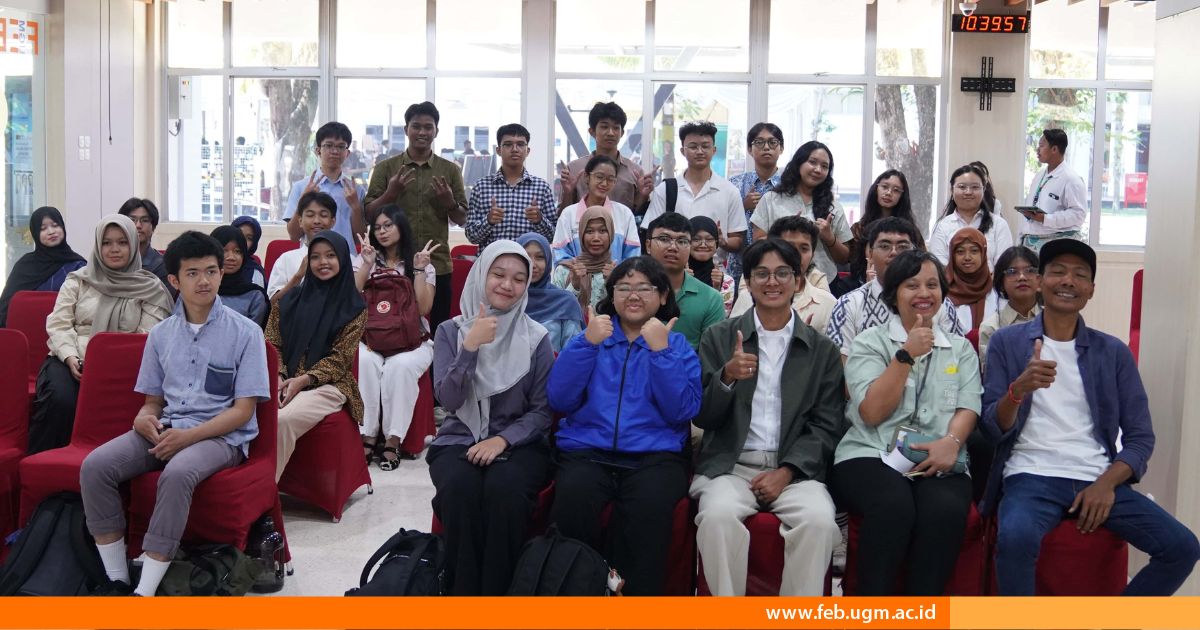
He also encouraged students not to be afraid of choosing a different path, especially when they do not yet have a clear picture of their future. Pande likened the educational journey to climbing a mountain. After reaching the summit and gaining knowledge, a person needs to come back down and share that knowledge with others.
“The success of education is not measured only by how high someone reaches in terms of position, but also by how much benefit they can provide to others,” he concluded.
Report: Shofi Hawa Anjani
Editor: Kurnia Ekaptiningrum
Sustainable Development Goals