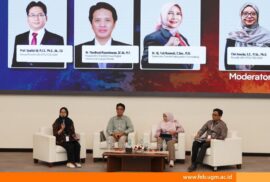

The accountability of non-governmental organizations (NGOs) extends beyond reporting to donors on the use of funds and the implementation of programs. The involvement of beneficiary communities also plays an important role in shaping organizational accountability. So, how do beneficiaries contribute to this process?
Amanda Acintya, S.E., M.Sc., Ph.D. AFHEA, a lecturer at the Department of Accounting, Faculty of Economics and Business, Universitas Gadjah Mada (FEB UGM), together with researchers from the University of Sussex, University College London, and Aston University, examined how beneficiaries contribute to shaping NGO accountability through a process known as co-production of accountability.
Through a study entitled Co-producing NGO Accountability Accounts with Beneficiaries: Evidence from Indonesia, the researchers investigated the accountability practices of an NGO in Indonesia. Using a case study approach, the research collected data through interviews, observations, and document analysis to understand how beneficiary involvement shapes accountability practices and organizational program implementation.
Amanda explained that, in practice, NGO accountability is generally oriented toward reporting to donors. Program success is measured through various indicators, such as the number of participants, increased income, behavioral changes, and the resulting social impact. Although these measurements are important for evaluating organizational performance, beneficiaries are often positioned merely as subjects of evaluation through surveys and questionnaires.
However, she added, beneficiary communities have experiences and needs that should help determine how programs are implemented. The study found that beneficiaries are, in fact, central to the process of shaping NGO accountability. Nevertheless, the relationship between NGOs and beneficiaries remains influenced by unequal power dynamics.
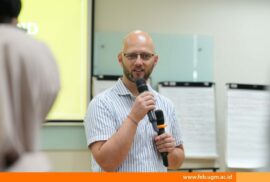
“NGOs hold greater power because they have more resources than the beneficiaries,” Amanda explained during a Research Series session entitled “How Beneficiaries Shape NGO Accountability.”
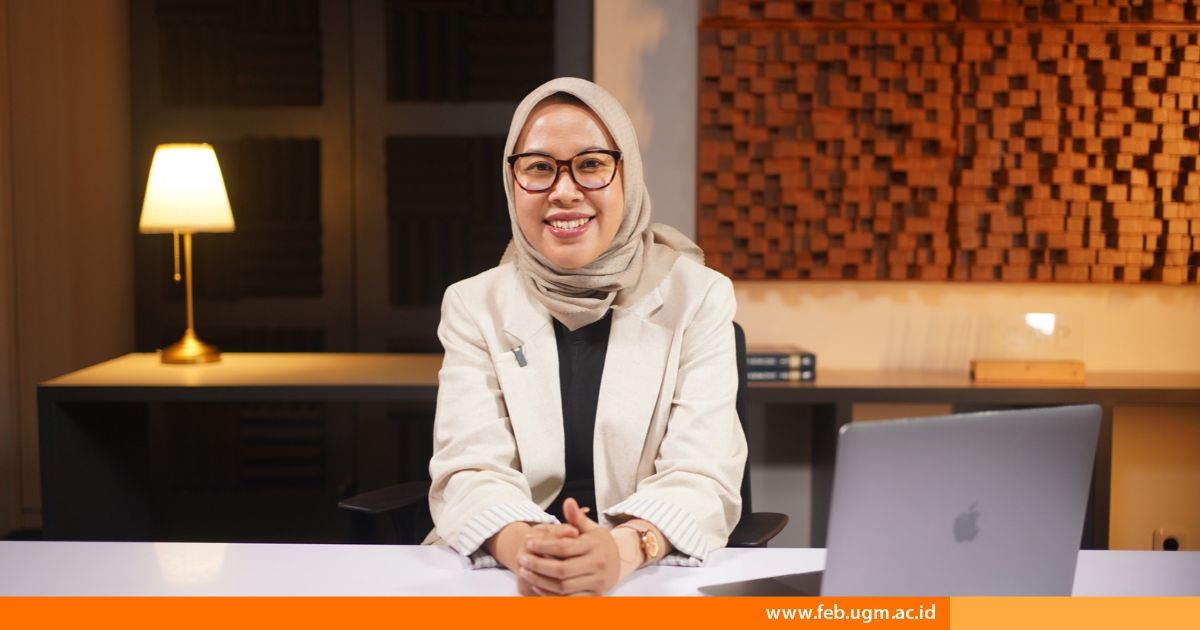
Although NGOs must meet organizational targets, performance indicators, and donor requirements, this does not mean that communities are entirely passive. The study found that beneficiary contributions do not always take the form of direct criticism or explicit demands. Instead, their involvement can emerge through everyday actions, a phenomenon referred to as silent participation.
“Beneficiaries do not always have to speak up loudly to influence how NGO programs are implemented. They have the option to attend, learn in their own ways, make changes, or even withdraw from the program,” she stated.
Amanda explained that these actions provide signals for NGOs to assess whether their programs genuinely address community needs. Thus, participation should be measured not only by how actively individuals express their opinions but also by how they respond to and engage with program implementation.
She illustrated this through an example of a post-pandemic economic recovery program, in which some participants attended training sessions while simultaneously managing their businesses and family responsibilities. Others also faced limited internet access. These circumstances meant that participants could not always engage actively during training sessions. In response, the NGO adjusted its program delivery methods based on these experiences to ensure that the training remained relevant to beneficiaries’ everyday lives.
These findings demonstrate that accountability is not something NGOs produce independently. Rather, it emerges through the relationship between organizations and the communities they serve. Through the concept of co-production of accountability, accountability, traditionally understood as a one-way relationship between organizations and donors, becomes a process that actively involves beneficiaries.
“When beneficiaries are regarded as partners rather than merely recipients of assistance, NGO programs become more responsive to community needs,” Amanda explained.
These findings offer valuable insights for NGOs, governments, and other development institutions in designing more inclusive and participatory evaluation systems. By involving beneficiaries, program implementation is expected to go beyond achieving organizational targets and become more responsive to the needs of grassroots communities.
Watch the full Research Series session entitled “How Beneficiaries Shape NGO Accountability” at: http://ugm.id/PenerimaManfaatBentukAkuntabilitasNGO.
Report: Dwi Zhafirah Meiliani
Editor: Kurnia Ekaptiningrum
Sustainable Development Goals