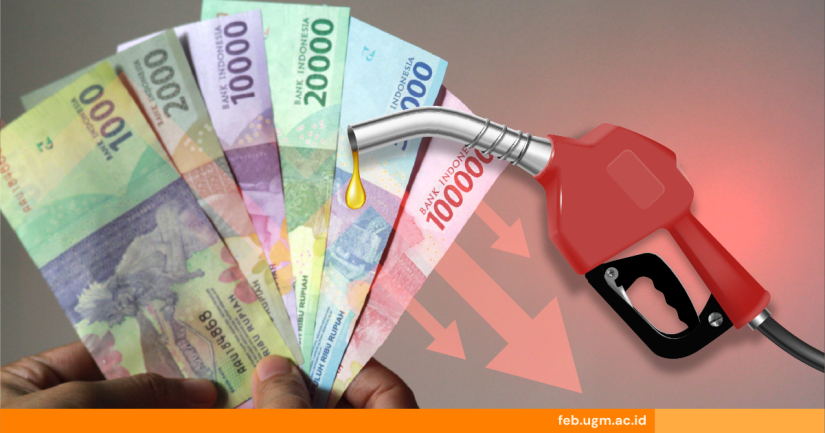
The weakening of the rupiah against the U.S. dollar, followed by a rise in the price of non-subsidized fuel, has once again raised concerns about the state of the national economy. The combination of these two factors is seen as not only affecting industrial production costs but also potentially dampening investment and reducing consumer purchasing power, particularly among the middle class.
Denni Puspa Purbasari, Ph.D., a lecturer in the Department of Economics at FEB UGM, explained that the weakening of the rupiah and global uncertainty are having a multi-layered impact on various economic sectors. One of the most vulnerable sectors is the petrochemical industry, which relies heavily on oil not only as an energy source but also as a raw material.
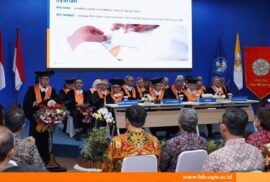
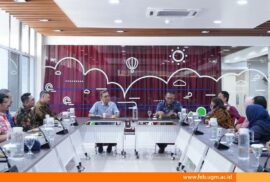
“The petrochemical industry is the hardest hit. When oil supplies are no longer available in their usual quantities, the industry faces the risk of raw material shortages that threaten the sustainability of company operations. Although in recent developments some supply routes have reopened, supply and prices have not yet fully stabilized,” she said during an Expert Discussion on the topic “The Weakening of the Rupiah Against the U.S. Dollar” held on Wednesday (June 11).
In line with the rupiah’s weakening, the price adjustment for Pertamax has also become a public concern. In response, Denni explained that Pertamax is essentially unsubsidized, so its selling price should be determined by market mechanisms.
When asked whether this increase in Pertamax prices was in line with its economic price, Denni said that Indonesia’s fuel market structure, which is not yet fully competitive, could not provide a clear answer. The economic price of fuel is determined not only by global crude oil prices but also by production and distribution costs and taxes.
“The components of fuel prices include not only crude oil but also production costs, distribution costs, taxes, and others. Pertamina is the one that knows the detailed calculations,” she explained.
Denni emphasized that the government needs to be cautious in responding to external pressures, ranging from uncertainty over interest rate movements in developed nations to the risk of global financial market volatility. The government must strengthen the domestic economic situation and avoid introducing new regulations that confuse businesses and the public.
“We must avoid a situation where numerous regulations are issued, statements are released before the regulations are finalized, the regulations cannot be found on the government’s official website, the drafting process lacks consultation with stakeholders, and implementation is sudden. This causes the business community and the public to hit the brakes on their activities suddenly,” she emphasized.
Meanwhile, Wisnu Setiadi Nugroho, S.E., M.Sc., M.A., Ph.D., believes that the increase in non-subsidized fuel prices is placing significant pressure on the middle class, particularly the vulnerable middle class, which lacks strong social protection.
According to him, the combination of rising prices for necessities, weakening purchasing power, and increasing expenses is further narrowing household consumption capacity.
“This places a heavy burden on the vulnerable middle class. In the long term, this situation could even drive changes in consumer behavior, including the potential adoption of electric vehicles by certain groups,” he explained.
Wisnu believes that one option to safeguard the state budget without sacrificing the lower-middle class is to evaluate high-cost priority programs whose impacts have not yet been clearly felt. For example, the Free Nutritious Meals program and the Merah Putih Cooperative program are often glorified with claims that they will absorb a large number of workers and create a multiplier effect on the economy. According to him, an evaluation of these policies must also take into account the opportunity cost, that is, other benefits that may be lost due to budget allocation to these programs.
The recommendations include cutting wasteful policies, boosting public confidence, and taking clear action to stop wasteful spending. Meanwhile, the public also needs to become more adaptive by building their own resilience through risk management, asset diversification, and more prudent personal financial strategies,” he said
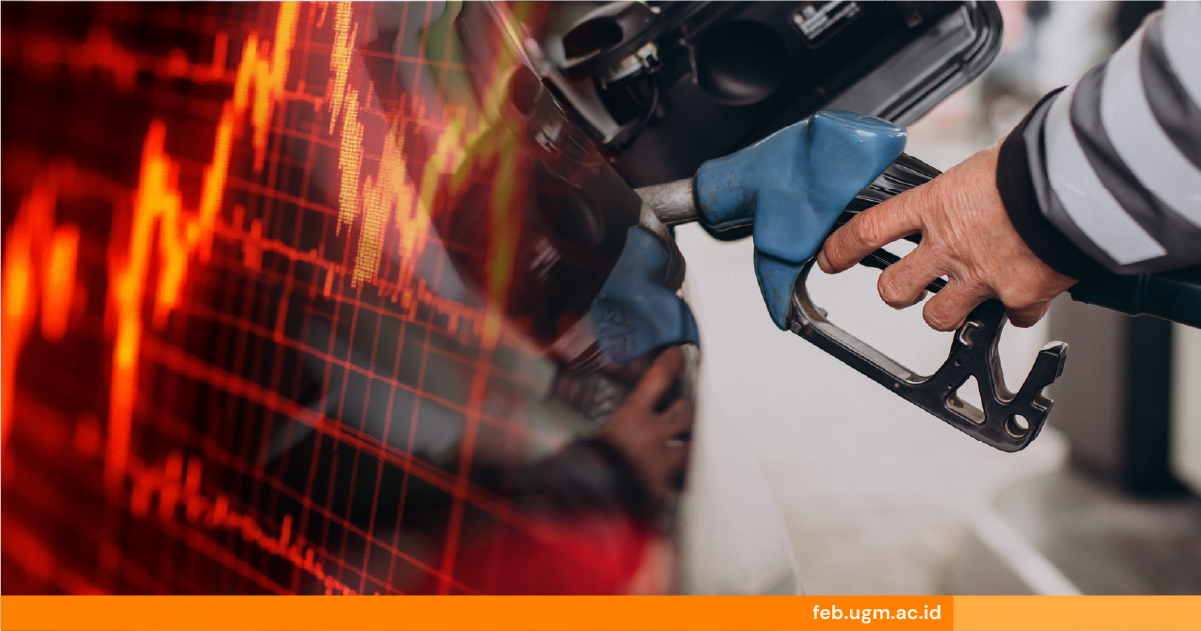
Meanwhile, another lecturer at the Faculty of Economics and Business, UGM, Dr. Evi Noor Afifah, S.E., M.S.E., noted that pressure on the industrial sector could reduce investment and aggregate demand in the economy. This situation could ultimately slow national economic growth.
“It is estimated that in the coming period, the pace of economic growth may slow down again. If this situation persists, the impact will spread to economic activity as a whole,” explained Evi.
Regarding the current economic pressures, Evi noted that the government often cites external factors as the primary cause. In her view, however, the current situation is actually driven by internal factors.
“Fiscal discipline is not being adhered to, and spending is directed toward risky programs that yield no significant impact. All of these factors are exacerbating the situation. So external factors are not the main issue; the main issue lies within the country itself,” she explained. Government spending is indeed necessary to support growth. However, that alone is not enough; it must be accompanied by the condition that the spending is of high quality.
Muhammad Nabiel Arzyan, S.E., M.Sc., a lecturer at the Faculty of Economics and Business, UGM, stated that maintaining macroeconomic stability is the primary policy focus amid global uncertainty. The issue of the rupiah’s exchange rate is long-term in nature and linked to structural problems, thus requiring a comprehensive, long-term policy response.
“Therefore, fiscal and monetary policies must be implemented carefully to maintain the trust of economic actors. In an uncertain global situation, every policy must be formulated in a measured manner so as not to add to the uncertainty,” he said.
Reportage by: Shofi Hawa Anjani
Editor: Kurnia Ekaptiningrum
Sustainable Development Goals