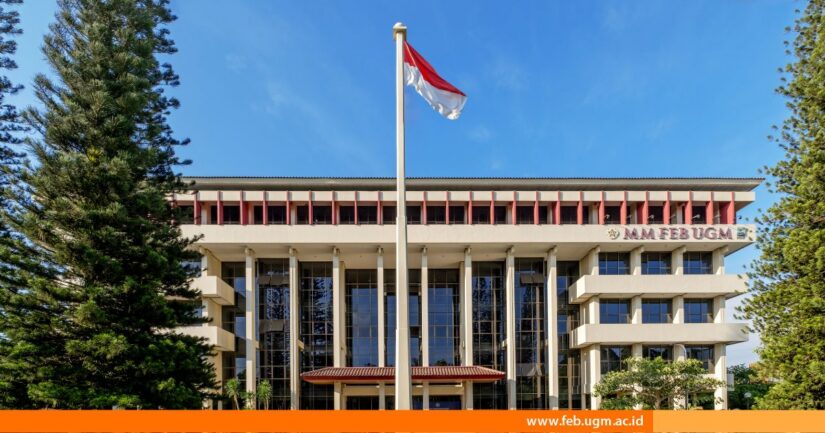
The Master of Business Administration Program at the Faculty of Economics and Business, Universitas Gadjah Mada (MBA FEB UGM), has risen to the 191–200 band globally in the QS Global MBA Ranking 2027, which ranks 423 MBA programs worldwide. The achievement marks an improvement from the 201–250 band in the 2026 edition. In Asia, MBA FEB UGM also climbed to 27th among 81 ranked MBA programs, up from 30th in 2026.
Vice Dean for Academic and Student Affairs at FEB UGM, Bayu Sutikno, S.E., M.S.M., Ph.D., said the achievement was a source of pride and would further encourage FEB UGM MBA to improve the quality of its program continuously.
“We are very grateful and proud of the rise in the QS Global MBA Rankings 2027 achieved by the MBA FEB UGM. The program has moved up one ranking band, from 201–250 globally to 191–200. In Asia, MBA FEB UGM also climbed three places, from 30th to 27th,” Bayu said on Friday (18/9/2026).
According to Bayu, the achievement reflects the continued development of MBA FEB UGM in both global and Asian rankings. He noted that MBA FEB UGM is the only MBA program in Indonesia to have moved up a ranking band in the 2027 edition.
“This makes MBA FEB UGM the only program in Indonesia to have moved up a ranking band, as well as the one with the highest increase in ranking, rising three places compared with other business schools in Indonesia,” he explained.
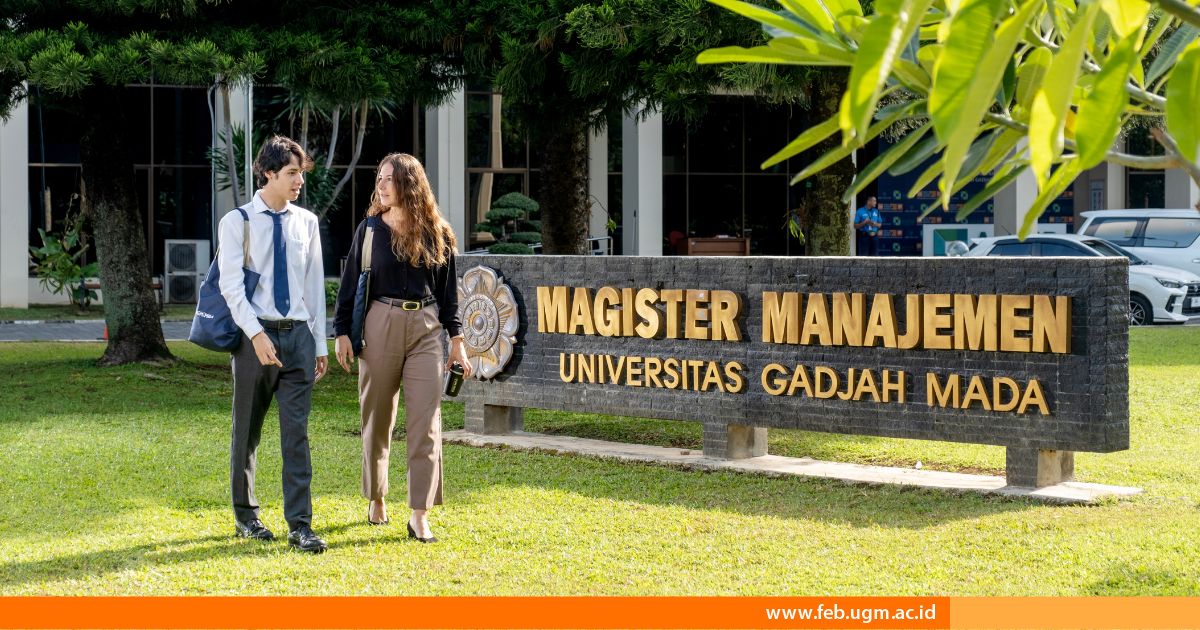
Bayu emphasized that the achievement belongs to the program as a whole rather than to a single campus. MBA FEB UGM is delivered at two locations, the Yogyakarta Campus and the Jakarta Campus, under one curriculum and one quality standard.
Improvement Across Indicators
The QS Global MBA Ranking evaluates MBA programs based on five indicators: Employability, Return on Investment, Entrepreneurship and Alumni Outcomes, Thought Leadership, and Class and Faculty Diversity. The indicators carry different weights based on the QS Global Employer Survey, QS Global Academic Survey, and data reported by business schools, with each indicator scored on a scale of 0–100.
In the 2027 ranking, four of the five MBA FEB UGM indicators improved compared with 2025. The Employability score increased from 30.1 to 34.4, Return on Investment rose from 31.5 to 41.7, Entrepreneurship and Alumni Outcomes increased from 58.5 to 60.9, and Class and Faculty Diversity rose from 64.1 to 75.2. The largest increase was recorded in Class and Faculty Diversity, which gained 11.1 points since 2025. Meanwhile, Return on Investment increased by 10.2 points over the same period.
Bayu said one of MBA FEB UGM’s strengths was reflected in the Entrepreneurship and Alumni Outcomes indicator. The program scored 60.9 on this indicator, placing 72nd globally.
“One of MBA FEB UGM’s strengths is Entrepreneurship and Alumni Outcomes, which scored 60.9 and ranked 72nd globally, placing it in the top 17 percent and making it the highest-ranked in Indonesia. In addition, the Diversity indicator scored 75.2 and ranked 83rd globally,” he explained.
Bayu emphasized that MBA FEB UGM would continue to maintain these strengths while using this achievement as a foundation to develop further other areas, particularly Employability and Return on Investment.
“Going forward, in addition to maintaining these strengths, we will further improve Employability and Return on Investment, which together account for 60 percent of the ranking,” he added.
A program development agenda also accompanies the rise in the ranking. Bayu said that strengthening national and international networks would remain one of the strategies for improving graduate employability.
“To further strengthen our current position, we will intensify our national and international networks to improve Employability, alongside structured updates to the curriculum design and content by integrating sustainability and the latest technologies,” he said.
Synergy Between the Yogyakarta and Jakarta Campuses
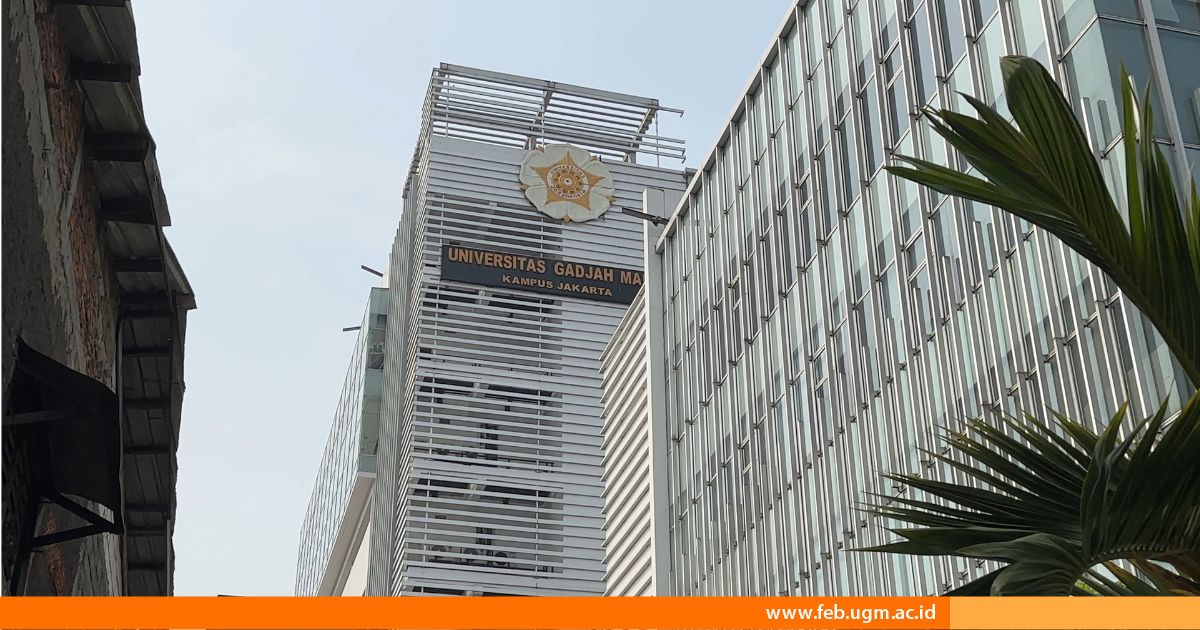
MBA FEB UGM is delivered at two locations, the Yogyakarta Campus and the Jakarta Campus. Both are part of a single program with the same academic and quality standards.
Director of MBA FEB UGM Jakarta Campus, Prof. Drs. Gugup Kismono, MBA, Ph.D., said the improvement in the ranking was a shared achievement of both campuses. Program development is guided by the academic leadership of the Department of Management and the quality policies of FEB UGM, ensuring alignment with international accreditation standards and the faculty’s strategic roadmap. Implementation is carried out jointly by program managers at both campuses, faculty members, and academic and administrative staff through continuous efforts to maintain the quality of the learning process.
“This achievement belongs to the program, not to a single campus,” he said.
Gugup explained that MBA FEB UGM in Jakarta and Yogyakarta have different participant profiles. Participants at the Jakarta Campus are predominantly professionals and executives from various sectors, including finance, energy, technology, consulting, state-owned enterprises, and government. Meanwhile, the Yogyakarta Campus has a larger proportion of recent graduates and a strong academic and research intensity. These differences are managed as a source of synergy rather than a gap.
“The differences in participant profiles between the two campuses are actually a strength. Participants at the Yogyakarta Campus gain access to the practical experience, networks, and career guidance of senior executives at the Jakarta Campus. Meanwhile, participants at the Jakarta Campus benefit from fresh perspectives, up-to-date analytical skills, and fundamental questions that can often be overlooked amid executive routines,” he explained.
Gugup said the Jakarta Campus’s location at the heart of the national business ecosystem is leveraged to strengthen the connection between classroom learning and business practice. The location is also expected to help bridge the gap between the classroom and professional practice through practitioner involvement, discussions of corporate cases, applied projects, and other activities that enable students to gain a direct understanding of organizational challenges.
Program Strengthening Agenda
Meanwhile, Director of MBA FEB UGM Yogyakarta Campus, Prof. Amin Wibowo, S.E., MBA, Ph.D., said the achievement in Entrepreneurship and Alumni Outcomes is one of the areas that MBA FEB UGM continues to develop. Entrepreneurship is not positioned solely as a specialization but is also integrated into various learning activities.
“We choose not to position entrepreneurship merely as a single concentration. Instead, it serves as a spirit across all courses, alongside leadership and sustainability,” he explained.
Amin said the improvement in MBA FEB UGM’s global and Asian ranking also strengthens opportunities for collaboration with industry partners. Future partnerships will not only involve practitioners as guest speakers but will also include joint projects, access to business data and cases, and stronger networks to support graduate employment.
Furthermore, Amin said the rise in the ranking would be followed by several strengthening initiatives targeting indicators with significant weights, implemented in an integrated manner across the Yogyakarta and Jakarta Campuses.

In terms of Employability, the program will strengthen career services, track graduate outcomes in accordance with international standards, and expand its network of employers. This indicator carries a 40 percent weight in the ranking and remains one of the areas being further developed.
From a learning perspective, MBA FEB UGM will enhance practical learning experiences through applied projects, the use of Indonesian business cases, and greater practitioner involvement in the learning process.
Strengthening will also be carried out in entrepreneurship by integrating entrepreneurial perspectives across various courses and by providing support to students and alums developing their businesses.
Meanwhile, strengthening faculty research and publications will form part of the efforts to improve the Thought Leadership indicator. Over the past three years, this has been the only indicator showing a declining trend.
In terms of internationalization, the program will expand partnerships with international business schools through student exchanges, joint classes, and various forms of academic collaboration. These efforts aim to broaden learning experiences while strengthening the program’s international network.
Amin noted that at the Asian level, MBA FEB UGM’s ranking of 27th among 81 MBA programs places the program close to several MBA programs in Malaysia in the 19–23 ranking band. This reflects the competitive landscape among MBA programs in Asia and provides context for the program’s continued development.
Reportage: Kurnia Ekaptiningrum
Sustainable Development Goals