
Rising geopolitical tensions are posing new challenges to Indonesia’s economic resilience. These risks could affect macroeconomic stability, disrupt trade and investment flows, and put pressure on productivity and public welfare. Such conditions call for strategies that not only maintain economic stability but also strengthen competitiveness and ensure inclusive development.
Chairman of the Board of Commissioners of the Indonesia Deposit Insurance Corporation (LPS), Prof. Dr. Anggito Abimanyu, stated that slowing global economic growth and escalating geopolitical tensions could put pressure on Indonesia’s economy, particularly through trade, investment, exchange rates, and financial sector stability.
Anggito explained that economic resilience should not be measured solely by the ability to sustain economic growth. More importantly, it requires the capacity to anticipate risks early, maintain stability and public confidence, adjust economic structures and policies, and restore productivity and livelihoods in the wake of economic shocks.
“Economic growth is necessary, but it is not sufficient to ensure resilience and equitable development,” he explained during the 21st Forum for Economic Study and Discussion (FSDE) FEB UGM, themed “Building Resilience: Overcoming Geopolitical and Regional Risks for Inclusive Development,” held on Saturday (November 7, 2026), at the Sukadji Ranuwihardjo Auditorium, MM UGM.
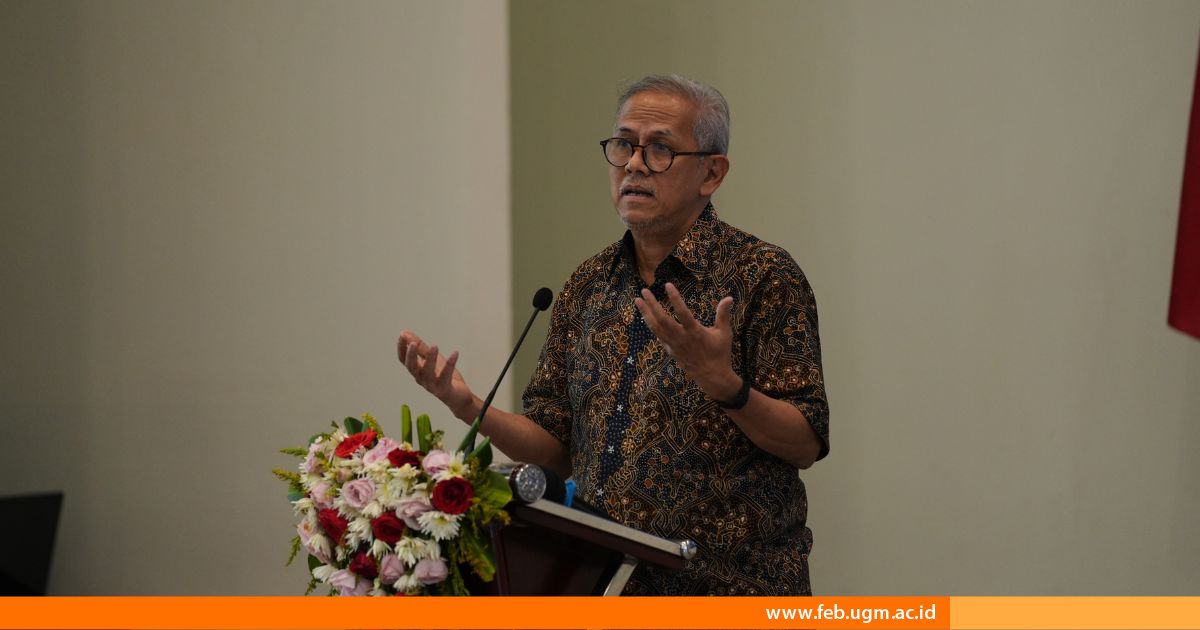
To address these risks, the financial sector needs to maintain stability and public confidence, expand access to productive financing, and strengthen protection against digital risks. According to Anggito, food and energy security must also remain priorities to safeguard national economic resilience.
Echoing these concerns, Finance Director of Garuda Indonesia, Sophia Wattimena, highlighted the increasingly complex and interconnected nature of global risks. Geoeconomic confrontation, inflationary pressures, and financial market volatility can trigger cascading effects that disrupt economic activity. She also addressed Indonesia’s competitiveness challenges and the need for greater transparency in the capital market to maintain investor confidence.
In the context of economic development, Sophia emphasized the importance of strengthening micro, small, and medium enterprises (MSMEs) as part of efforts to enhance national economic resilience. According to her, three key areas require attention: access to financing, human resource capacity development, and more targeted program implementation.
She added that data integrity plays a crucial role in formulating effective policies. Accurate data is essential for the government and stakeholders to identify community needs and ensure that development programs reach those who need them most.
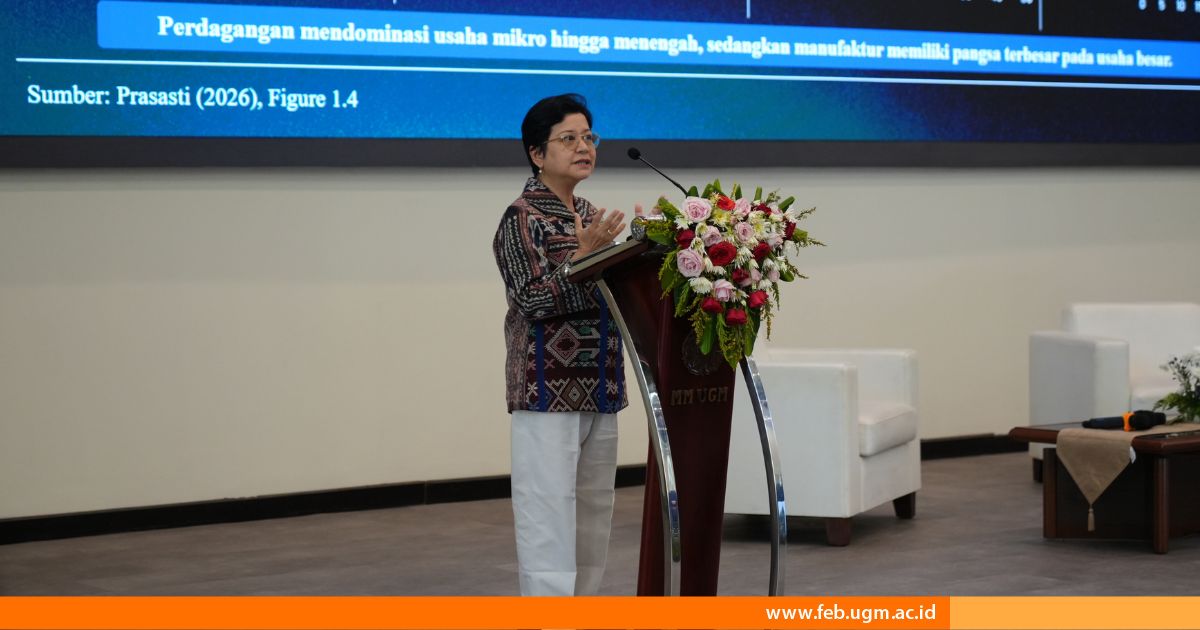
“We need accurate data with clear definitions, time periods, and coverage so that we can propose well-targeted policies that support our economic growth,” she stated.
Furthermore, Sophia emphasized the importance of good governance in implementing development programs. She noted that sound planning must be accompanied by effective implementation and adequate oversight to ensure that policy objectives are achieved.
Economic Structural Transformation and Fiscal Policy Strategies
Founder of CORE Indonesia, Dr. Hendri Saparini, pointed out that global uncertainty is becoming increasingly difficult to predict. This is driven by various factors, ranging from geopolitical conflicts and changes in trade policies to technological developments such as artificial intelligence.
According to Hendri, the impact of global changes varies across countries depending on their economic characteristics and structures. She cited Vietnam as an example of a country that has strengthened its economic resilience through trade restructuring and increased exports of manufactured products. Meanwhile, Indonesia continues to face challenges due to its export structure, which remains heavily dependent on commodities and raw materials.
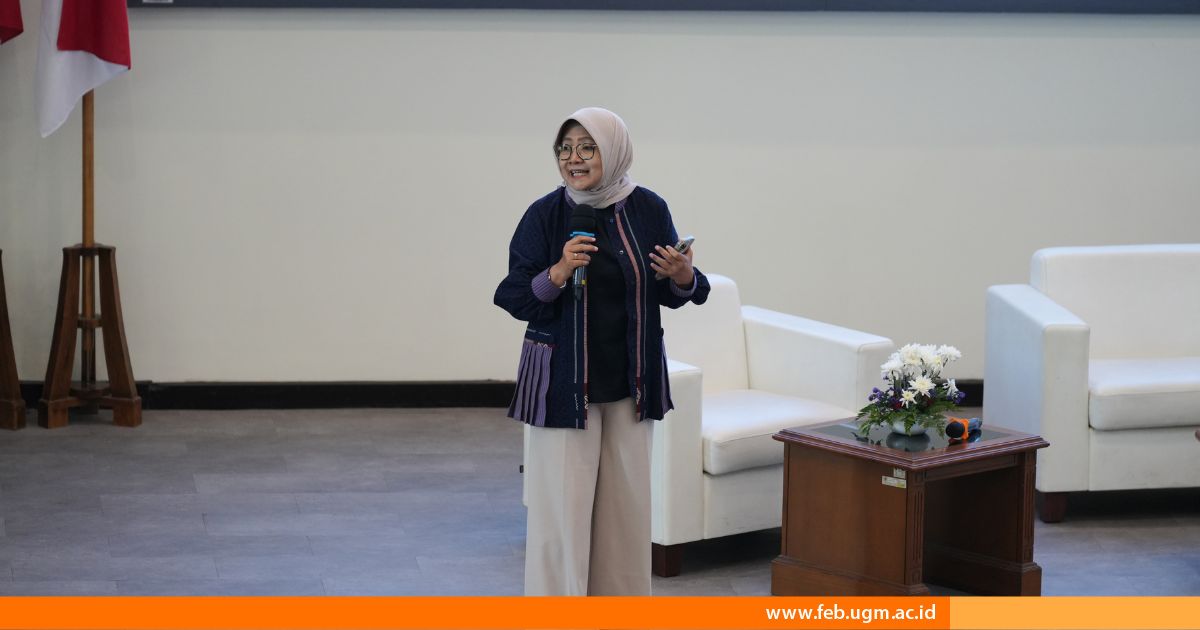
Beyond external factors, Hendri also highlighted several domestic challenges, including shifts in development policy priorities, reductions in fiscal transfers to regional governments, and the risk of deindustrialization. She stressed the importance of transforming Indonesia’s industrial structure so that the country moves beyond being a supplier of raw materials and develops the capacity to produce higher-value-added products.
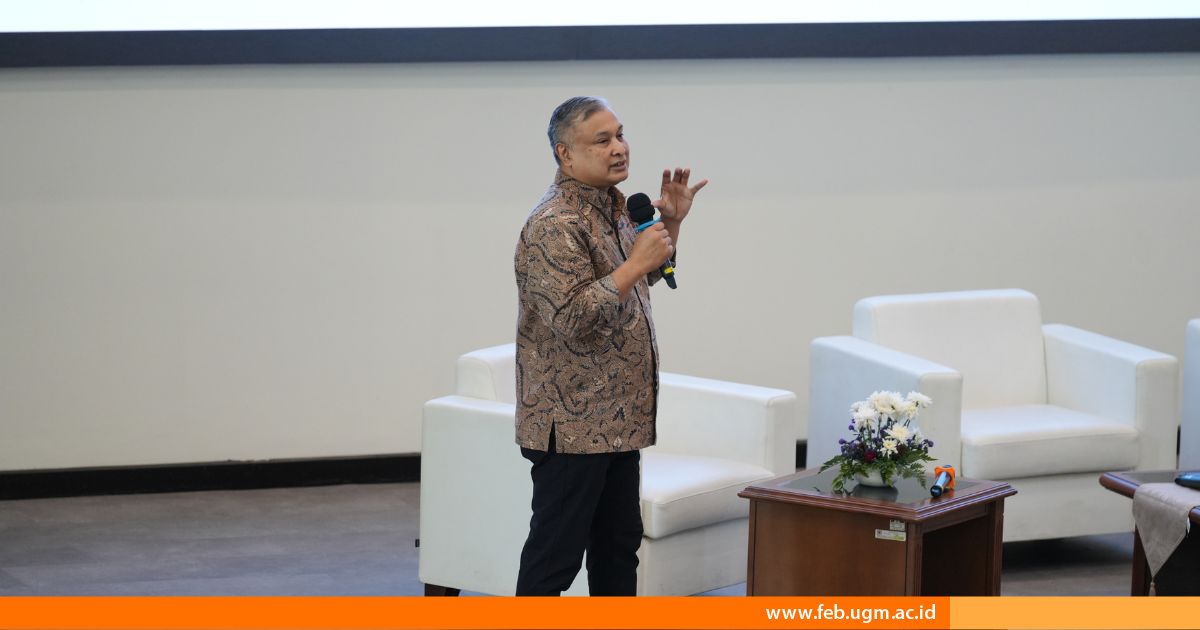
Meanwhile, Director of State Budget Strategy, Wahyu Utomo, explained the role of fiscal policy in balancing economic stability, public protection, and fiscal sustainability. In responding to various global pressures, the government must ensure that household purchasing power is maintained, food and energy supplies remain available, and the budget deficit stays under control.
He added that economic pressures must be addressed through anticipatory and adaptive policies without compromising fiscal discipline. In this way, the State Budget (APBN) can continue to play a vital role in maintaining stability while protecting communities from the impacts of economic shocks.
Social Protection as a Foundation for Inclusive Development
Another equally important aspect of building economic resilience is social protection. Head of the Department of Economics at FEB UGM, Elan Satriawan, M.Ec., Ph.D., discussed the relationship between human development and the resilience of public welfare.
Elan explained that risks to public welfare are becoming increasingly complex as various shocks, including geopolitical uncertainty, climate change, and risks throughout the life cycle, can occur simultaneously. These conditions may exacerbate the vulnerability of certain population groups, particularly those with limited access to quality employment and social protection.
He also highlighted challenges in Indonesia’s labor market, particularly the high proportion of informal employment, which often fails to provide workers with income security and adequate protection. Although various social assistance and social security programs are already in place, ensuring that assistance reaches the intended beneficiaries remains a challenge.
According to Elan, strengthening adaptive social protection requires support in four key areas: social protection programs that respond to community needs; integrated data and information through the National Socioeconomic Single Data system (DTSEN); financing mechanisms capable of responding to crises; and institutional coordination among ministries and regional governments.
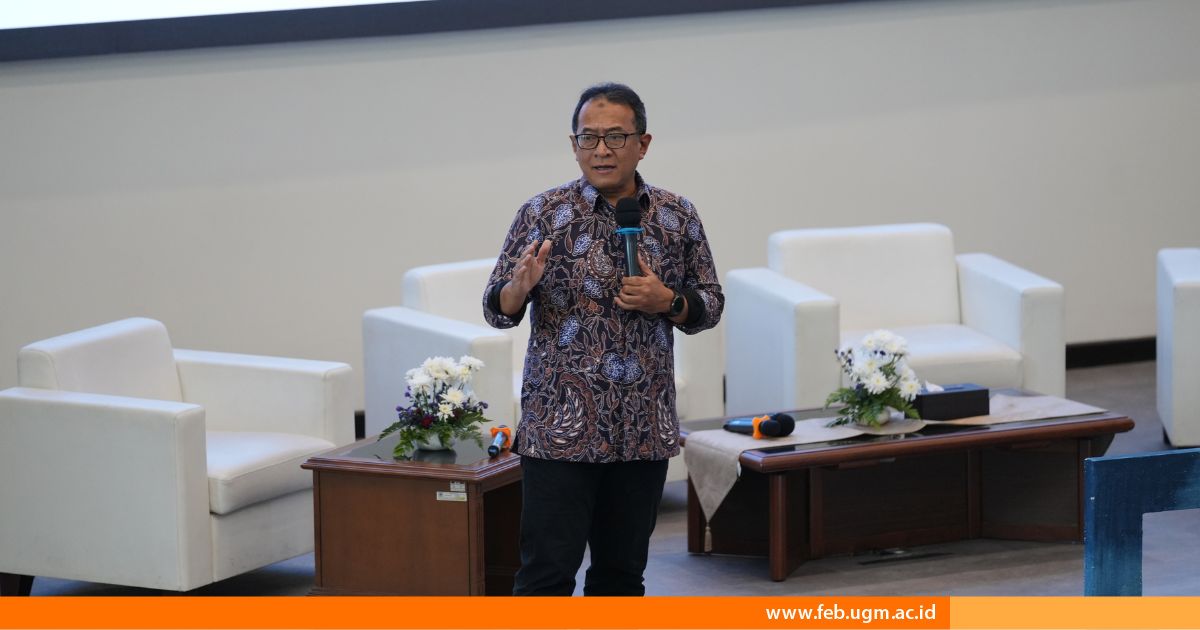
He emphasized that social protection systems should not merely assist after communities have experienced shocks. They must also be capable of anticipating risks and reaching vulnerable groups before their welfare deteriorates.
“What we need is a more adaptive protection system. A system that not only protects after a disaster has occurred but also has the capacity to anticipate risks before a disaster strikes,” he explained.
The discussions highlighted that economic resilience cannot be achieved through macroeconomic stability and fiscal policy alone. Strengthening industrial structures, improving productivity, and developing inclusive social protection systems are equally essential to ensuring that communities can withstand various economic shocks.
Reporter: Dwi Zhafirah Meiliani
Editor: Kurnia Ekaptiningrum
Sustainable Development Goals