The issue of organic waste remains a significant challenge in Indonesia. Poorly managed household waste accumulation not only worsens environmental pollution but also contributes to climate and public health problems.
Driven by this concern, Vidhyazputri Belva Aqila, an Accounting student from the Faculty of Economics and Business (FEB) UGM, class of 2023, together with four Universitas Gadjah Mada students, initiated WormiBox—an Internet of Things (IoT)-based organic waste decomposer that utilizes worms as a decomposition medium to promote a circular economy. The 2025 Student Creativity Program in Entrepreneurship (PKM-K) scheme saw the development of this innovation.
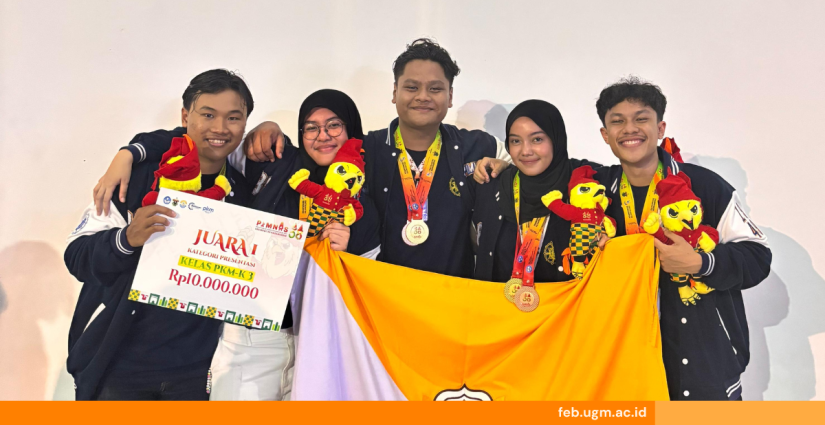
The WormiBox team successfully won 1st Place in the Presentation category and 3rd Place in the Poster category at the 2025 National Student Scientific Week (PIMNAS). The team consists of Azkal Anas Ilmawan (Nuclear Engineering, 2022), Fikriansyah Ridwan Pratama (Engineering Physics, 2023), Vidhyazputri Belva Aqila (Accounting, 2023), Maulana Iqbal Pambudi (Animal Science & Industry, 2023), and Maureen Arsa Sanda Cantika (Geographic Information Systems, 2022). This cross-disciplinary collaboration laid the foundation for a product that is not only functional but also economically valuable and sustainable.
The WormiBox idea was born out of the team’s concern about the growing volume of food waste and the lack of organic waste management at the household level.
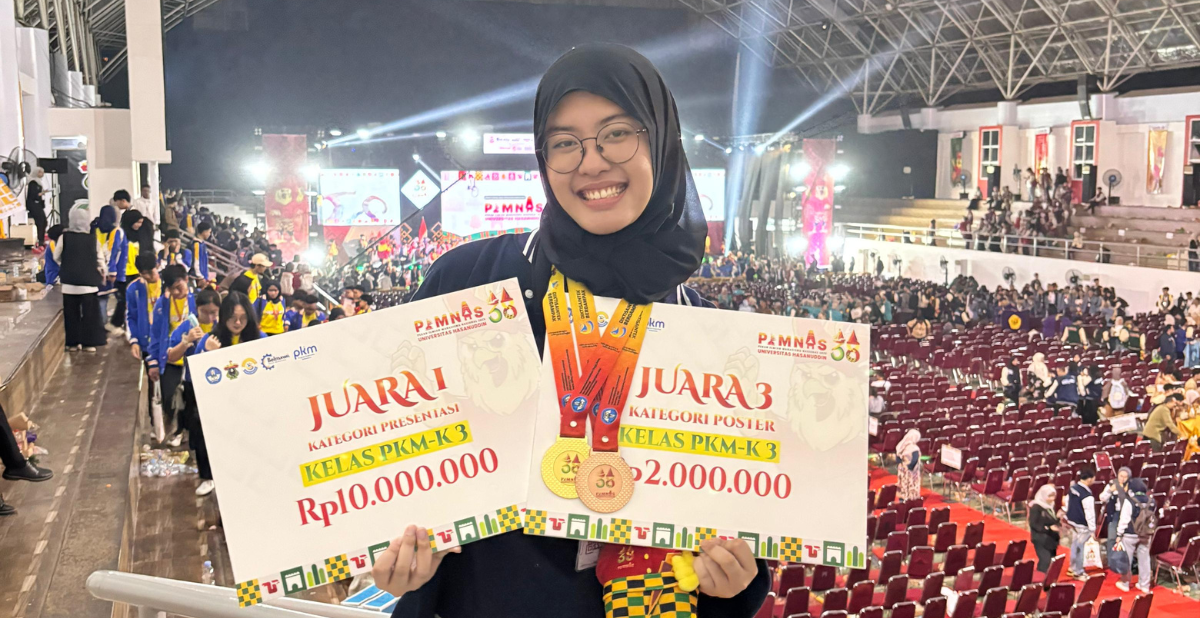
Initially, it stemmed from the increasingly widespread food waste problem in Indonesia, which adds to the already severe organic waste issue, while handling by both the government and the public remains very minimal. This condition has the potential to cause various environmental problems if left unresolved,” explained Belva.
Through WormiBox, the team chose an ecological approach, using worms as decomposers. This choice was made for a reason, as the decomposition results can be reused. This approach is also aligned with the sustainability principles they aim to promote in society.
“So, we finally created a decomposer tool that can help reduce organic waste. We also chose worms as decomposers, which can later be reused and create a circular economy,” Belva added.
During its development, WormiBox faced several technical challenges. The process required a series of trials, design revisions, and component modifications. The most critical stage occurred during product manufacturing, when the team had to ensure the tool functioned properly and provided convenience for consumers.
“The most difficult phase was during the product manufacturing stage, because we had to ensure that the product could be used properly by consumers without causing difficulties or discomfort,” Belva added.
To address these challenges, the team routinely conducted internal discussions and received mentoring from supervising lecturers. Through continuous consultation, both technical and conceptual problems were gradually identified and resolved. Under the guidance of Dr. Ir. Nur Abdillah Siddiq, S.T., IPP., the development of WormiBox became more structured, directed, and evaluation-based to ensure product quality and sustainability.
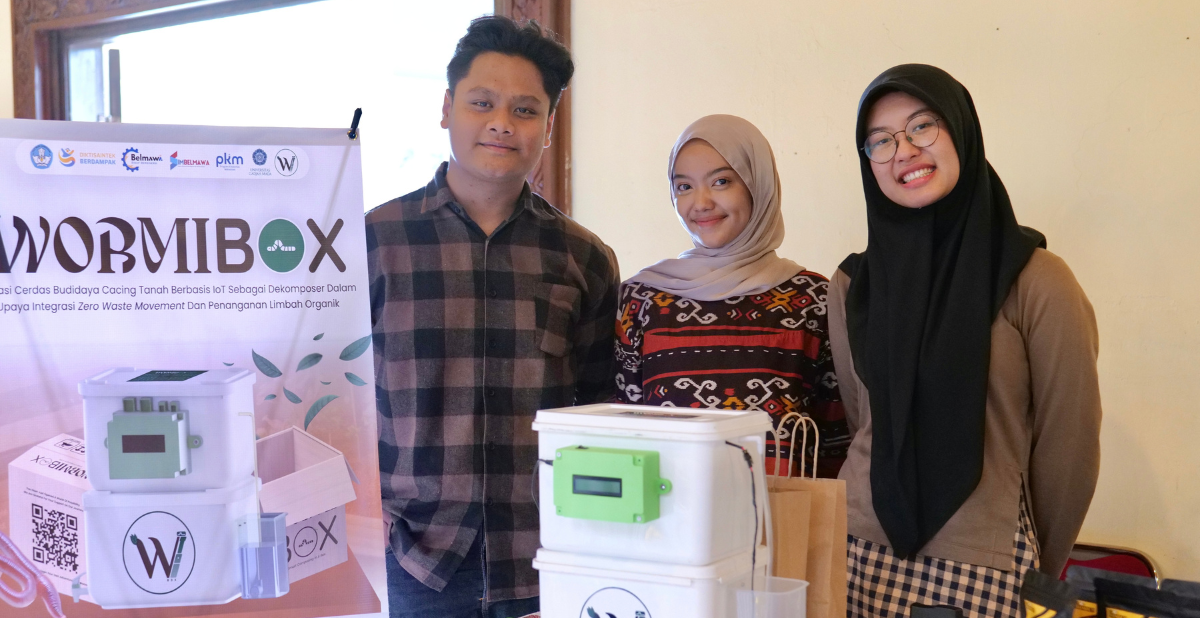
Team dynamics also became an important learning aspect in implementing this program. Differences in academic backgrounds among team members often led to debates and differing perspectives. However, this condition enriched decision-making processes. Through open discussions, the team learned to make collective decisions that best supported the sustainability and development of WormiBox.
Overall, the WormiBox journey took nearly one year, starting from initial idea discussions in November 2024 to participation in PIMNAS on November 23–28, 2025. The selection process, funding, and progress evaluations were essential parts of this journey. According to the team, the most memorable experience was the intensive interaction with lecturers and participants from other universities.
“The most memorable part was experiencing in-depth discussions with lecturers who are experts in their fields, so we gained a lot of new knowledge. In addition, meeting teams from other universities was inspiring because we could see a range of interesting ideas and how they presented their work. Feedback from the judges also gave us many new insights,” said Belva.
University support was strongly felt throughout the development process, primarily through intensive mentoring and training sessions. From the entire process, the team emphasized the importance of idea consistency and product deepening as key success factors.
Belva believes that PIMNAS and PKM are highly valuable programs to participate in because they provide comprehensive learning opportunities. Through WormiBox, the team not only showcases technological innovation but also reinforces students’ roles as agents of change in addressing environmental challenges in tangible ways.
Reporter: Dwi Zhafirah Meiliani
Editor: Kurnia Ekaptiningrum
Sustainable Development Goals