The Faculty of Economics and Business, Universitas Gadjah Mada (FEB UGM), once again organized a Technical Training on the Valuation for the Disposal of University-Owned Assets (BMU) from Tuesday to Thursday, March 31 to April 2, 2026. This initiative serves as a strategic effort to enhance asset management quality while supporting the modernization of campus facilities.
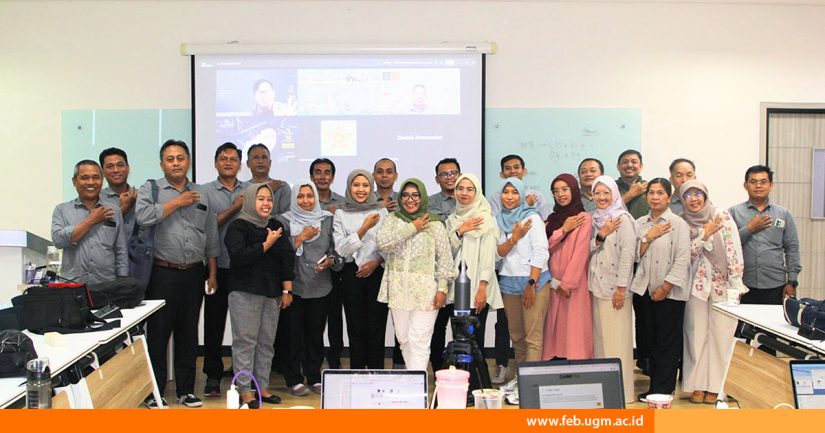
FEB UGM professional staff attended the training, which served as a platform for integrating conceptual understanding with practical implementation in asset valuation and disposal processes.
The Vice Dean for Finance, Assets, and Human Resources, Suyanto, S.E., M.B.A., Ph.D., stated that the dynamics within the faculty present particular challenges, especially with the presence of facilities and equipment that are no longer optimally utilized. This technical training aims to improve participants’ competencies in asset management.
“The aim is to carry out the asset disposal process more quickly and systematically, promptly addressing unused items to create a cleaner, more organized, and optimal working environment,” he explained.
To strengthen participants’ understanding, the program featured a series of lectures and practical sessions delivered by various speakers. Rio Jaka Tama presented the session on data collection and worksheet preparation for machinery and equipment valuation, emphasizing the importance of data quality and documentation for producing accurate valuations. Participants also attended practical sessions on valuation and report preparation for machinery and equipment, led by Rosario Guntur Harimawan.
Nurisqi Amalia provided further insights into the preparation of valuation reports, highlighting their importance as formal documents that present analysis, methodologies, and valuation conclusions in accordance with applicable standards. Participants also received training on vehicle valuation from Agung Laksana, covering key factors such as physical condition, year of manufacture, and market conditions.
In addition, a report review session led by Sudarto offered critical perspectives on the quality of valuation outputs. Participants then continued hands-on field data collection on motor vehicles with Fatima Putri Prativi, emphasizing the importance of direct observation for obtaining reliable data.
The training also covered furniture (meubeler) asset valuation, delivered by Bagaskara and Anisa Nurpita, including practical valuation and report preparation for asset disposal. Meanwhile, Dr. Ike Yuli Andjani, M.Si., guided participants through field data collection practices for furniture, including inspection processes and worksheet preparation as the basis for Valuation.
Through this comprehensive series of materials and practical sessions, participants gained a thorough understanding of the asset valuation process, from data collection to the preparation of valuation reports.
Report by: Shofi Hawa Anjani
Editor: Kurnia Ekaptiningrum
Sustainable Development Goals