Different business characteristics mean that each micro, small, and medium enterprise (MSME) faces different tax obligations. Therefore, business owners need to understand the tax scheme that best fits their turnover, business type, and profit level, and ensure accurate tax reporting through proper bookkeeping.
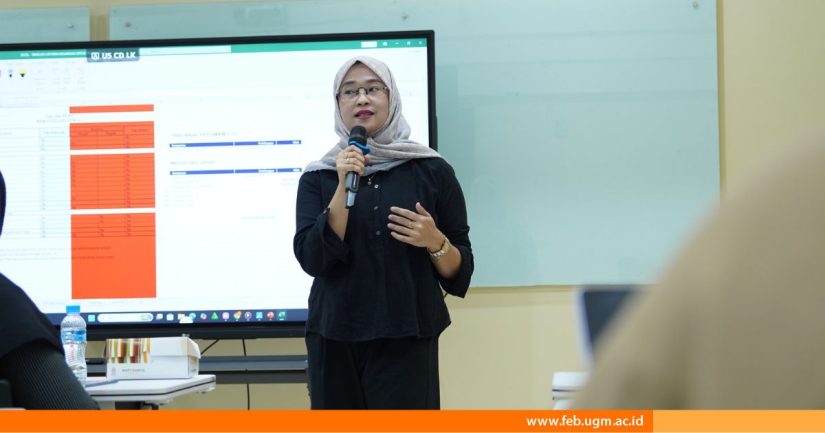
This was conveyed by Annisa Hayatun Nazmi Burhan, S.E., M.Sc., Ph.D., a lecturer from the Department of Accounting at FEB UGM, during the SIDEK-ERP Implementation and MSME Tax Reporting Training held on Thursday, July 9, 2026, at FEB UGM. The program was initiated by the Research Group on Information Systems and Digital Transformation at FEB UGM as part of efforts to improve MSMEs’ understanding of Indonesia’s tax regulations.
Annisa explained that one of the tax schemes currently applicable to MSMEs is the 0.5% Final Income Tax (PPh Final), which is calculated directly from monthly turnover. In addition, there is a non-final tax alternative under the General Tariff Scheme (Article 17), which is imposed on net profit using progressive tax rates.
She noted that the 0.5% Final Income Tax scheme can be beneficial for MSMEs because it is based on monthly turnover, while the non-final scheme applies progressive rates to net profit. Therefore, business owners need to understand which scheme is most appropriate for their business conditions.
“Every business whether in culinary services, trading, services, garment production, or other sectors has different business conditions. That is why MSME owners need to understand the applicable tax regulations,” she said.
Furthermore, Annisa emphasized the importance of maintaining regular bookkeeping and transaction records. Proper financial records serve as the primary basis for preparing tax reports and can also help business owners provide evidence of turnover and business transactions to tax authorities when required.
“What business owners need to do is maintain clear bookkeeping, even if it is only done using Excel. Then, all supporting documents such as invoices and receipts should be properly collected,” she explained.
According to her, keeping all transaction evidence enables business owners to ensure accurate, data-based tax reporting. It also helps reduce the risk of administrative errors in the future.
Through this training, MSME participants are expected not only to understand recent changes in tax regulations but also to implement sound financial recording practices as the foundation for tax reporting. The program also aims to encourage higher tax compliance among MSMEs by strengthening tax literacy and administrative capacity in accordance with Indonesian tax regulations.
Report by: Najwa Anggi Namira
Editor: Kurnia Ekaptiningrum
Sustainable Development Goals