Amid the rapid transformation of the world of work, university graduates can no longer rely solely on their Grade Point Average (GPA). Higher education institutions are therefore expected to design learning processes that go beyond academic achievement by emphasizing the development of competencies relevant to the evolving needs of the workforce and society.
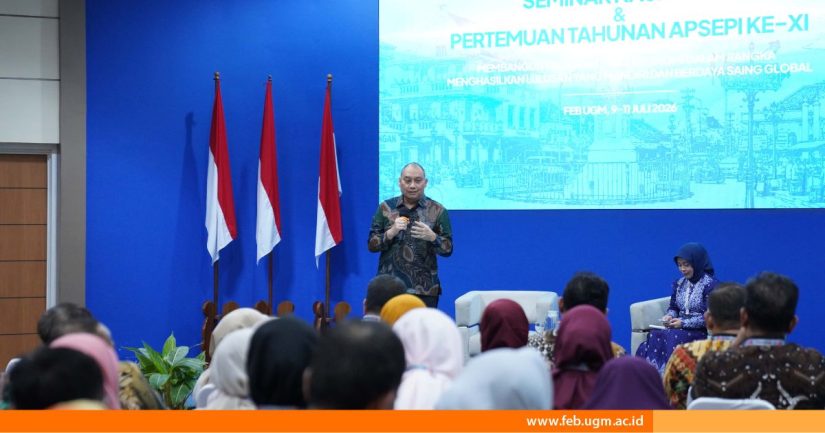
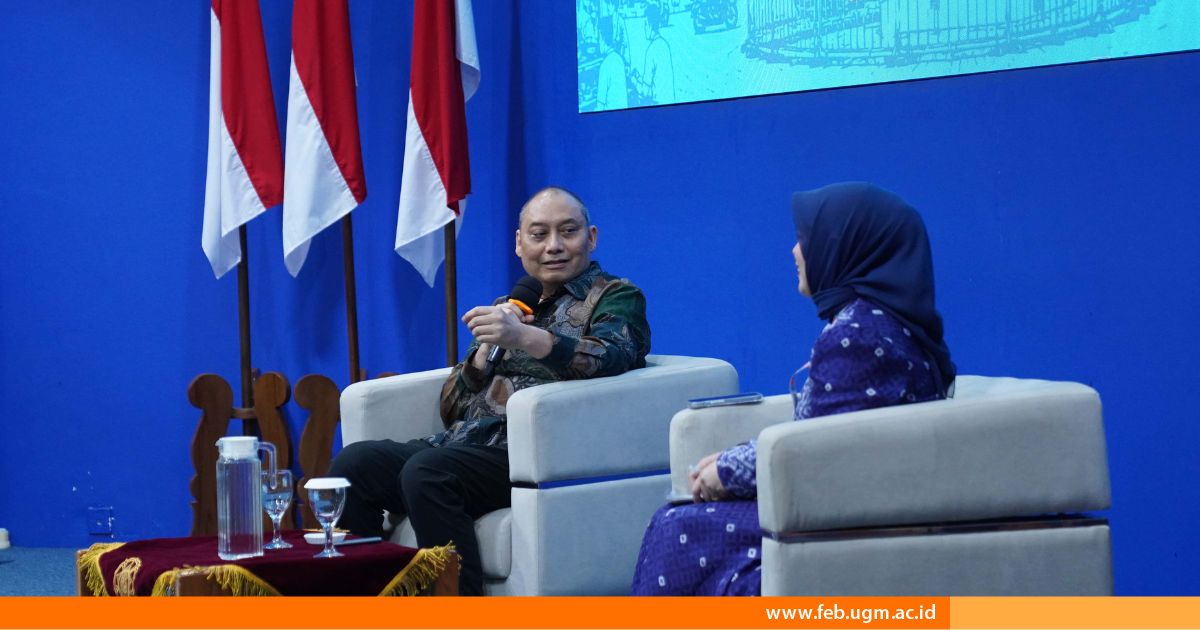
Prof. B.M. Purwanto, M.B.A., Ph.D., Professor at the Department of Management, Faculty of Economics and Business, Universitas Gadjah Mada (FEB UGM), and an expert in Outcome-Based Education (OBE) curriculum development, explained that one of the major challenges faced by higher education institutions in Indonesia is the tendency to formulate graduate profiles based on specific occupations that graduates are expected to pursue. According to him, academic programs are not intended to prepare students for a single profession but rather to equip them with competencies applicable across a wide range of professional roles.
“Graduate profiles should be followed by clearly defined competencies that describe the abilities graduates must possess to contribute effectively across various fields,” he said during the National Seminar and the 11th Annual Meeting of APSEPI 2026 held on Thursday (July 9), themed Mission-Based Curriculum Management and Learning Outcomes/Competency-Based Education.

He emphasized that formulating competencies is far from straightforward, as each academic program has its own characteristics, social context, and distinctive strengths. Drawing on his teaching experience abroad, Prof. Purwanto shared how his involvement in addressing various issues in Sleman Regency through research, consultancy, and community engagement had been transformed into teaching materials, workshops, and learning modules.
“They greatly appreciated these materials because they did not have similar experiences,” he explained.
Prof. Purwanto also highlighted the persistent confusion surrounding the distinction between the Indonesian National Qualifications Framework (KKNI) and competencies. To illustrate the difference, he likened KKNI to the ingredients in a kitchen, with lecturers serving as chefs who transform those ingredients into a complete dish. This analogy underscores that curriculum development is not merely about assembling courses but about designing an integrated learning system that produces graduates with the intended competencies.
He further questioned the assumption that quantitative measures alone can represent graduate quality, raising concerns about whether GPA truly reflects competence.
“If that were the case, graduates with higher GPAs than those from Harvard would automatically be more competent than Harvard graduates. Clearly, that is not the reality. This means that GPA does not fully represent graduates’ competencies,” he remarked.
For this reason, he suggested that universities develop additional mechanisms to assess graduate competencies. Such assessments, he noted, should not serve as graduation requirements but rather function as an internal quality control system to ensure that graduates genuinely achieve the competencies established by their academic programs.
Furthermore, Prof. Purwanto stressed that graduate competencies extend beyond mastery of academic disciplines. They also encompass leadership, communication skills, teamwork, integrity, ethics, professionalism, technological proficiency, and creative problem-solving abilities. These competencies complement one another in preparing graduates to meet the demands of today’s dynamic workplace.
He concluded by emphasizing that universities must provide students with ample opportunities to develop these competencies, not only through classroom instruction but also through diverse experiential learning experiences outside the classroom.
In line with this vision, FEB UGM continues to foster a learning ecosystem that enables students to develop well-rounded competencies. This development extends beyond academic knowledge to include practical skills, professional attitudes, behaviors, and values through a wide range of learning experiences, including student organizations, internships, research, community service, competitions, and international programs. Through this holistic approach, students are expected to graduate with the competencies needed to make meaningful contributions to both the workforce and society.
Reporter: Shofi Hawa Anjani
Editor: Kurnia Ekaptiningrum
Sustainable Development Goals