Slowly, Maëli Inès Lagnide brushed paint across the surface of the wooden mask in front of her. Each stroke of the brush gradually added color to the once-plain mask. For the student from Rotterdam School of Management, painting a wooden mask was a new and memorable experience.
“I really enjoyed the painting session because it allowed me to focus on one thing, slow down, and let our creativity speak,” said Maëli.
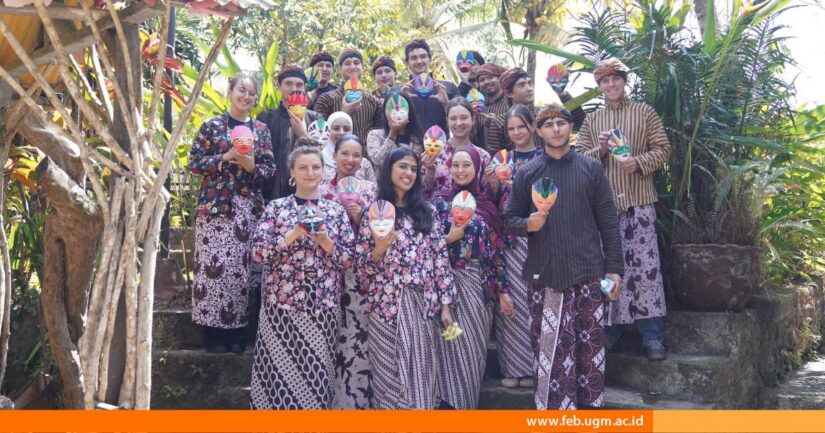
Maëli gained this experience during Cultural Immersion Day at Kembang Arum Tourism Village in Turi, Sleman, alongside 71 international students from 42 universities worldwide. The students are participating in exchange and double-degree programs at FEB UGM for one semester.
For Cole Davis Lynch, a student at the University of Victoria in Canada, the highlight was Jemparingan, a traditional Javanese form of archery with its own distinctive techniques and style of play.
For Cole, the experience was quite different from the archery he was familiar with. One of the things that caught his attention most was the body position used when shooting. While archery is generally practiced while standing, Jemparingan is performed while sitting.
“Today was so much fun! It was such a new experience because archery here is done while sitting, unlike in Canada, where it is done standing. That was really cool!” he said.
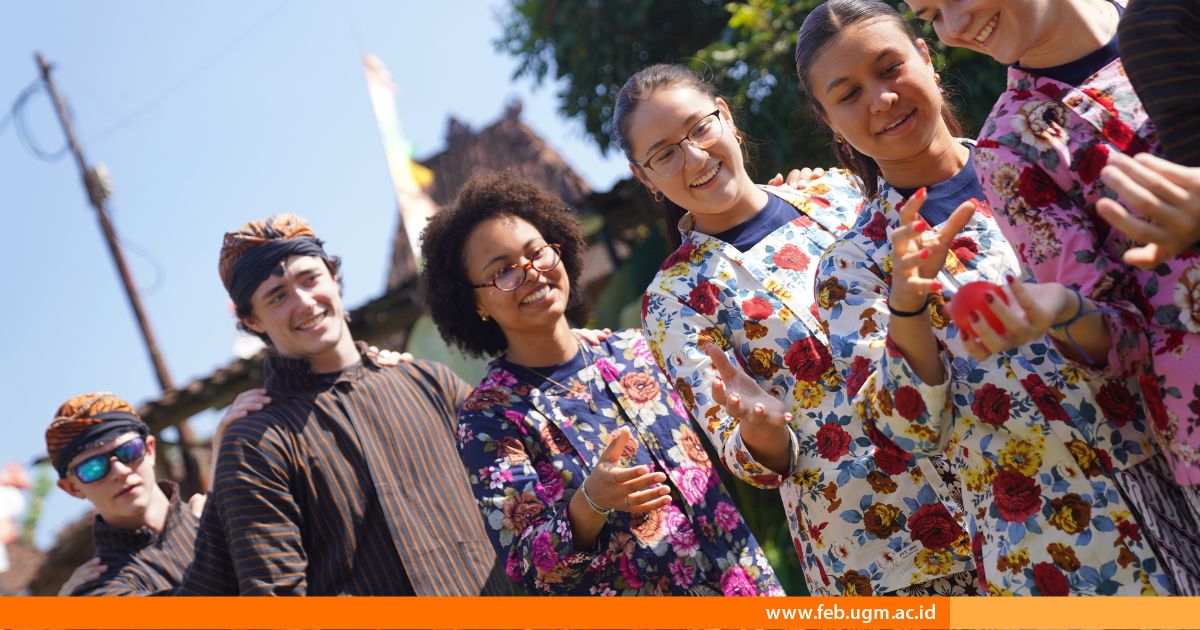
The cultural activities featured in Cultural Immersion Day 2026 are part of FEB UGM’s efforts to help international students get to know and experience Javanese culture firsthand. The students began their cultural exploration by wearing traditional Javanese attire, with the male students wearing surjan and the female students wearing kebaya. They also wore a jarik, traditional batik-patterned cloth associated with Yogyakarta, adding an authentic touch to the experience.
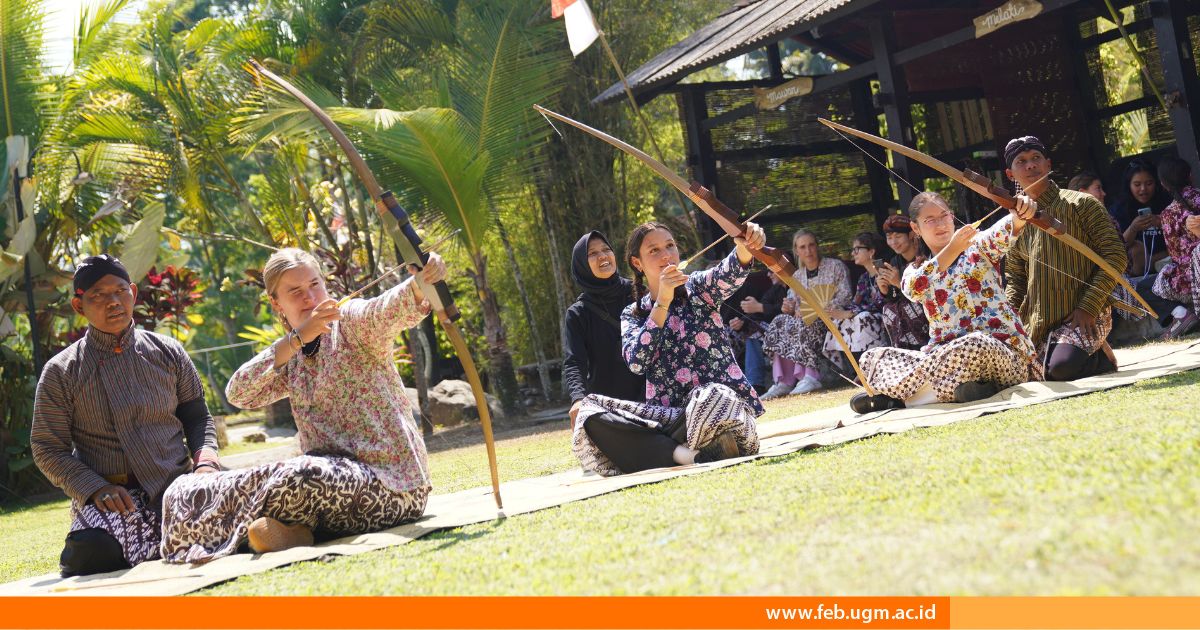
The international students took part in various traditional Javanese activities. First, they made traditional toys from janur (young coconut leaves), crafting them into various shapes such as a keris, a bird, and a flower. Second, they painted traditional Javanese wooden masks in a variety of colors. Finally, they tried Jemparingan, a traditional Javanese archery activity with its own distinctive techniques.
These experiences are particularly meaningful for the international students, who will spend one semester in Yogyakarta. Amid the academic life they are about to undertake, culture serves as a gateway to understanding the social environment in which they live.
Report: Najwa Anggi Namira
Editor: Kurnia Ekaptiningrum
Sustainable Development Goals