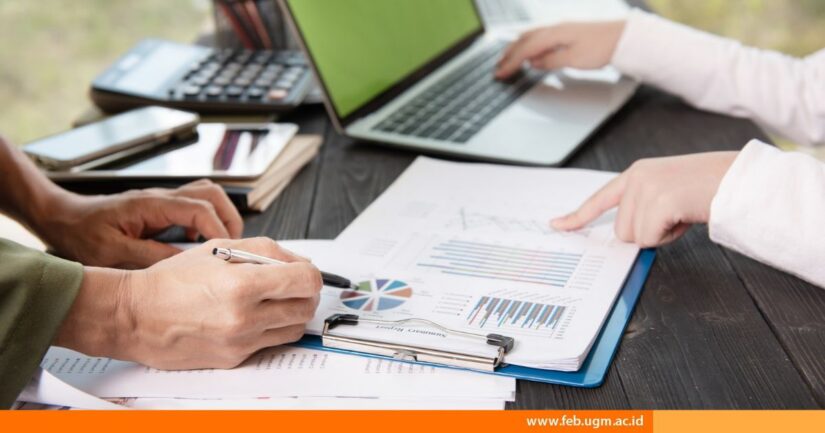
A large government budget does not necessarily guarantee a program’s success in delivering benefits to society. Budget management needs to be supported by measurable planning, control, and evaluation to ensure that every expenditure generates benefits aligned with development objectives.
Professor of Accounting at the Faculty of Economics and Business, Universitas Gadjah Mada (FEB UGM), Prof. Dr. Abdul Halim, stated that public management accounting plays an important role in ensuring that government budgets are used effectively and accountably. He made the statement during an FEB UGM Podcast entitled “Big Budget, Where Does the Impact Go? The Role of Accounting in Public Policy.”
According to Abdul Halim, public management accounting helps the government generate information that serves as a basis for decision-making and supports program control and performance measurement. This is particularly important because government financial management, especially funds sourced from the State Budget (APBN), must be accountable and aligned with established plans and objectives.
“Essentially, accounting produces information that is used for decision-making. In government, public management accounting is also useful for control and performance measurement,” he explained.
He further explained that measuring the success of government programs requires attention to the relationship between inputs, processes, outputs, outcomes, and impacts. The government should not merely calculate the amount of funds allocated or the number of activities implemented, but should also assess the results and changes experienced by society.
In this context, the concept of value for money is an important approach to evaluating budget performance. The concept encompasses three aspects: economy, efficiency, and effectiveness. These three pillars help ensure that budgets are spent at a reasonable cost, utilized optimally, and achieve their intended objectives.
He illustrated the application of public management accounting through local government decisions on whether to purchase or lease official vehicles. Such decisions need to take into account various cost components, including procurement, maintenance, depreciation, and utilization rates.
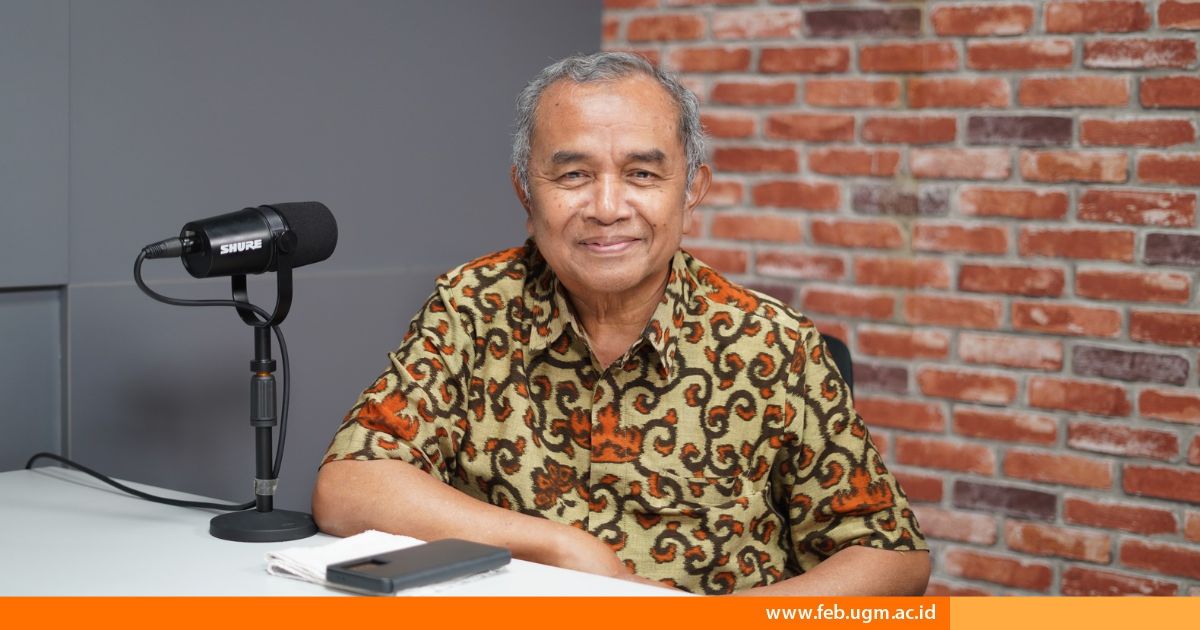
“If leasing is considered more efficient than purchasing, it can serve as an alternative for reducing government expenditure,” he said.
Abdul Halim also emphasized that oversight of budget utilization is an important aspect of public financial management. He highlighted the role of Regional Legislative Councils (DPRD) in scrutinizing and overseeing regional budget allocations to ensure accountability in their use. According to him, budgeting should be based on clear data and identified needs so that accountability considerations support every decision.
The use of technology and artificial intelligence also has the potential to support greater efficiency in government budget management. Through more systematic data processing and calculations, the government can evaluate the relationship between the resources used and the results achieved. However, the adoption of technology needs to be accompanied by improvements in working practices and the quality of public services.
He added that the implementation of public management accounting still faces several challenges, particularly in objectively measuring performance and ensuring policy consistency during government transitions. Therefore, transparency and accountability are essential to ensure that budget utilization can be traced back to the planned objectives, programs, and activities.
“Through public management accounting, supported by data-driven planning, performance measurement, as well as transparent and accountable oversight, the government is expected to ensure that every budget allocation genuinely contributes to development objectives and delivers tangible benefits to society,” he emphasized.
The full episode of the FEB UGM Podcast, entitled “Anggaran Besar, Dampaknya ke Mana? Peran Akuntansi dalam Kebijakan Publik” is available at http://ugm.id/PeranAkuntansiManajemenPublik.
Reporter: Najwa Anggi Namira
Editor: Kurnia Ekaptiningrum
Sustainable Development Goals