Many recent graduates enter the workforce with a strong academic foundation, but many experience culture shock when faced with the complex and dynamic realities of companies or institutions. Analytical skills, communication, adaptability, and a willingness to continue learning are becoming increasingly important competencies for bridging the gap between classroom theory and professional practice.
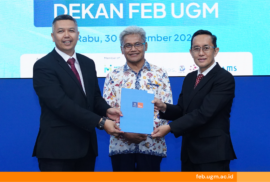
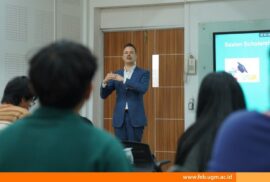
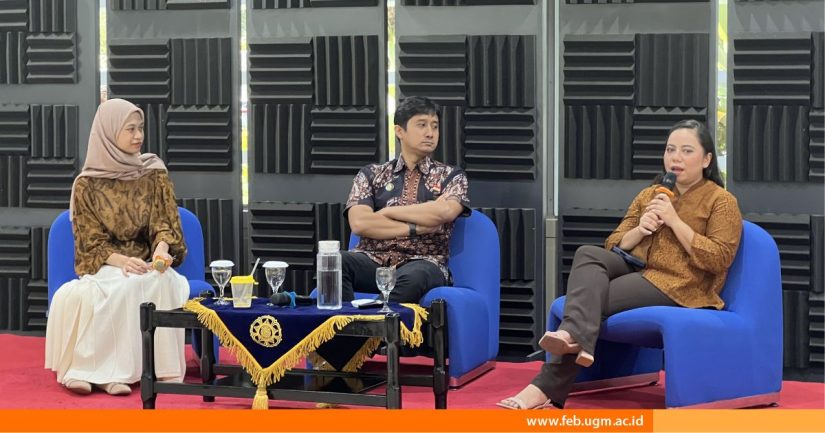
This topic was highlighted during an Alumni Sharing session titled “Starting Line: The Journey from Fresh Graduate to Young Professional,” organized by the Faculty of Economics and Business (FEB) UGM on Monday (June 18, 2026). The event featured FEB UGM alums from the government and corporate sectors who shared their experiences transitioning from campus life to the professional world.
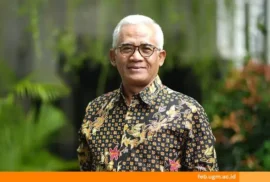
Putut Purwandono, a 2004 graduate of the Economics program at FEB UGM who currently serves as Division Head of Tax Records Collection and Revenue Development for the City of Yogyakarta, explained that the education he received during his studies fostered analytical, logical, mathematical, and data-driven thinking. However, he noted that these competencies must be complemented by communication skills and experiences gained outside the classroom.
According to her, her involvement in student organizations and research activities during college provided valuable experience that helped develop her leadership, teamwork, and communication skills, which later proved invaluable in her career.
“These experiences fostered communication, leadership, and teamwork skills that proved invaluable upon entering the workforce. If you’re strong in research and enjoy reading, you’ll find it easier to follow discussions, understand issues, and communicate with seniors and leaders once you enter the workforce,” he explained.
Putut also highlighted the challenges new graduates often face when entering the workforce, namely, aligning the theories learned in college with real-world realities. Nevertheless, he emphasized that the combination of academic knowledge and an understanding of organizational dynamics remains a crucial foundation.
“On campus, we often view various issues from an ideal theoretical perspective. However, once we enter the workforce, we’ll find that every decision is influenced by many factors, ranging from politics, budgets, and regulations to the interests of various stakeholders,” she said.
Meanwhile, Angelica Emmy Seraphine, a 2012 Management graduate who currently serves as Commercial Account Manager at Asuransi Astra, shared her decade-long career journey. She emphasized that the early years of employment are a crucial phase for learning and gaining a comprehensive understanding of the company, from the role itself, the company’s products or services, and the work culture, to the personalities of her colleagues.
According to him, the ability to build professional networks and a proactive attitude toward seeking information are essential assets for thriving in an ever-changing work environment.
“Build networks with senior colleagues and across departments. Additionally, it is crucial to be proactive in seeking information and to be willing to keep learning. Keep growing, because the professional world will always be dynamic,” he said.
Angel also reminded everyone that a career journey is not an instant process. In the face of various challenges and work pressures, consistency in continuous learning and integrity are the factors that determine the sustainability of one’s career.
“A career is a marathon, not a sprint. There will be challenges, pressures, and even times when motivation wanes. But what matters most is to keep learning, maintain integrity, and find the reasons that keep us growing,” she concluded.
Reported by: Shofi Hawa Anjani
Edited by: Kurnia Ekaptiningrum
Sustainable Development Goals