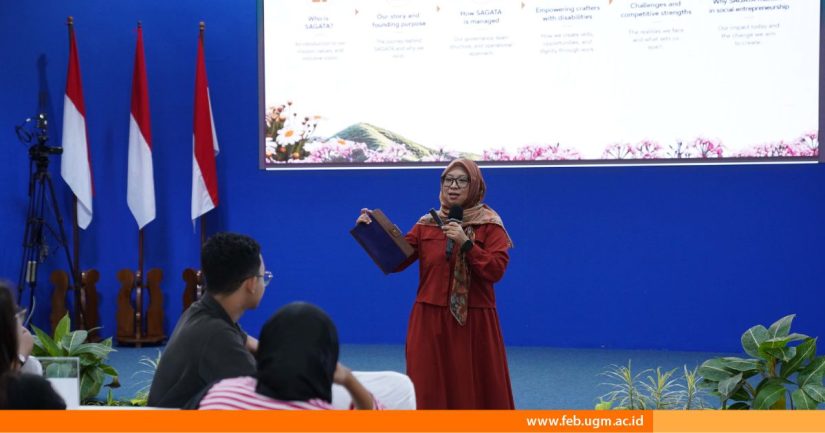
A business’s success is not solely measured by the profits it generates, but also by the positive social impact it creates. Social entrepreneurship offers an innovative and sustainable business approach to addressing societal challenges, including creating employment opportunities and fostering economic independence for people with disabilities.
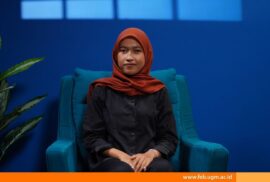
Megawati Syahril, S.E., M.B.A., CEO of SAGATA, a handicraft enterprise that empowers people with disabilities, explained that the primary goal of social entrepreneurship is to create sustainable social impact. According to her, this business model provides a meaningful solution to the challenges faced by people with disabilities in Indonesia. Through SAGATA, she creates opportunities for individuals with disabilities to work, earn an income, and achieve economic independence.
Megawati noted that people with disabilities in Indonesia continue to face numerous barriers, ranging from limited access to education and employment to persistent social stigma that questions their capabilities. In reality, with an inclusive environment and the right support, many of them can produce high-quality, competitive products. Through social entrepreneurship, these challenges can be transformed into opportunities that generate both social impact and sustainable business growth.
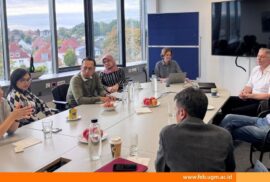
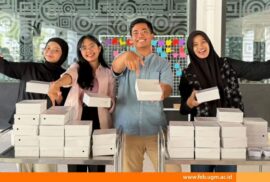
These insights were shared during the workshop “Social Entrepreneurship for Inclusion and Empowerment,” held as part of the Global Summer Week program on July 16, 2026, which brought together dozens of students from five countries. During the session, Megawati shared SAGATA’s journey and business practices. She explained that the company deliberately maintains a handcrafted production process carried out by artisans with disabilities. While this approach requires more time than conventional manufacturing, she believes that the success of a social enterprise should not be measured solely by efficiency, but by its ability to balance social mission with business sustainability.
“We have the opportunity to contribute to society. I believe this is the perfect combination of the knowledge we gained during our university years and applying it directly to create meaningful impact for the community,” she said.
During the workshop, participants were invited to develop social entrepreneurship ideas through group discussions. The teams then presented their proposals and received direct feedback from Megawati. She encouraged participants not to stop at designing innovative solutions but to ensure that a realistic business model supports every idea, addresses genuine market needs, and creates long-term social impact.
Reporter: Najwa Anggi Namira
Editor: Kurnia Ekaptiningrum
Sustainable Development Goals