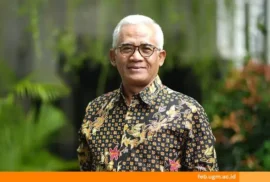
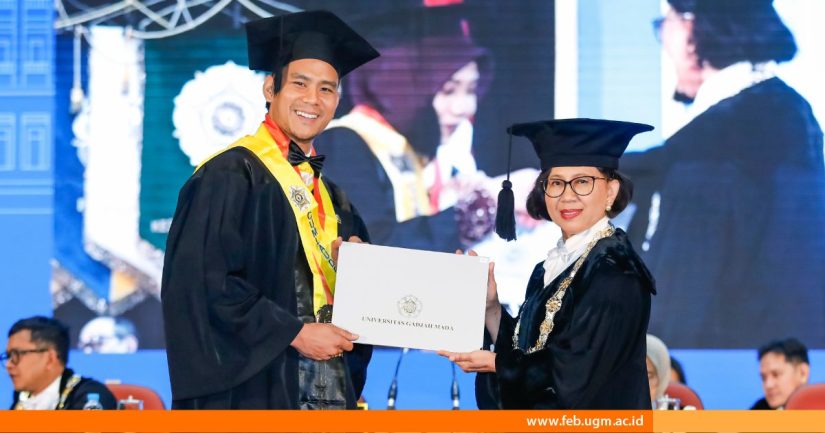
Being named the best graduate of the Master’s Program at the Faculty of Economics and Business, Universitas Gadjah Mada (FEB UGM), while also earning the title of Valedictorian at The University of Queensland (UQ), was an achievement Fajar Munichputranto had never imagined. He earned these distinctions through the double degree program between the Master of Management at FEB UGM and the University of Queensland.
Behind this remarkable accomplishment lies a story of perseverance, dedication, and a commitment to advancing sustainable business practices in Indonesia. For Fajar, his academic journey was not only about personal achievement but also about shaping his character and vision for the future.
“These two achievements have become the most memorable milestones in my life. Through them, I gained invaluable academic experiences, life lessons, and meaningful relationships within a relatively short period,” said Fajar, who pursued his master’s degree with an LPDP Scholarship.
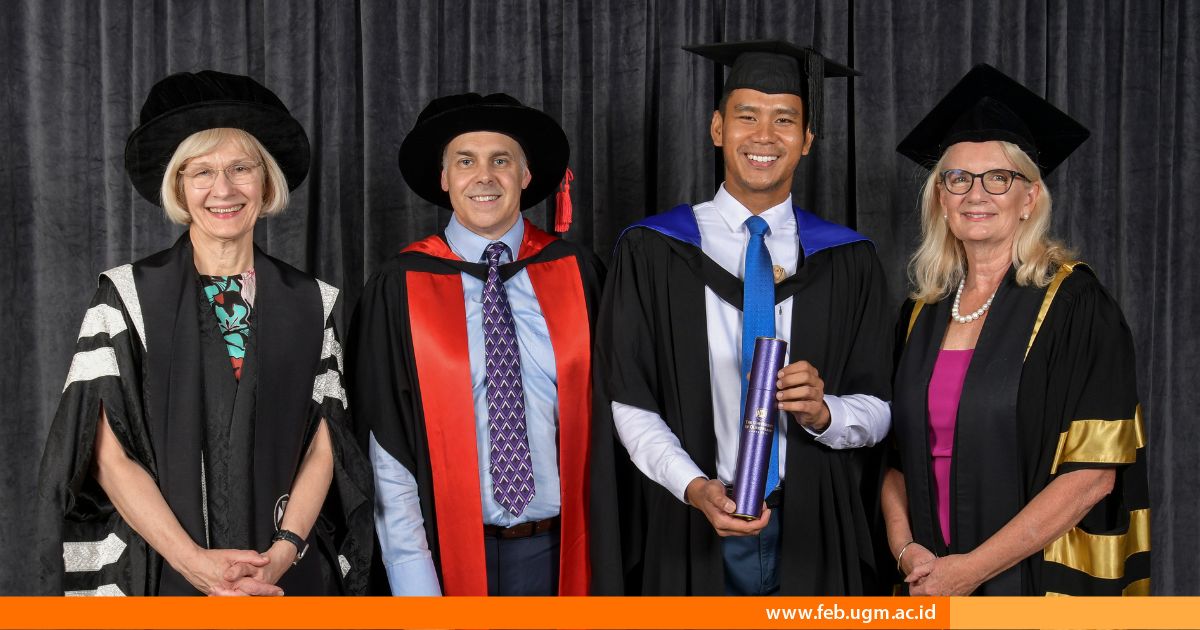
Studying in two different countries provided Fajar with a unique learning experience. Although FEB UGM and UQ offered different academic environments, both taught him the importance of embracing diverse perspectives.
“At FEB UGM, diversity generally comes from students’ professional experiences and educational backgrounds. At UQ, however, diversity is shaped by differences in values, cultures, contexts, and perspectives on a much broader international scale,” he explained.
These experiences encouraged him to prioritize integrity, objectivity, and equality in every discussion, creating an open and respectful learning environment.
Beyond cultural differences, Fajar also observed distinct learning systems at the two universities. At FEB UGM, active classroom participation and discussions contributed significantly to students’ grades. Meanwhile, UQ employed a highly detailed assessment system, with grading criteria varying across courses and lecturers. These differences required him to adopt different learning strategies to succeed in each institution.
At the same time, Fajar balanced his academic responsibilities with his professional career. While pursuing his studies, he continued managing his family’s waste-to-energy (WtE) business, which converts organic waste into renewable energy. As Vice Director of PT Cipta Visi Sinar Kencana, he was involved in planning and designing technical projects in collaboration with multinational companies. To manage these multiple responsibilities, Fajar relied on careful prioritization and digital calendars to organize his schedule.
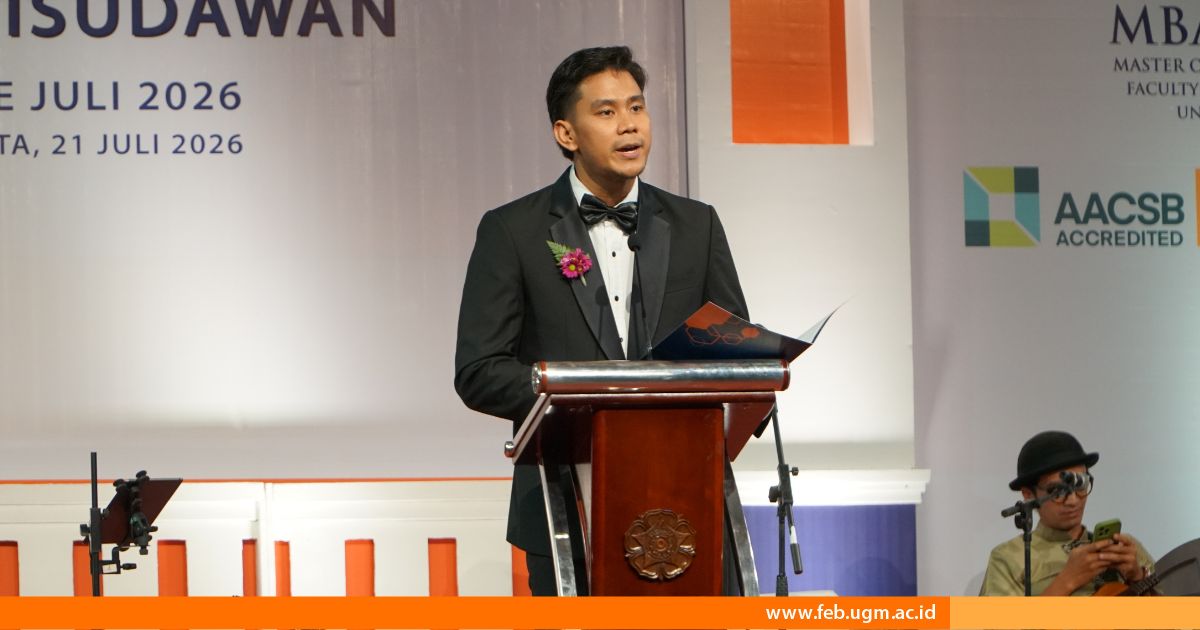
Fajar also highlighted how many concepts from his MBA studies have been directly applicable to the development of Indonesia’s waste-to-energy industry. These include financial feasibility analysis using sustainable or green finance approaches, and methods for quantifying social value, given the significant social impact generated by WtE projects.
He noted that the Business Ethics for Sustainability course at FEB UGM shaped his understanding of business ethics. In contrast, the Social Entrepreneurship in Practice course at UQ broadened his perspective on validating business ideas and creating social value.
Reflecting on his journey from the banking sector to completing his MBA, Fajar shared an important lesson about decision-making.
“The essence of decision-making is weighing the benefits against the costs or resources required while mitigating risks. After completing my studies, I realized there is another essential element to consider, ethics,” he said.
According to him, MBA graduates today must possess strong analytical and problem-solving skills, as well as the ability to communicate ideas effectively and efficiently. These competencies are becoming increasingly important as artificial intelligence (AI) continues to transform industries worldwide.
Despite all his accomplishments, Fajar believes his success was not solely the result of his own hard work, but also the unwavering support and prayers of his parents and wife throughout his academic journey.
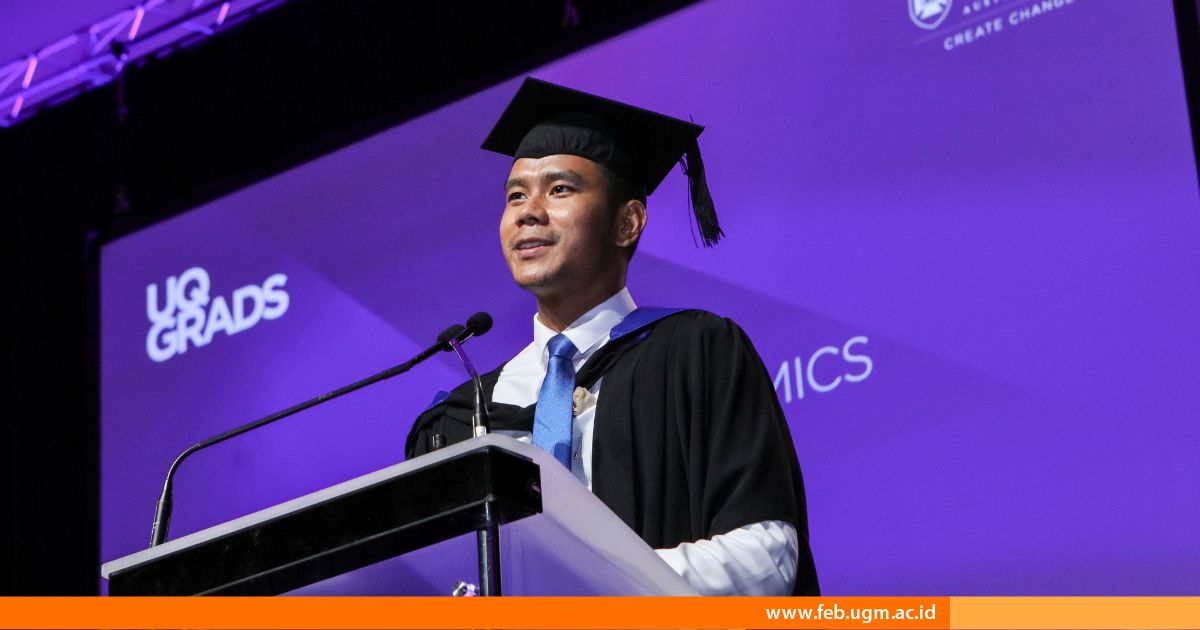
“I am endlessly grateful for God’s blessings and deeply thankful for the support of my parents and my wife throughout this challenging journey,” he said.
He added that the true key to success is not striving to be the best, but consistently giving one’s best in line with personal values and shared standards.
For students still considering a double degree program, Fajar strongly believes it offers invaluable experience. In his view, the program provides students with broader opportunities within a single period of study.
“The benefits complement each other, including access to reputable academic journals, opportunities to participate in international competitions and business incubators, as well as expanding networks with academics, lecturers, and business partners,” he explained.
Finally, Fajar encouraged students aspiring to receive the LPDP Scholarship or to pursue studies abroad first to establish a clear sense of purpose.
“Ask yourself and reflect carefully on what you truly hope to gain from receiving a scholarship and studying overseas,” he advised.
Reporter: Shofi Hawa Anjani
Editor: Kurnia Ekaptiningrum
Sustainable Development Goals