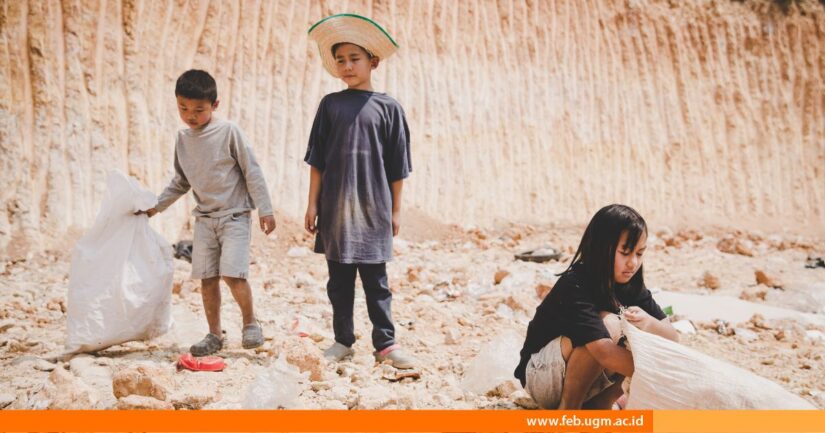
Poverty remains one of the social challenges faced by countries around the world. One of the Indonesian government’s policies to address poverty is the Bantuan Langsung Tunai (BLT) Dana Desa. The program is expected to improve people’s welfare, including their children’s well-being. However, do children actually benefit from this assistance?
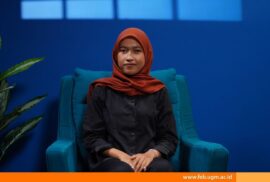
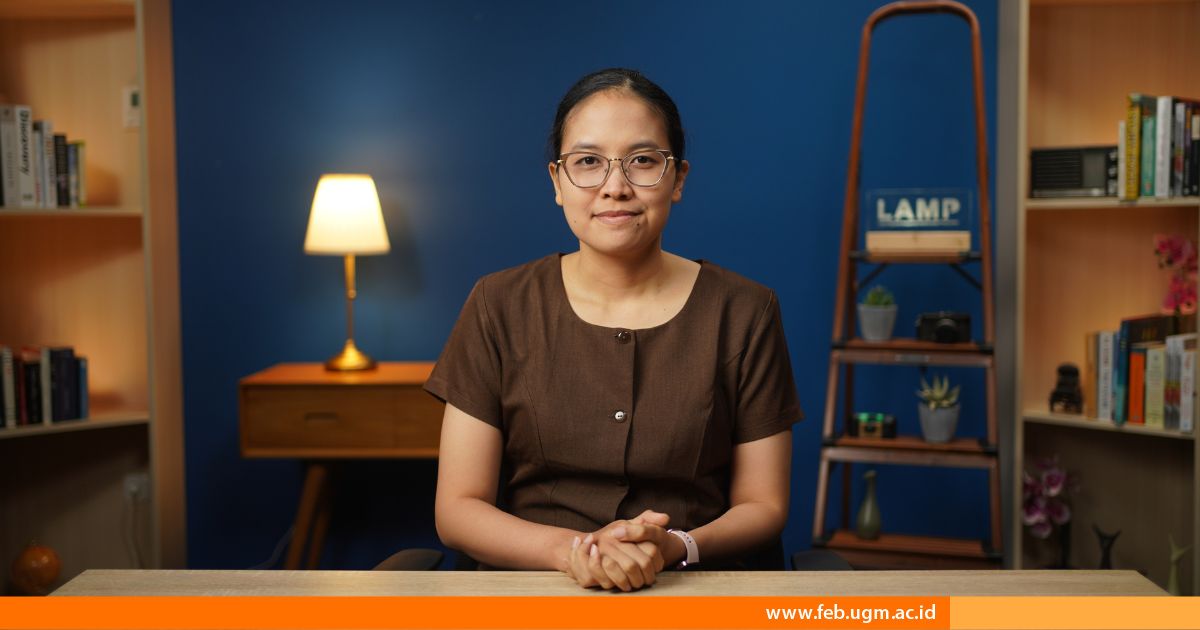
This question became the starting point for Syaila Anya Tanaya’s research during her studies in the Master of Development Economics program at the Faculty of Economics and Business, Universitas Gadjah Mada (MEP FEB UGM). She examined the impact of the Bantuan Langsung Tunai (BLT) Dana Desa on child nutrition, particularly breastfeeding and complementary feeding (MPASI).
Poverty and Challenges in Child Nutrition
Syaila, who graduated from the MEP FEB UGM program in January 2026, highlighted that malnutrition and stunting remain major issues closely associated with the social and economic conditions of communities. Between 2013 and 2023, approximately one in five children in Indonesia experienced stunting.
“Since 2020, the government has implemented the Bantuan Langsung Tunai (BLT) Dana Desa as one of the social protection instruments for rural communities, with funding reaching tens of trillions of rupiah each year. The assistance is provided in the form of unconditional cash transfers,” she explained during the 3 Minute Thesis program, titled “Dari Dana Desa ke Gizi Anak: Evaluasi Dampak BLT di Indonesia.”
According to household production theory and Engel’s law, she continued, additional income increases a household’s ability to meet its consumption needs, including children’s food needs. Therefore, children’s nutritional quality should also improve.
Syaila explained that the study examined households with children aged 0–24 months, using data from the 2022 and 2023 National Socioeconomic Survey (SUSENAS) and the 2021 Village Potential Statistics (PODES). This age group was selected because the first two years of life are a critical period for children’s growth and development.
The study examined breastfeeding practices and the quality of complementary foods, particularly whether children received sufficiently diverse diets. It is also considered an important aspect of the Bantuan Langsung Tunai (BLT) Dana Desa: the program targets families who are initially more likely to be poor and vulnerable.
The research produced an interesting finding. Bantuan Langsung Tunai (BLT) Dana Desa was found to change what was on children’s plates. The policy increased the likelihood that children would receive diverse complementary foods by 9.38 percentage points. This means that additional household income could be allocated toward providing children with a wider variety of foods, such as eggs, fish, vegetables, and other foods that may previously have been difficult for low-income families to afford.
“Bantuan Langsung Tunai (BLT) Dana Desa enables poor families to provide more nutritious food for their children,” said Syaila.
Money Can Buy Food, but Not Time
Bantuan Langsung Tunai (BLT) Dana Desa can increase the likelihood that children receive a more diverse range of complementary foods, but its impact on breastfeeding was not statistically significant. Unlike complementary feeding, breastfeeding requires something that money cannot buy: time.
A mother’s circumstances, employment, social pressures, and physical and psychological condition can influence breastfeeding practices. According to Syaila, economic assistance needs to be accompanied by nutrition education, integrated health services such as posyandu, health support, and assistance for mothers and children, particularly during the first 1,000 days of life.
“Cash is necessary, but not sufficient. When we talk about breastfeeding, we are talking about time. Breastfeeding is more time-intensive, while complementary feeding is relatively money-intensive. Therefore, complementary feeding can change when household income increases, but breastfeeding does not necessarily do so,” Syaila explained.
These findings show that the success of a policy cannot be measured solely by the amount of assistance provided, but also by how that assistance is translated into household well-being. In the context of child nutrition, money can help families provide a more diverse diet, but children’s needs extend beyond food.
The full video of the 3 Minute Thesis program, titled Dari Dana Desa ke Gizi Anak: Evaluasi Dampak BLT di Indonesia, is available at ugm.id/EvaluasiDampakBLTdiIndonesia.
Report: Najwa Anggi Namira
Editor: Kurnia Ekaptiningrum
Sustainable Development Goals