The success of digital transformation is determined not only by technological readiness but also by the quality of human resources, governance, and supportive policies. These three aspects need to work together to ensure that digital transformation can enhance productivity while delivering inclusive and sustainable benefits.
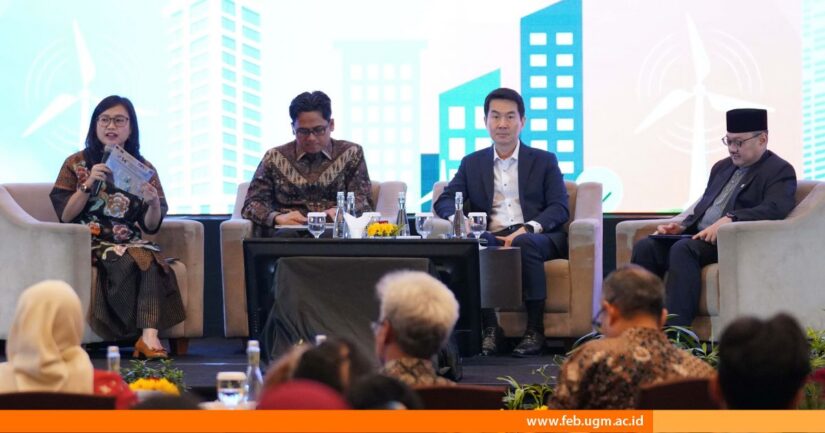
This was conveyed by Prof. Syaiful Ali, M.I.S., Ph.D., Ak., C.A., CPA (Aust.), CESGA during the plenary session of The 14th Gadjah Mada International Conference on Economics and Business (GAMAICEB) 2026 at The Alana Yogyakarta Hotel & Convention Center on Wednesday (16/9). In his presentation, titled “Digital Transformation and Sustainable Development,” Syaiful Ali discussed how digital transformation can support sustainable development while also creating risks when not accompanied by adequate ecosystem readiness.
He reviewed 52 studies to examine the extent to which digital transformation can support sustainable development or create risks. The findings indicate that digital transformation tends to provide benefits for sustainable development, depending on the conditions under which it is implemented.
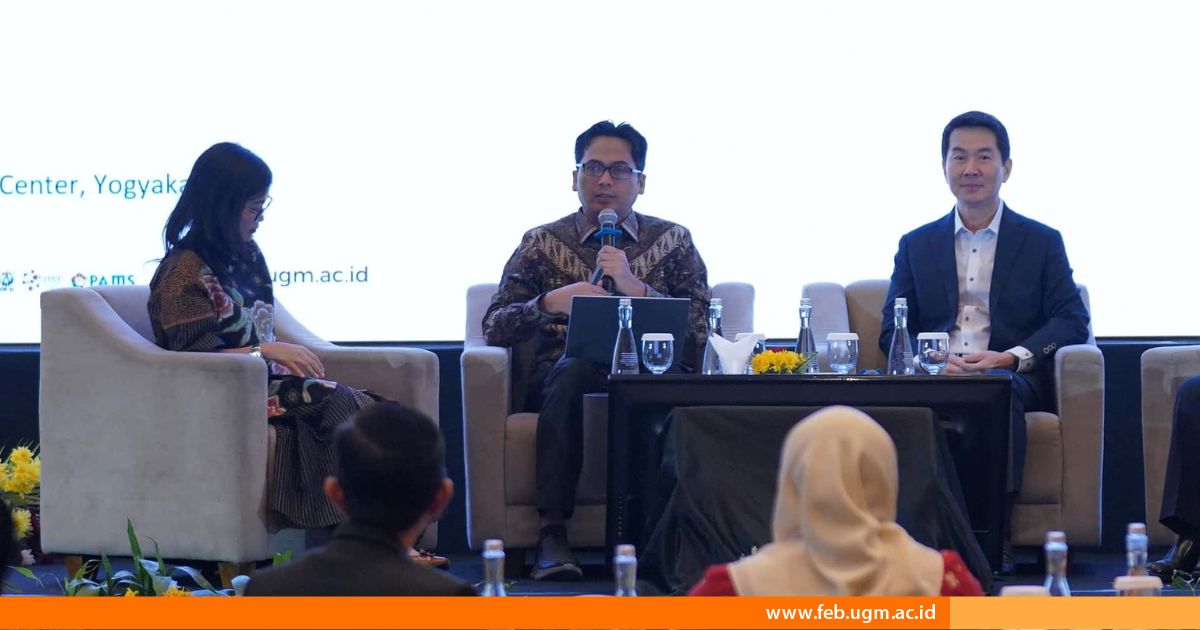
“Some companies, regions, and groups benefit more, while others may be disadvantaged. Factors such as institutional policies, workforce skills, infrastructure, and industrial structure are key determinants of these outcomes. In addition, higher energy consumption leads to more electronic waste,” he explained.
Syaiful emphasized that successful digital transformation requires a combination of people, governance, and policy. These three aspects, he noted, need to be strengthened simultaneously. Industrial policies, green financing, and environmental regulations should also be aligned toward common goals so that digital transformation does not focus solely on technological growth.
In the public-sector context, Syaiful Ali highlighted the importance of instruments for measuring the quality of digital transformation governance in local governments. He introduced the Gadjah Mada Digital Transformation Governance Index (GM-DTGI), which has been developed by the Center for Information Systems Studies at FEB UGM since October 2024. GM-DTGI is designed to measure how Indonesia’s regencies and cities manage digital transformation. The assessment is conducted annually using information publicly disclosed by local governments.
Dr. Siwage Dharma Negara, a Principal Fellow at the ISEAS-Yusof Ishak Institute in Singapore, presented the perspective on productivity in digital transformation. In his presentation, titled “Governing Indonesia’s Transformation: Digitalization, Sustainability & Productivity,” Siwage emphasized that Indonesia’s large digital market needs to be accompanied by greater digital depth and productivity.
According to Siwage, Indonesia already has a significant digital scale and is one of the largest digital markets in Southeast Asia. However, the number of users and level of technology consumption alone are not sufficient to ensure that technology contributes to productivity.

“Beyond being able to use technology and increasing the number of users, we also need to improve productivity through technology in companies, agriculture, logistics, education, and government. Therefore, the policy focus needs to shift from digital consumption toward digital production and innovation,” he explained.
Siwage emphasized that productivity serves as a bridge between technology and well-being. This perspective is also relevant to the downstreaming agenda currently being developed in Indonesia, which should not stop at resource processing alone.
He also highlighted the use of artificial intelligence (AI). According to him, AI adoption should be assessed not only by its adoption rate but also by its contributions to productivity, job quality, and inclusion.
In this context, he noted that Indonesia’s AI roadmap needs to strengthen governance, talent, infrastructure, data, and priority use cases.
The discussion on governance was also presented by Dr. Mohd Hairul Azrin Haji Besar from Universiti Brunei Darussalam, a member of the ASEAN University Network for Business & Economics (AUN BE). In his presentation, titled “Future of Corporate Governance in Emerging Economies – Internalization of Ethics and Trust,” Azrin highlighted the importance of ethics and trust in building corporate governance.

According to Azrin, the development of various corporate governance mechanisms has not necessarily eliminated issues such as scandals, greenwashing, lack of transparency, and declining trust. This situation indicates that additional oversight mechanisms need to be complemented by stronger ethical values at both the individual and organizational levels.
In the context of emerging economies, Azrin explained the importance of establishing globally credible governance while maintaining legitimacy rooted in local contexts. He also emphasized that external oversight functions, despite their important role, often face institutional limitations.
“Therefore, strengthening self-governance is an important part of building sustainable governance. Controls can reduce the opportunities for violations, but character is what guides a person’s decisions when no one else is watching,” he explained.
Meanwhile, Elinor Kasapidis expanded the discussion of transformation and governance from a business perspective to navigate uncertainty. In her presentation, titled “Reframing Business Models for an Uncertain Future: How Finance Can Connect Digital Transformation, Sustainability and Systemic Resilience,” Elinor discussed the phenomenon of polycrisis, in which various crises and pressures within the global system do not occur independently but are interconnected and can generate cascading effects.
“Digital transformation, sustainability demands, and various forms of uncertainty can no longer be viewed as standalone issues, as changes in one aspect can create consequences for others,” she explained.

Elinor stated that digitalization provides benefits while also creating new risks. Therefore, technological capabilities need to be accompanied by consideration of their impacts. Governance should maximize the benefits of digitalization without shifting costs or risks onto the broader system.
Furthermore, she explained that finance can help translate systemic complexity into a clearer basis for decision-making. This can be achieved by connecting financial and non-financial dependencies within business models, testing assumptions and data quality, and considering the adequacy of organizational resilience capacity.
“By connecting finance, digital transformation, and sustainability, organizations can view business decisions not only in terms of their immediate outcomes but also their long-term consequences for organizational resilience and the broader system,” she explained.
Report: Shofi Hawa Anjani
Editor: Kurnia Ekaptiningrum
Sustainable Development Goals