
The shadow economy, economic activities that go unrecorded, poses a challenge to a country’s economy. This phenomenon not only results in lost potential state revenue but is also closely linked to money laundering practices that can damage the stability of the financial system.
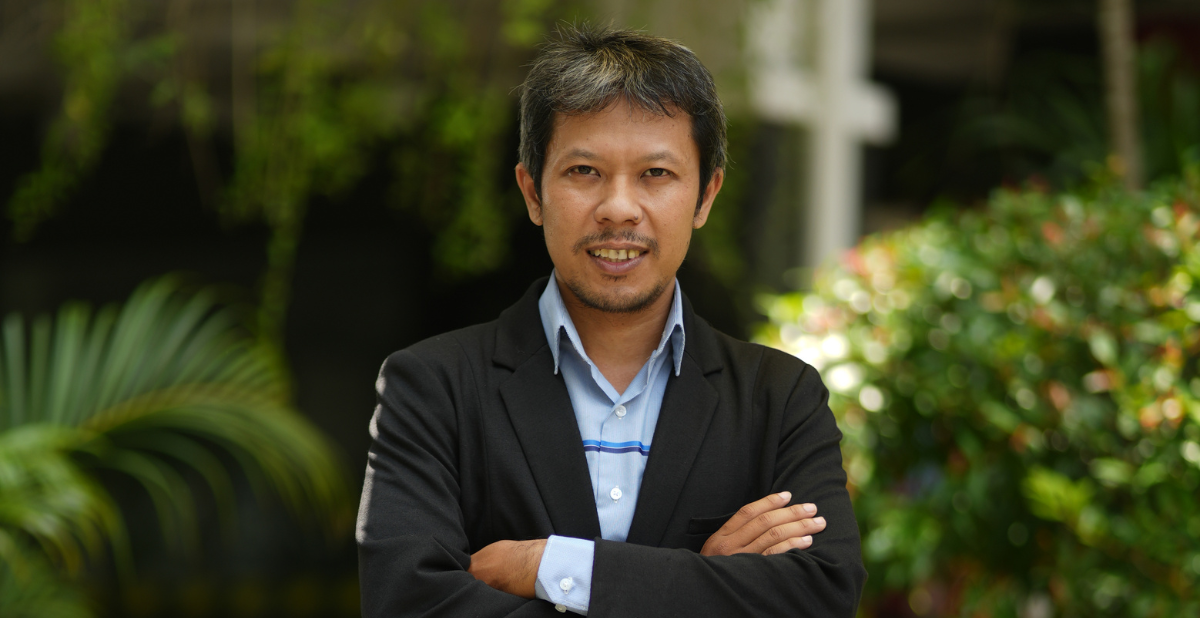
A lecturer from the Department of Accounting, Faculty of Economics and Business, Universitas Gadjah Mada (FEB UGM), as well as a Forensic Accounting expert, Rijadh Djatu Winardi, S.E., M.Sc., Ph.D., CFE., CFrA., explained that the shadow economy includes all economic activities, both legal and illegal, conducted without official business registration. Examples include micro, small, and medium-sized enterprises (MSMEs) operating without permits or registration, informal workers, and large-value buying and selling transactions that go unreported. Other examples include illegal activities such as drug trafficking and the production of illicit substances. These activities in the shadow economy aim to avoid taxes, regulations, and administrative procedures.
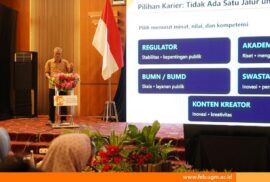
“Funds from illegal activities are then inserted into the financial system to appear legitimate. This process usually goes through several stages, starting from placing funds into the financial system, layering transactions to make them difficult to trace, and finally integrating them back into the formal economy in the form of assets or investments that appear legal,” Rijadh explained during the Economic and Business Journalism Academy event titled “Understanding the Shadow Economy and Money Laundering” held on Tuesday (27/1/2026) at Room 5.2 Pertamina Tower FEB UGM.
Riyadh stated that unrecorded economic activities could reduce state revenue by narrowing the tax base. This condition impacts the government’s limited capacity to finance infrastructure development, education, and social programs.
“The main problem arises when the state fails to observe these activities, meaning they do not feature in GDP. This results in weakened state capacity to finance development. In addition, this condition creates distortions in business competition and has the potential to hinder long-term economic growth,” he said.
Rijadh added that high-income countries tend to have smaller shadow economies compared to middle- and low-income countries, which face greater challenges in suppressing shadow economy activities. The EY Global Shadow Economy Report 2025 estimates Indonesia’s shadow economy at USD 326 billion (IDR 5,304 trillion).
“In the Indonesian context, estimates of the shadow economy size across several periods show significant figures and positively correlate with the level of informal employment. It means that the larger the informal workforce, the larger the economic activities operating outside the formal system,” Rijadh said.
In light of this condition, Riyadh emphasized the importance of strengthening governance to curb the shadow economy, thereby improving the country’s fiscal capacity and supporting sustainable economic growth. Countries with good governance tend to have smaller proportions of shadow economy activities. In addition, financial development plays a vital role as a structural prevention mechanism by formalizing transactions, increasing transparency, and integrating economic agents into the official monetary system.
“In the Indonesian context, strategies are focused on strengthening tax compliance through the Compliance Improvement Program (CIP), integration of National ID (NIK) and Tax ID (NPWP) data, digital data matching, and strengthening digital tax administration systems. Priority sectors with high shadow economy activity, such as retail trade, food and beverages, gold and fisheries, also require supervision,” he said.
However, implementing these strategies also faces various challenges. Informal economic data is difficult to track in real time, many MSME actors tend to avoid formalization, and cross-border transactions often bypass supervision.
“Data integration between financial institutions and the use of Big Data and AI are needed to detect interaction patterns and strengthen supervision. In addition, simplifying processes and promoting digital financial inclusion for MSMEs are necessary, along with international cooperation to strengthen cybersecurity and financial supervision,” he explained.
Reported by: Shofi Hawa Anjani
Editor: Kurnia Ekaptiningrum
Sustainable Development Goals