The role of government appraisers is becoming increasingly important as the government’s need to manage state and regional assets expands. Appraisal results not only determine the objective value of assets but also serve as the basis for decision-making, asset utilization, and the transparent and accountable management of state assets.
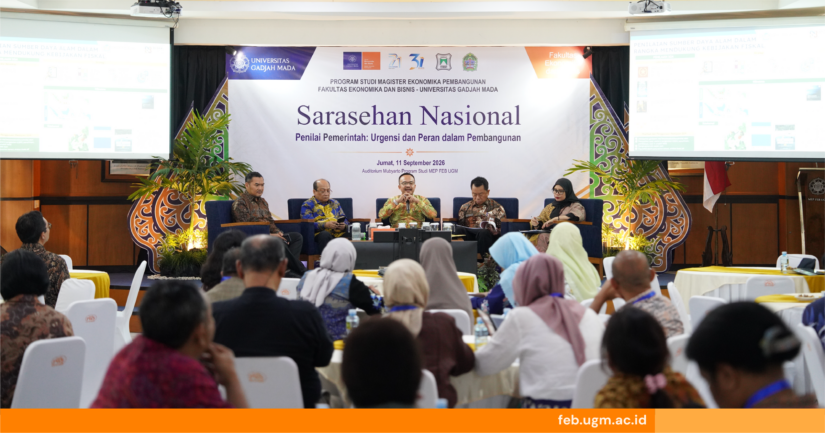
Dr. Edih Mulyadi, S.E., Dipl stated this. Real Est.Val., M.Si., Secretary of the Directorate General of State Assets (DJKN) at the Indonesian Ministry of Finance, during the National Symposium “Government Appraisers: Urgency and Role in Development” organized by the Master in Development Economics at the Faculty of Economics and Business, Universitas Gadjah Mada (MEP FEB UGM), on Friday (September 11).
Edih explained that every state asset has value. Therefore, valuation plays a crucial role in producing an accountable valuation opinion that serves as the basis for the government’s decision-making and management of state assets.
“Through valuation, we can objectively determine the value of assets, support government decision-making, optimize the use of state-owned property, and ensure transparent and accountable asset management,” he said.
Edih explained that the scope of valuation needs extends beyond government asset management. For example, it includes the development of the Merah Putih Village Cooperative, the formulation of tariffs and government policy needs, as well as natural resources (SDA), which are considered more dynamic.
“The valuation of natural resources is not merely intended to determine the economic value of a resource. By understanding the potential value of a particular area, the government can assess the consequences of resource utilization and assist local governments in identifying potential local revenue sources while supporting sustainable resource management,” he explained.
Edih added that the government has made efforts to strengthen the property database by developing the National Valuation Information System (SIPN), which compiles a large volume of property data from various sources. The compiled data now includes three million records and will serve as a tool to help appraisers analyze the distribution of transaction data and property information in the locations being appraised.
The importance of valuation is also felt in the management of local government assets. The Regional Secretary of Gunungkidul Regency, Sri Suhartanta, S.IP., M.Si., stated that optimizing Regional-Owned Assets (BMD) is one of the local government’s strategies to address fiscal challenges, including a decline in central government transfer revenues.
According to Sri Suhartanta, the increase in Local Original Revenue (PAD) has not been sufficient to cover local expenditure needs and offset the decline in transfer revenues. Therefore, the local government needs to optimize its assets, including identifying those that are not yet productive or remain idle.
“Asset valuation is one of the key steps because it provides an objective and accountable basis for determining the utilization or transfer of regional assets,” she said.
Sri Suhartanta added that regional assets that are not managed optimally are merely numbers on the balance sheet. Conversely, assets that are properly valued, well managed, and used appropriately can support public services, investment, revenue sources, and regional development.
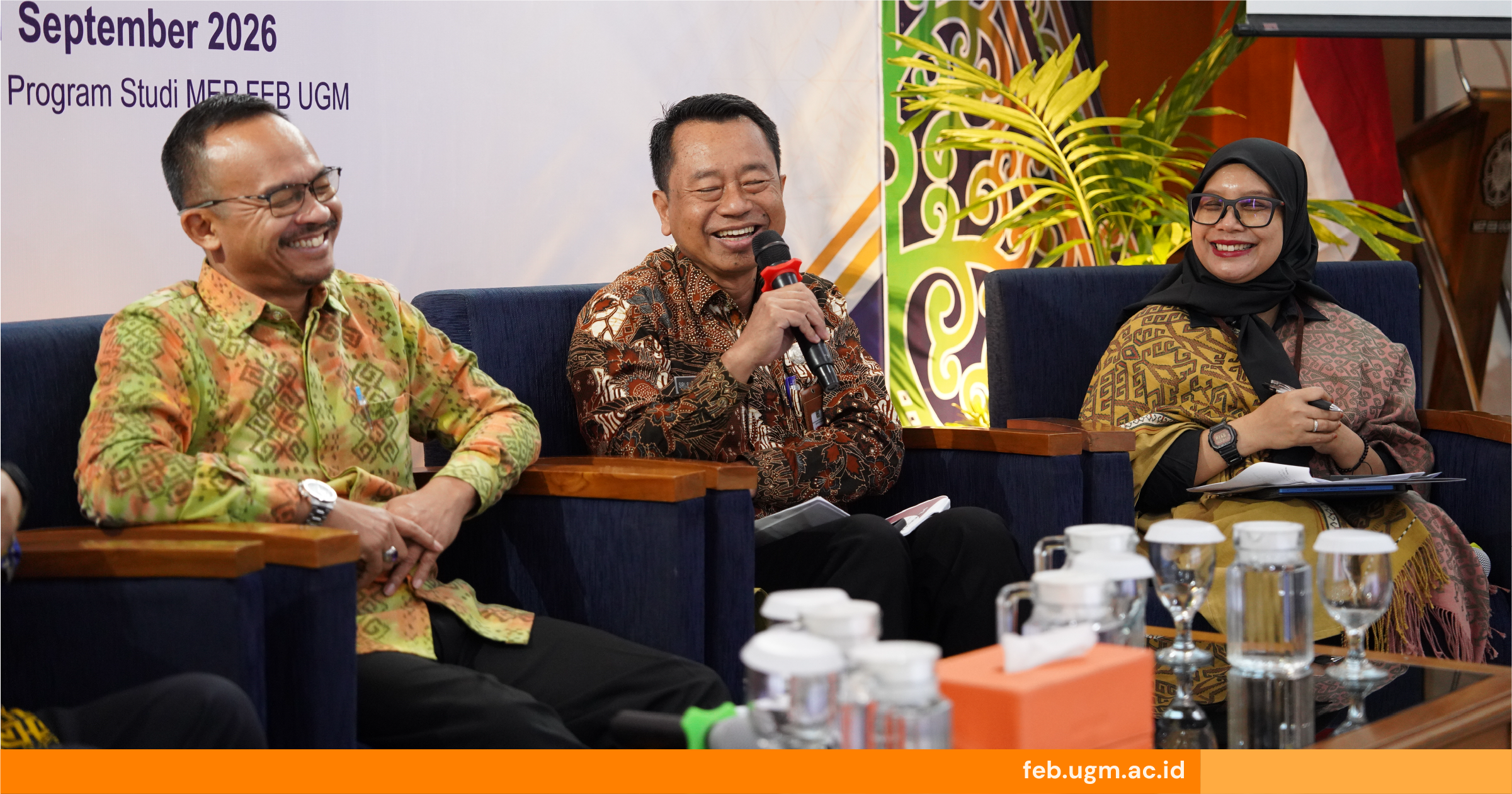
Meanwhile, Dr. Drs. Horas Maurits Panjaitan, M.Ec.Dev., Secretary of the Directorate General of Regional Finance Development, Ministry of Home Affairs of the Republic of Indonesia, stated that accurate and reliable valuation plays a strategic role in optimizing the utilization of Regional-Owned Assets (BMD) with the potential to generate Regional-Owned Revenue (PAD). The utilization of BMD can take various forms, such as leasing, Utilization Cooperation Agreements (KSP), Build-Operate-Transfer (BOT) or Build-Transfer-Operate (BTO) arrangements, and Infrastructure Provision Cooperation Agreements (KSPI).
“BMD appraisals are part of the asset management cycle, ranging from needs planning, procurement, use, utilization, appraisal, transfer of ownership, to disposal,” he explained.
Horas Maurits Panjaitan explained that appraisal results can support the determination of value for leasing activities and other forms of utilization. Furthermore, in the context of asset transfers, the appraisal serves as the basis for determining value before a sale, exchange, or capital contribution.
“Professional appraisal is not an expense but an investment in optimizing local government revenue (PBB-P2 & BPHTB), ensuring the success of collaborative BMD utilization, and fostering accountability and good governance,” he said.
From a professional perspective, Second Vice Chair of the MAPPI National Executive Board, Wahyu Mahendra, S.T., M.Ec.Dev., M.H., MAPPI (Cert.), emphasized the importance of appraisers’ competence in ensuring accountability in asset management. According to him, the significant value of the assets being appraised demands an appraisal of adequate quality.
“An appraiser’s competence is not merely an administrative requirement for the position, but rather the primary safeguard of the state’s financial accountability,” he explained.
Wahyu explained that an appraiser’s competence encompasses not only knowledge but also skills and attitudes. Knowledge is built through measurable and tiered appraisal education, while skills are acquired through experience and continuing education. As for attitudes and ethics, these are reflected through adherence to the Indonesian Appraiser Code of Ethics (KEPI) and the Indonesian Appraisal Standards (SPI), particularly the principles of independence, objectivity, and integrity.
“These three aspects converge on the importance of the quality of the appraisal process. Therefore, harmonization of standards is deemed necessary so that appraisal results have a consistent methodological and ethical foundation,” he explained.
During the seminar, MAPPI presented five recommendations to strengthen BMD and PBB-P2 appraisers in Indonesia. First, to promote the enactment of an Appraisal Law as the sole legal framework for appraisal practices in Indonesia. Second, to strengthen cooperation between MAPPI and UGM in the education of BMD appraisers. Third, to promote the development of the SPI series on the Appraisal of Regional Government Assets as a common standard. Fourth, establish a BMD Appraisers Department within MAPPI as a platform for capacity building and competency enhancement. Fifth, define the division of roles between Government Appraisers and Public Appraisers/KJPP, particularly for high-value assets or those with special characteristics.
Previously, the Dean of the Faculty of Economics and Business (FEB) at UGM, Prof. Dr. Didi Achjari, S.E., M.Com., Ak., CA., noted in his remarks that strengthening the valuation ecosystem requires collaboration among academics, regulators, the government, and the profession. The MEP program at FEB UGM, he said, has, for more than three decades, demonstrated its track record and contributions to producing top-tier talent in the field of development economics, including pioneering asset management and valuation.
Didi hopes this roundtable discussion will serve as an important forum for bringing together diverse perspectives and constructive ideas to lead to practical policy recommendations. Furthermore, this event is also expected to be a strategic step toward achieving good, transparent, and accountable governance.
Reporter: Shofi Hawa Anjani
Editor: Kurnia Ekaptiningrum
Sustainable Development Goals