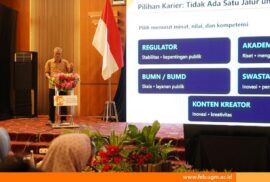

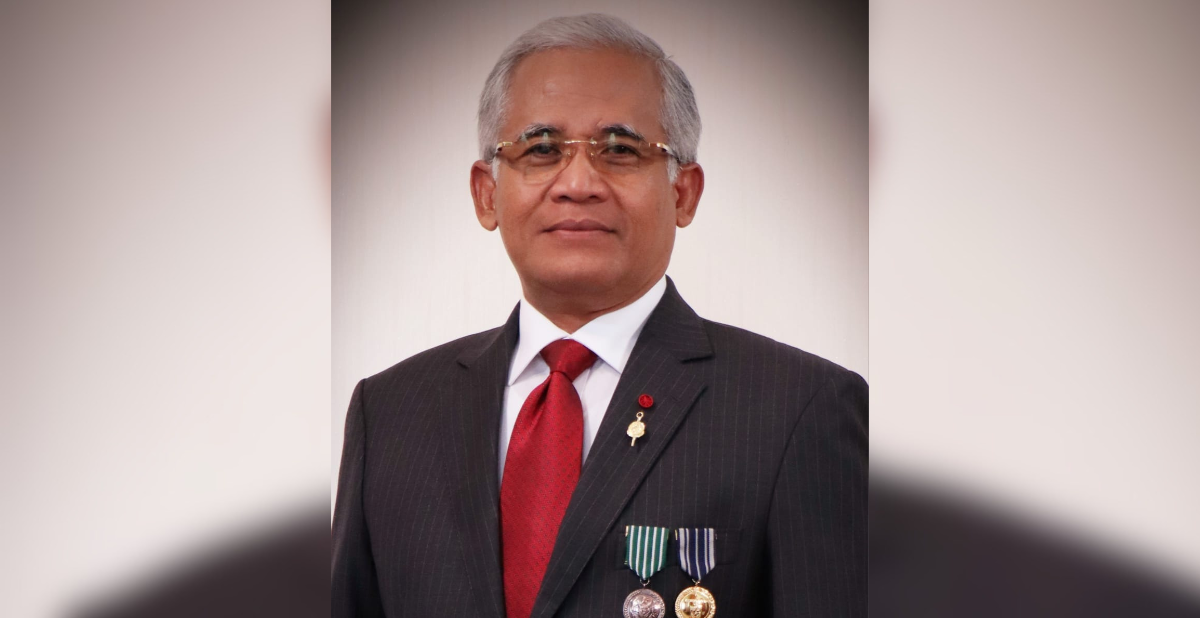
Global geopolitical tensions, particularly in the Middle East, could affect the global economy, including Indonesia. A Professor of Finance at the Faculty of Economics and Business, Universitas Gadjah Mada (FEB UGM), Prof. Dr. rer. soc. R. Agus Sartono, M.B.A., stated that this situation presents a serious dilemma in managing state financing amid rising uncertainty.
According to him, the escalation of conflicts involving major countries risks triggering prolonged wars. Conflicts initially expected to end quickly may instead persist, as seen in Vietnam, Afghanistan, and Iraq. The situation becomes even worse when Iran restricts access to the Strait of Hormuz, disrupting global oil supply and driving up energy prices.
These conditions could disrupt global trade and trigger an energy crisis, affecting logistics costs and possibly leading to a broader economic crisis.
“Disruptions to supply chains will likely result in rising inflation, which will, in turn, necessitate increased funding from subsidies. Ultimately, this could trigger social crises, and many countries will suffer due to the ongoing conflict in the Middle East,” said the former Deputy Coordinating Minister for People’s Welfare (2010–2021).
Raise Fuel Prices or Cut Spending?
As an importer of net oil, Indonesia should expect to face significant pressure from rising global oil prices. The government, therefore, faces two challenging policy options. First, increasing domestic fuel prices to prevent subsidy burdens from escalating. Second, implementing budget efficiency through program rationalization.
“The options are either raising fuel prices or pursuing efficiency by postponing non-urgent programs, including rationalizing development financing,” he stated.
If the government chooses the first option, it must be accompanied by cash assistance, as was the case during the COVID-19 pandemic.
Agus noted that raising fuel prices carries substantial social and economic risks, particularly amid weakening purchasing power and stagnant job opportunities. Such a policy could drive inflation and negatively affect economic growth.
“If this option is taken, the government must balance it with direct cash assistance as was done during the COVID-19 pandemic,” he explained.
On the other hand, budget efficiency could involve postponing non-essential programs and rationalizing development financing. One policy that has resurfaced is the implementation of work-from-home (WFH), as seen during the pandemic. While this may reduce operational costs, it also creates an unequal distribution of benefits.
“This WFH policy needs careful consideration. On the one hand, it reduces office overhead and transportation costs. On the other hand, it effectively becomes a subsidy for employees, while the poor and near-poor receive no direct benefit,” he added.
Rationalizing the Free Nutritious Meal Program (MBG)
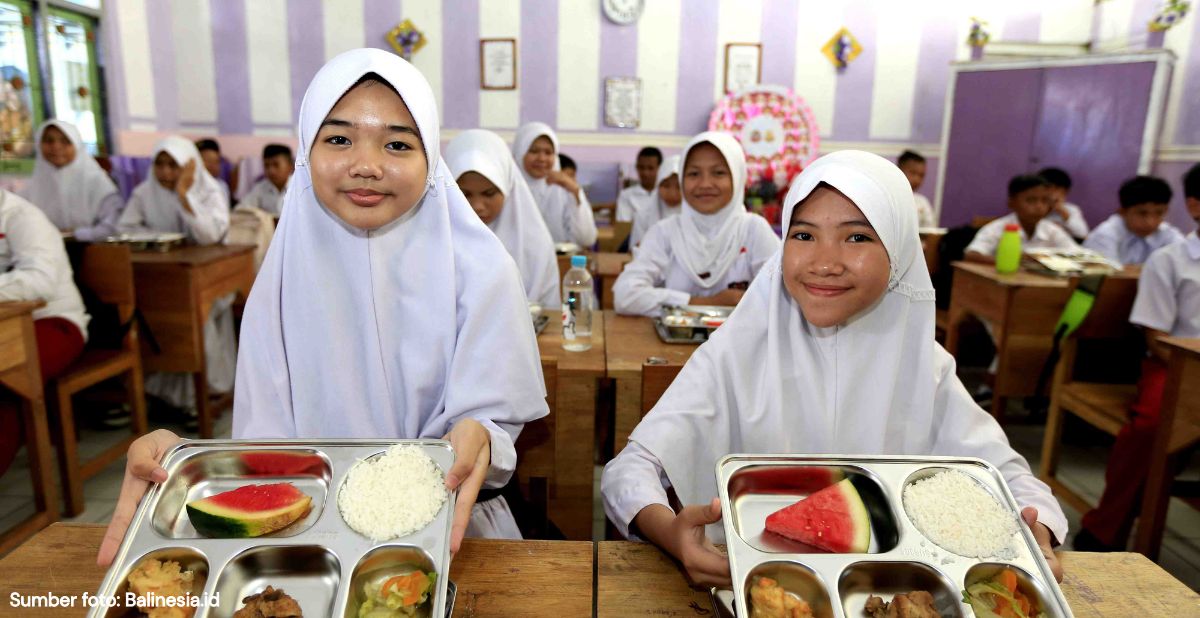
Agus further proposed rationalizing the Free Nutritious Meal (MBG) program by limiting its implementation to effective school days. Based on calculations, the number of effective school days per year is approximately 190 days. With an assumed cost of Rp15,000 per student per day and 55.28 million beneficiaries, the estimated budget would reach Rp157.55 trillion.
This figure is significantly lower than the initial allocation which stood at Rp335 trillion. The budget difference could cover the costs of supporting poor and near-poor families or fund other programmes.
“Efficiency not only involves limiting MBG to school days, but also prioritising around 40% of students from poor and near-poor families. The total cost would be much lower,” he explained.
Evaluating MBG Implementation
Agus also emphasized the need for caution in implementing the MBG program, particularly during online learning periods. He highlighted several issues, including distribution mechanisms and food quality.
Questions arise when students are required to attend school solely to pick up meals. Additionally, distributing raw food ingredients below the allocated budget may create negative public perceptions.
“Especially if the food provided is not ready to eat. It reduces the burden on service providers while costs remain the same. In such cases, the nutritional quality should actually improve,” he stressed.
He also pointed out field-level issues, such as poor food quality and the manipulation of expiration dates, which could pose health risks to children and erode public trust in the government.
According to him, local governments can plan MBG implementation by considering the number of students in each region. The village’s potential and funds can support the programme, creating a trickle-down effect on local economies.
“Claims that MBG can absorb hundreds of thousands of workers need to be reconsidered. The perspective must shift away from disbursement and salary distribution. It is especially the case when the budget drops from Rp15,000 to Rp7,500 per child, suggesting that half of the allocation is ineffective,” he said.
He also criticized the government’s narrative that MBG is not part of the education budget. According to him, this is inaccurate. The program is clearly linked to education funding, as stated in Government Regulation No. 118 of 2025 and Law No. 17 of 2025 on the 2026 State Budget.
Policy Rationalization
He thinks that the government should use the current situation as an opportunity to rationalise the MBG programme. It could reduce public complaints and signal that the government is responsive to public input.
“Reducing the number of students receiving the programme to 40% from poor and near-poor families would cut waste, while the remaining funds could go towards job-creating projects,” he added.
“Efficiency is not merely about cutting budgets, but ensuring that every rupiah works more effectively for public welfare,” he emphasized.
He also warned against allowing the fiscal deficit and public debt to increase, as this would burden future generations. Any policy decision must go hand in hand with efforts to plug revenue leaks.
“In difficult times like this, it is important to remember that a strong nation is not defined by how much it spends, but by how precisely it allocates its resources,” he concluded.
Report by: Kurnia Ekaptiningrum
Sustainable Development Goals