Amid increasing global economic fragmentation and geopolitical uncertainty, the implementation of the Global Minimum Tax has become a new challenge for many countries, including Indonesia. Director General of Taxes, Bimo Wijayanto, S.E., Ak., M.B.A., Ph.D., stated that Indonesia needs to take a more strategic role in the new global tax order. These goals are achievable through strategic measures, balanced policies, and international collaboration.
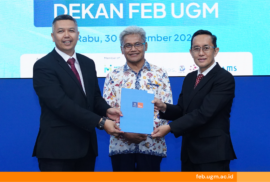
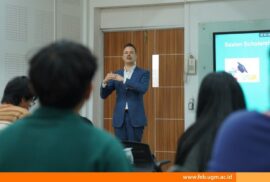
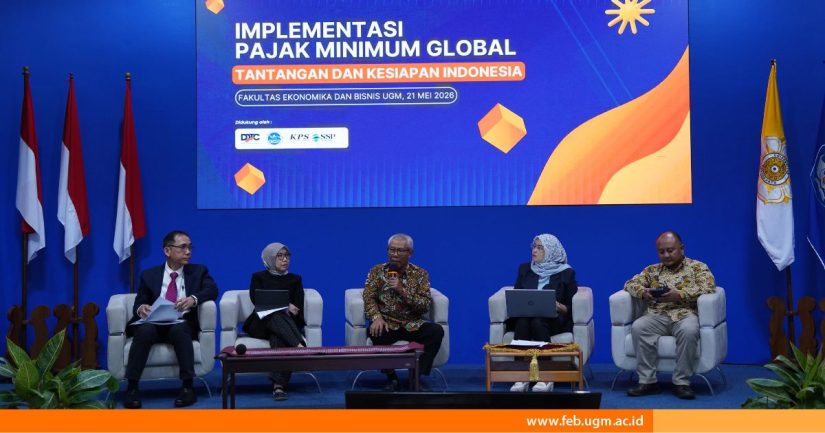
“Therefore, a series of strategic measures and disciplined implementation of action plans are required. It highlights the importance of creating balanced policies, providing certainty for investors, and strengthening international collaboration so that Indonesia can take a more strategic role in the new global tax order,” he stated during the KOMPAK Seminar titled “Implementation of the Global Minimum Tax: Challenges and Indonesia’s Readiness,” organized by the Faculty of Economics and Business, Universitas Gadjah Mada in collaboration with the Tax Education and Training Center on Thursday (21/5) at the 8th Floor Auditorium of the FEB UGM Learning Center.
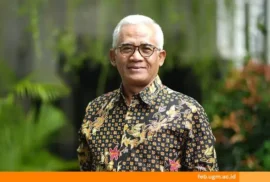
Meanwhile, UGM Vice Rector for Human Resources and Finance, Prof. Dr. Supriyadi, M.Sc., stated that Indonesia is currently facing an increasingly dynamic economic landscape. According to him, taxation challenges are no longer merely about increasing state revenue, but also about ensuring that revenue is high-quality, resilient, and sustainable.
He explained that the Global Minimum Tax policy does not mark the end of competition among countries, but rather the beginning of a new and more complex form of competition that requires strong institutional capacity.
“If we can respond appropriately, this policy can become an instrument to strengthen state revenue, a catalyst for policy reform, and a foundation for more sustainable competitiveness,” he explained.
Meanwhile, Secretary of the Financial Education and Training Agency, Wahyu Kusuma Romadhoni, explained that the Tax Education and Training Center initiated the KOMPAK program to strengthen tax education for all taxation stakeholders and the national tax ecosystem.
“KOMPAK is not only present as a seminar forum, but also as a space for collaboration and shared learning to create an adaptive tax system with legal certainty,” he said.
Dean of FEB UGM, Prof. Dr. Didi Achjari, S.E., M.Com., Ak., CA., stated that the seminar represents a collaboration between academics and policymakers regarding the dynamics of global taxation. In addition, the seminar is part of the commitment of FEB UGM and the Master of Accounting Program to provide excellent education that is adaptive to the evolving needs of the professional world and society.
“We realize this commitment through curriculum development efforts, collaboration with professionals, and the provision of both practical and academic learning processes,” he said.
Reported by: Shofi Hawa Anjani
Editor: Kurnia Ekaptiningrum
Sustainable Development Goals