Amid global challenges such as climate change, social inequality, and the growing demand for sustainable development, the role of accounting continues to evolve beyond its traditional function as a tool for financial recording and reporting. Today, accounting serves as a vital tool for promoting transparency, accountability, and informed decision-making, thereby contributing to achieving the Sustainable Development Goals (SDGs).
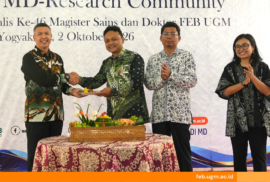
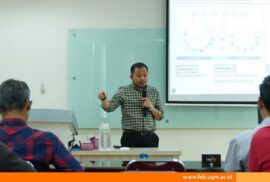
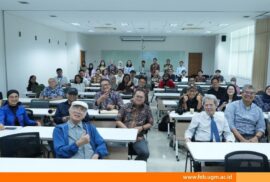
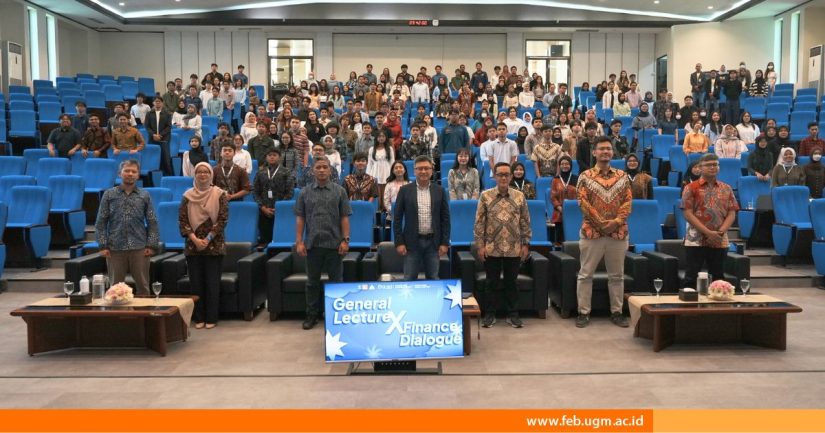
These issues were the focus of the Finance Dialogue at Gadjah Mada Accounting Days (GMAD) 2026, titled “Empowering Grassroots Economy with SDGs: Accounting as a Catalyst for Social Equity,” held on Saturday (May 23, 2026) at the MM UGM Auditorium.
Sustainable Finance as a Pillar of Economic Stability
Chair of the Audit Board of Indonesia’s Financial Services Authority (OJK), Sophia Wattimena, explained that climate change has become one of the most significant global risks affecting economic stability and the financial services sector. Over the next decade, we can expect major challenges to arise from risks such as extreme weather events, natural resource scarcity, and pollution.
According to Sophia, climate-related risks can affect the financial services sector by increasing credit, operational, market, and liquidity risks. To address these challenges, OJK continues to promote sustainable finance through various initiatives, including the Indonesian Sustainable Finance Taxonomy (TKBI), Climate Risk Management and Scenario Analysis (CRMS), and the development of sustainability reporting standards aligned with IFRS S1 and S2.
“Sustainability reporting should be positioned as a business imperative. It is not merely a reporting obligation but a strategic necessity for companies, as it is becoming increasingly important for investors, financial institutions, and supply chains in assessing both risks and business opportunities,” she stated.
Accounting’s Role in Promoting Sustainable Development
Accounting lecturer at FEB UGM, Dewi Wulansari, revealed that according to the SDG Report 2025, only around 18 percent of SDG targets are currently on track to be achieved by the 2030 Agenda. In this context, accounting plays a crucial role in helping organizations integrate sustainability-oriented policies and actions. By providing more comprehensive information, accounting functions not only as a reporting tool but also as a means of enhancing accountability and supporting decision-making.
“When we talk about climate change, deforestation, or other sustainability crises, accounting alone cannot solve all these issues. However, at the organizational level, accounting has a role to play in contributing solutions to these challenges,” Dewi explained.
She emphasized that accounting can help bridge organizational policies and actions with broader sustainable development objectives.
Ensuring the Credibility of Sustainability Information
Chair of the Small and Medium-Sized Practices Committee (KSMP) of the Indonesian Institute of Certified Public Accountants (IAPI), Sandra Pracipta, highlighted the importance of assurance in sustainability reporting. She argues that the increasing number of sustainability reports requires adequate assurance processes to ensure the information provided to investors and stakeholders is credible and reliable.
“Public accountants verify whether sustainability reports prepared by organizations comply with applicable standards. The challenge is that sustainability information does not only consist of quantitative data but also qualitative information that must be objectively verifiable,” she explained.
Sandra added that the level of independent assurance for sustainability reports remains relatively limited. Therefore, the accounting profession plays a crucial role in ensuring that sustainability information used by investors, regulators, and other stakeholders is trustworthy and complies with established standards.
The issues discussed during the dialogue underscored that achieving the SDGs requires access to credible, accountable information. In this regard, accounting serves not only as a reporting mechanism but also as a catalyst for social equity and sustainable development.
Reporter: Dwi Zhafirah Meiliani
Editor: Kurnia Ekaptiningrum
Sustainable Development Goals