Tourism can no longer be measured solely by the number of visitors or the amount of investment flowing into a destination. More importantly, tourism development should be carried out without harming the environment, local communities, or cultural identity. This was highlighted by Prof. Wihana Kirana Jaya, M.Soc.Sc., Ph.D., Professor at the Department of Economics, Faculty of Economics and Business, Universitas Gadjah Mada (FEB UGM), during the FEB Podcast titled “Shifting the New Paradigm: Building Community-Based and Sustainable Tourism.”
Prof. Wihana explained that the current tourism development paradigm in Indonesia remains largely linear and extractive. Tourism is often viewed primarily as a driver of economic growth, measured through visitor numbers and tourist spending. However, behind these achievements lie various negative externalities that can adversely affect local communities in tourism destinations.
“These negative externalities may include environmental degradation, overtourism, and economic leakage. Proper tourism development should not extract value from local communities,” he stated.
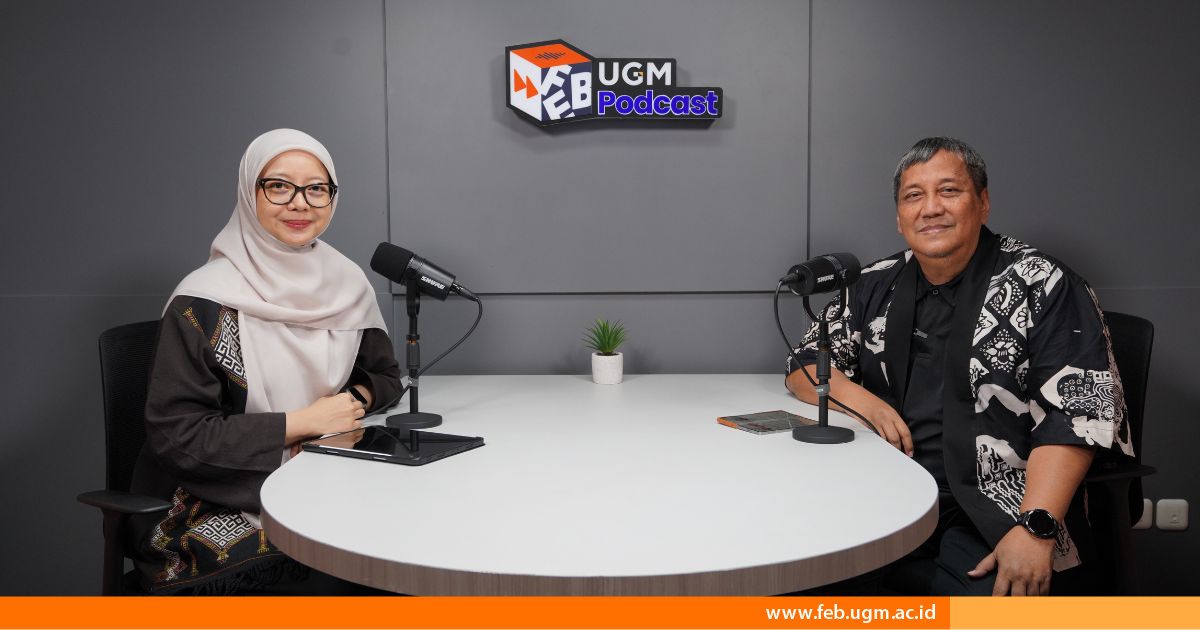
According to him, the tourism development paradigm must shift toward a more inclusive and sustainable approach. Beyond generating profits, tourism should maintain a balance between people, planet, and prosperity. This can be achieved by strengthening local supply chains, empowering local micro, small, and medium enterprises (MSMEs), and ensuring that communities become the main actors in tourism-related economic activities.
Wihana also emphasized the importance of community-based tourism, an approach that centers local communities in tourism development. Through this model, residents can directly benefit from tourism activities while minimizing the risk of economic leakage, where economic gains flow outside the local area.
Furthermore, he explained that the future direction of tourism development should go beyond sustainable tourism. Tourism must evolve toward regenerative tourism, an approach that seeks to restore harmony among people, culture, the economy, and nature.
“The economy must be in harmony with nature, culture, society, and spirituality. Tourism should not merely bring visitors to a destination; it should also serve as a medium for learning about life, culture, and the relationship between people and their environment,” he explained.
Through this approach, Wihana hopes that Indonesia’s tourism sector can grow more inclusively and sustainably while delivering greater benefits to local communities and the environment.
The full FEB UGM Podcast episode titled “Shifting the New Paradigm: Building Community-Based and Sustainable Tourism” can be accessed at: http://ugm.id/MembangunPariwisataBerbasisKomunitasdanBerkelanjutan
Reporter: Najwa Anggi Namira
Editor: Kurnia Ekaptiningrum
Sustainable Development Goals