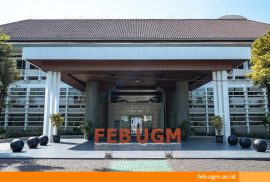
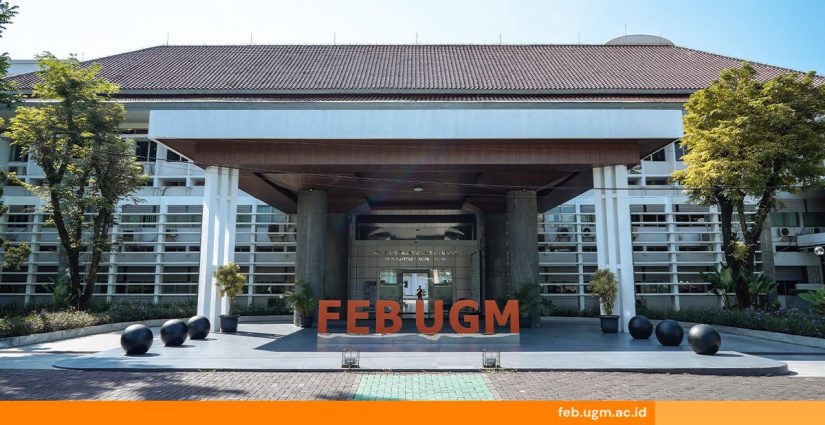
Choosing a college major can often be a challenge for prospective students. If you are still unsure but interested in economics and business, the Faculty of Economics and Business at Universitas Gadjah Mada (FEB UGM) offers three flagship undergraduate programs that can serve as a solid foundation for your future: Accounting, Economics, and Management. These programs are available through both the regular track and the International Undergraduate Program (IUP).
It is no surprise that FEB UGM is a top choice among applicants. Its educational quality has gained global recognition. FEB UGM was the first business school in Indonesia to receive international accreditation from the Association to Advance Collegiate Schools of Business (AACSB) on May 12, 2014, and successfully maintained this accreditation in 2019 and again in 2024. At the national level, FEB UGM is accredited as “Excellent” by Lembaga Akreditasi Mandiri Ekonomi Manajemen Bisnis dan Akuntansi.
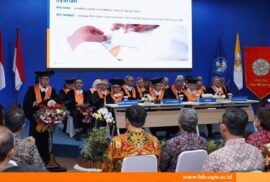
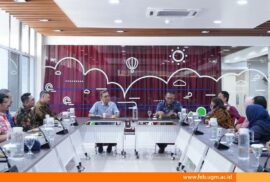
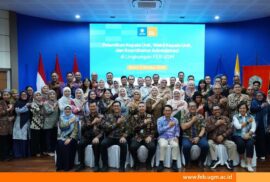
So, what makes these three programs stand out? Through the FEB Overview session titled “Shaping Your Study and Career Path with FEB UGM Undergraduate Programs,” FEB UGM introduced its undergraduate offerings. The session featured three speakers: Head of the Undergraduate Accounting Program, Choirunnisa Arifa, Ph.D., Secretary of the Undergraduate Economics Program, Novat Pugo Sambodo, Ph.D., and Head of the Undergraduate Management Program, RR Tur Nastiti, Ph.D..
Accounting Program: Preparing Certified Professionals
Choirunnisa Arifa explained that the Accounting program at FEB UGM is no longer limited to basic bookkeeping or financial reporting. The curriculum has evolved to meet industry demands, particularly in integrating technology and information systems.
“We do not only teach basic accounting, but also contemporary issues, especially the application of information systems in accounting,” she said.
At the foundational level, students study Financial Accounting and Financial Management. At the advanced level, they take more applied courses such as Data Analytics, Enterprise Resource Planning, and Information Systems Auditing. The program is also exploring international curriculum accreditation from global professional bodies such as the Association of Chartered Certified Accountants and CPA Australia, potentially allowing graduates to obtain associate-level certifications.
Nationally, the program is developing linkage pathways with the Professional Accounting Program (PPAk), enabling students to receive course waivers and pursue Chartered Accountant (CA) and Certified Public Accountant (CPA) certifications. Fast-track programs to the Master of Science in Accounting and the Doctoral programs are also available for those pursuing academic careers.
Economics Program: Developing Strong Analysts
Novat Pugo Sambodo highlighted that the Economics program equips students with three key competencies: strong analytical skills in both microeconomics and macroeconomics, robust data analysis, and effective communication.
“We make decisions based on scientific reasoning despite limitations—that is the essence of Economics,” he explained.
Students can choose from a range of specializations, including Monetary Economics, Public Economics, Development Economics, Health Economics, and Labor Economics. The program is supported by internationally educated faculty, including scholars who have co-authored research with Nobel laureates.
Graduates pursue careers across sectors such as central banks, ministries, financial authorities, banking, startups, NGOs, and stock exchanges as data analysts.
Management Program: Preparing Leaders for Business and Social Impact
RR Tur Nastiti emphasized that the Management program aligns with FEB UGM’s mission to develop future-ready leaders who foster sustainability. The curriculum covers the four core management functions: planning, organizing, leading, and controlling.
These are applied across areas such as marketing, innovation, operations, human resources, finance, and strategic management in both profit and non-profit organizations.
During the first two years, students follow a block system focusing on character and foundational competencies. In the final two years, they explore interdisciplinary courses and leadership development across business, social, entrepreneurial, and academic domains, often through internships.
“Wherever there are resources to be managed whether in profit or non-profit organizations—that is where management graduates have career opportunities,” she stated.
A Balanced and Inclusive Campus Life
All speakers emphasized that student life at FEB UGM extends beyond academics. Student organizations such as IMAGAMA, HIMIESPA, and IKAMA provide opportunities for personal development. Programs such as student exchanges, internships, double degrees, competitions, and interdisciplinary learning further enrich the student experience.
Mental health is also a priority. FEB UGM offers support through the Career and Student Development Unit (CSDU), which includes in-house psychologists providing counseling services.
Alums also play an important role. Through Kagama, FEB UGM alums provide scholarships, living allowances, and even laptop loans for students in need.
FEB UGM also maintains an extensive global network, partnering with more than 75 institutions across Asia, America, Australia, and Europe. These collaborations support academic programs, research, student exchanges, double degrees, and summer courses. FEB UGM is also a co-initiator of the Partnership of Asian Management Schools (PAMS), alongside Woosong University, Foreign Trade University, Sun Yat-sen University, and Universiti Kebangsaan Malaysia.
The full video of the FEB Overview program titled “Shaping Your Study and Career Path with FEB UGM Undergraduate Programs” is available online.
Author: Dwi Zhafirah Meiliani
Editor: Kurnia Ekaptiningrum
Sustainable Development Goals