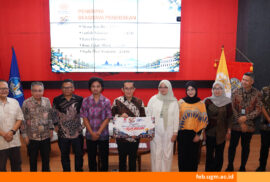
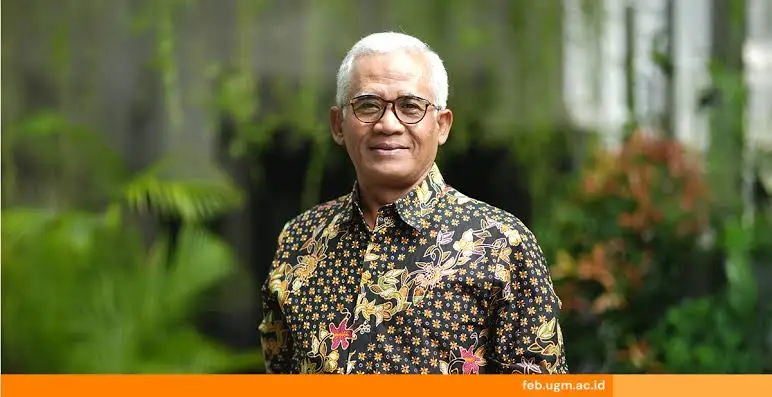
The government plans to implement free education through the college level. Prof. Dr. R. Agus Sartono, MBA, a professor at the Faculty of Economics and Business, Universitas Gadjah Mada (FEB UGM), believes that the plan to implement the Free College Tuition Program (PKG) must be designed with fairness and equitable access to education in mind. The program should be aimed not only at students at public universities (PTN) but also at students from low-income families attending private universities (PTS).
“The primary sources of funding for national development are ‘tax revenue’ and ‘debt/loans.’ Taxes are levied on all taxpayers, regardless of whether they are in the public or private sector or whether they run small- or large-scale businesses. But why, then, are only PTN students set to receive tuition ‘subsidies’—regardless of the amount or its components?” he explained in a written statement received on Saturday (September 26).
Agus stated that this policy actually has the potential to widen the gap between wealthy and low-income families. Low-income families may not be able to provide their children with additional educational resources, putting them at a competitive disadvantage when applying to public universities. As a result, children from low-income families are forced to attend more expensive private universities.
“This is where the issues of disparity and inequality come to the fore, and new policies should not actually widen these disparities,” explained the man who previously served as Deputy Minister for the Coordination of Education and Religion at the Coordinating Ministry for Human Development and Culture.
This situation, he continued, requires attention to ensure that the free education policy does not further widen disparities and inequalities in access to education. Article 31 of the 1945 Constitution stipulates that every citizen has the right to education. This provision does not differentiate access to education based on whether the educational institution is public or private. Therefore, according to Agus, education assistance policies must take into account citizens’ right to education as well as the economic conditions of the communities targeted by the program.
He also emphasized the need for clarity regarding the scope of the term “free” in the Free College Program. He questioned whether free education covers only the waiver of the Single Tuition Fee (UKT) or also includes students’ living expenses.
“It is possible that low-income families would still face difficulties if they have to send their children to study on another island, even if they are only exempt from the UKT,” said Agus.
KIP Kuliah and Free Education
Agus proposed that the government expand the existing KIP Kuliah program into a model for a Free College Program. Improvements could be made by adjusting the amount of financial aid and expanding the target recipient group.
He cited the example of students from low-income families, particularly those in deciles one through three, who could be exempted from tuition fees regardless of where they pursue their education. This assistance could also be supplemented with a monthly living allowance for the duration of their studies.
According to Agus, this model bears similarities to the LPDP scholarship scheme, which provides support for tuition, living expenses, and other allowances during the study period without restricting recipients to a specific educational institution.
Given the government’s limited fiscal capacity, he proposed prioritizing the Free College Program for students from low-income families in the first through third deciles. According to the 2025 Higher Education Statistics, there are approximately 10.75 million students enrolled in public universities (PTN), private universities (PTS), religious universities, and civil service universities. Of this total, 44.95 percent are enrolled in private universities and 40.99 percent in public universities. Meanwhile, students at public and private religious institutions account for 11.88 percent, with the remainder enrolled in civil service colleges.
Using the available socioeconomic database, the government is deemed capable of targeting assistance toward students from low-income families without making the status of a public or private university the primary basis for granting subsidies.
“To avoid creating a moral hazard for private universities, the government may establish classifications and funding limits. With this approach, the government can focus more effectively, not by subsidizing ‘educational services’ but by subsidizing and providing support to children from low-income families,” he explained.
Agus also believes that a beneficiary-based approach can help reduce social disparities while making the program more sustainable. On the other hand, the involvement of private universities in the program is seen as a way to encourage these institutions to continue developing while expanding access to higher education for communities in their surrounding areas. This is because private universities have long played a role in building the quality of human resources.
“Ideally, the government should bring educational services closer to the community. For example, by establishing new institutes on par with ITB and ITS in Eastern Indonesia. This way, graduates from public schools will also have better access to education in the future,” he said.
Organizing Funding Sources
Another issue that needs attention is the funding source for the Free College Program. Agus believes that the government’s limited fiscal space must be taken into account when designing this policy. One approach is to evaluate and streamline existing educational programs, including the MBG program.
Agus noted that the MBG program needs to be improved through an evaluation of distribution mechanisms and budget rationalization. One proposed option is to reduce the number of Nutrition Fulfilment Service Units (SPPG) and direct MBG distribution more precisely to children from families in the first through third deciles. This scheme can be integrated with the School KIP program at the elementary (SD/MI), middle (SMP/MTs), and high school (SMA/SMK/MA) levels using the latest databases from the Central Statistics Agency (BPS) and the Ministry of Social Affairs, while ensuring the validity of recipient data.
The funds saved through this rationalization can then be redirected to support a free college program without increasing government debt. This step must be accompanied by budget efficiency measures and efforts to plug budget leaks and combat corruption.
“Given the tight fiscal space, the choices sometimes feel bitter. But rest assured, as Aristotle said, the fruits of education are very sweet,” he said.
Reportage by: Kurnia Ekaptiningrum
Sustainable Development Goals